BOOK FORMAT Hardcover, 9.5 x 11 in. / 232 pgs / 136 duotone / 31 color.
PUBLISHING STATUS Pub Date 9/30/2011 Out of print
DISTRIBUTION D.A.P. Exclusive Catalog: SPRING 2011 p. 177
PRODUCT DETAILS ISBN 9781935202523TRADE List Price: $40.00 CAD $50.00
AVAILABILITY Not available
"This book is the first in thirty years to be devoted exclusively to Robert Rauschenberg’s photographic oeuvre and the first in-depth presentation of the artist’s photographs taken between 1949 and 1962. Many of the images included here have not been published since 1981. Though highly influential to others, and of critical importance to Rauschenberg’s own thought processes, this body of work has suffered from limited exposure. The magnitude and breadth of the images in this book should not only alleviate this neglect but also, we trust, inspire a clearer understanding of Rauschenberg’s contribution to the photographic medium..."
-Susan Davidson and David White
"What is a photograph? Much of Robert Rauschenberg's protean work seems designed to test the limits and tease out the fissures, ambiguities, and overlaps within the category of the photographic. Where, then, might Photograph, one of Rauschenberg's Combine paintings from 1959, fit within this? For Rauschenberg, so capacious and elastic was the photographic that it could encompass even an object made from detritus such as scraps of paper, photographs, metal, fabric, and wood mounted on canvas. Photograph incorporates two of Rauschenberg's photographs of almost identical landscape horizons set within a composition of assemblage to form a mise en abyme of photography itself. To return to the opening question of this essay: what if we begin to think of the entirety of Rauschenberg's output as essentially a photographic endeavor, with the Combines, performances, silkscreens, White Paintings, and black paintings all ultimately being individual facets of a larger, essentially lens-based, photographic project? As Walter Hopps has written on the fundamental and generative role of photography within Rauschenberg's work, 'The use of photography has long been an essential device for Rauschenberg's melding of imagery. While photography is an inadequate metaphor for the complexity of retinal reception, it remains a vital means for Rauschenberg's aesthetic investigations of how humans perceive, select, and combine visual information. Without photography, much of Rauschenberg's oeuvre would scarcely exist.'"
Nicholas Cullinan, excerpted from his essay, "To Exist in Passing Time."
Published by D.A.P./Schirmer/Mosel Edited by David White, Susan Davidson. Text by Nicholas Cullinan.
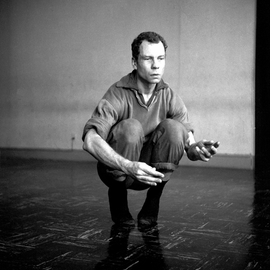
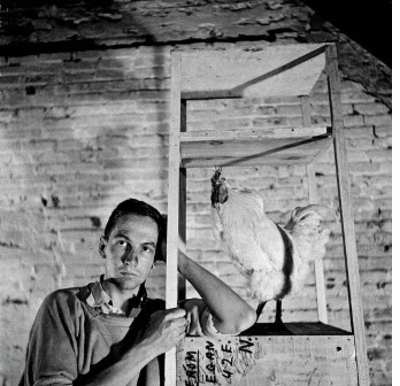
Robert Rauschenberg's engagement with photography began in the late 1940s under the tutelage of Hazel Larsen Archer at Black Mountain College in North Carolina. This exposure (or experience) was so great that for a time Rauschenberg was unsure whether to pursue painting or photography as a career. Instead, he chose both, and found ways to fold photography into his Combines, maintained a practice of photographing friends and family, documented the evolution of artworks and occasionally dramatized them by inserting himself into the picture frame. As Walter Hopps wrote, "The use of photography has long been an essential device for Rauschenberg's melding of imagery... [and] a vital means for Rauschenberg's aesthetic investigations of how humans perceive, select and combine visual information. Without photography, much of Rauschenberg's oeuvre would scarcely exist." The artist himself affirmed, "I've never stopped being a photographer." This volume gathers and surveys for the first time Rauschenberg's numerous uses of photography. This publication includes portraits of friends such as Cy Twombly, Jasper Johns, Merce Cunningham and John Cage, studio shots, photographs used in the Combines and Silkscreen paintings, photographs of lost artworks and works in process. This allows us to re-imagine almost the entirety of the artist's output in light of his always inventive uses of photography, while also supplying previously unseen glimpses into his social milieu of the 1950s and early 60s. Painter, sculptor, printmaker and photographer Robert Rauschenberg (1925-2008) provided a crucial bridge between Abstract Expressionism and Pop art. After studying at Black Mountain College under Josef Albers, Rauschenberg moved to New York where he formed close allegiances with Jasper Johns and Cy Twombly, began his groundbreaking Combines, collaborated with the Merce Cunningham Dance Company and co-launched the non-profit Experiments in Art and Technology. Considered one of the most innovative artists of his era, he died in 2008.
PRAISE AND REVIEWS
T: The New York Times Style Magazine
Matt Mccann
"Robert Rauschenberg: Photographs 1949-1962" (Shirmer/Mosel, $75) is a thorough (though not exhaustive) collection; many of these photographs were personally permitted at one point or another, by the artist, to be published or displayed. As such, the catalog offers a unique and focused view from the eye of a tremendously energenic and industrious artist, whose purview seemed to exclude nothing.
New York Magazine
Jerry Saltz
"Rauschenberg turns out to have been a natural, breezily brilliant with a camera, never more so than when shooting his circle of artist friends."
Photograph Magazine
Vince Aletti
Robert Rauschenberg: Photographs 1949 - 1962 (D.A.P) comes as something of a surprise, if not a revelation. Although his photographs are nowhere near as original as his art, they're solid examples of a midcentury American style that zeroed in on the vernacular, the ephemeral, and the everyday.
The Photobook Review
Philip Gefter
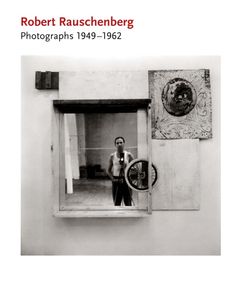
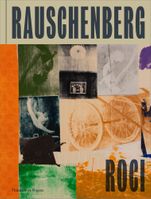
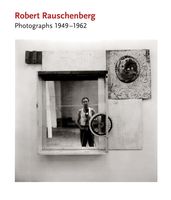
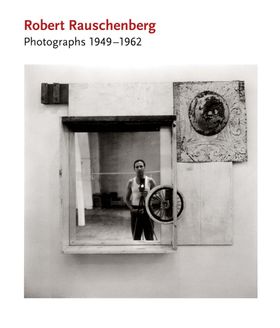
The ordinary, spontaneous moments in Rauschenberg's pictures are observed with a focused eye and lyric purity that one also sees in the photographs of Allen Ginsberg or Alfred Stieglitz. On the cover is a photographic self-portrait in which Rauschenberg incorporates his own reflection in a mirror holding a camera, framed within one of his combines. "I've never stopped being a photographer," he said.
NEW YORK Showroom by Appointment Only 75 Broad Street, Suite 630 New York NY 10004 Tel 212 627 1999
LOS ANGELES Showroom by Appointment Only
818 S. Broadway, Suite 700 Los Angeles, CA 90014 Tel. 323 969 8985
ARTBOOK LLC D.A.P. | Distributed Art Publishers, Inc.
All site content Copyright C 2000-2025 by Distributed Art Publishers, Inc. and the respective publishers, authors, artists. For reproduction permissions, contact the copyright holders.
The D.A.P. Catalog www.artbook.com
Distributed by D.A.P.
FORMAT: Hbk, 9.5 x 11 in. / 232 pgs / 136 duotone / 31 color. LIST PRICE: U.S. $40.00 LIST PRICE: CANADA $50 ISBN: 9781935202523 PUBLISHER: D.A.P./Schirmer/Mosel AVAILABLE: 9/30/2011 DISTRIBUTION: D.A.P. RETAILER DISC: TRADE PUBLISHING STATUS: Out of print AVAILABILITY: Not available TERRITORY: *not available
Published by D.A.P./Schirmer/Mosel. Edited by David White, Susan Davidson. Text by Nicholas Cullinan.
Robert Rauschenberg's engagement with photography began in the late 1940s under the tutelage of Hazel Larsen Archer at Black Mountain College in North Carolina. This exposure (or experience) was so great that for a time Rauschenberg was unsure whether to pursue painting or photography as a career. Instead, he chose both, and found ways to fold photography into his Combines, maintained a practice of photographing friends and family, documented the evolution of artworks and occasionally dramatized them by inserting himself into the picture frame. As Walter Hopps wrote, "The use of photography has long been an essential device for Rauschenberg's melding of imagery... [and] a vital means for Rauschenberg's aesthetic investigations of how humans perceive, select and combine visual information. Without photography, much of Rauschenberg's oeuvre would scarcely exist." The artist himself affirmed, "I've never stopped being a photographer." This volume gathers and surveys for the first time Rauschenberg's numerous uses of photography. This publication includes portraits of friends such as Cy Twombly, Jasper Johns, Merce Cunningham and John Cage, studio shots, photographs used in the Combines and Silkscreen paintings, photographs of lost artworks and works in process. This allows us to re-imagine almost the entirety of the artist's output in light of his always inventive uses of photography, while also supplying previously unseen glimpses into his social milieu of the 1950s and early 60s.
Painter, sculptor, printmaker and photographer Robert Rauschenberg (1925-2008) provided a crucial bridge between Abstract Expressionism and Pop art. After studying at Black Mountain College under Josef Albers, Rauschenberg moved to New York where he formed close allegiances with Jasper Johns and Cy Twombly, began his groundbreaking Combines, collaborated with the Merce Cunningham Dance Company and co-launched the non-profit Experiments in Art and Technology. Considered one of the most innovative artists of his era, he died in 2008.