| |||||||||||||||||||||||||
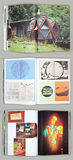
ARTBOOK BLOGEventsStore NewsMuseum Stores of the MonthNew Title ReleasesStaff PicksImage GalleryBooks in the MediaExcerpts & EssaysArtbook InterviewsEx LibrisAt First Sight2025 Gift GuidesFeatured Image ArchiveEvents ArchiveDATE 10/22/2026 McNally Jackson Seaport presents Tom Cole and Elliot Tuttle launching 'Chimes'DATE 10/14/2026 McNally Jackson Seaport presents David Jacob Kramer and Michael Schmelling launching 'Handmade Utopia'DATE 9/20/2026 Artbook | D.A.P. NYC Sample Sale at RodeoDATE 9/17/2026 Long live idiosyncratic 'Hives!'DATE 9/16/2026 "The world has become too dangerous for anything less than Utopia" — Buckminster FullerDATE 9/15/2026 Honoring National Hispanic American Heritage MonthDATE 9/15/2026 The analogue allure of Socialist HotelsDATE 9/13/2026 The story of America's first major Black media empire through Barbara Karant's documentary lensDATE 9/12/2026 MASS MoCA R&D Store presents 'three six five' author Lucy Ives in conversation with Lauren Levato CoyneDATE 9/11/2026 The Strand presents Melissa Auf der Maur in conversation with Kelefa Sanneh for the NYC launch of 'Melissa Auf der Maur: My '90s Rock Photographs'DATE 9/11/2026 In 'My ’90s Rock Photographs,' Melissa Auf der Maur plays witnesses to her own existenceDATE 9/3/2026 If Emmett Till LivedDATE 8/30/2026 "No room for squares." Graham Marsh's pocket guide to Ivy style | IMAGE GALLERY DATE 9/17/2026 Long live idiosyncratic 'Hives!'Spreads from bookseller favorite Aladin Borioli: Hives, 2400 BCE–1852 CE, first published in 2020 by Paris-based RVB Books and widely available only now through this must-have new co-edition with The Ice Plant. Retaining all of the perfect original design details, from the bright yellow paperback cover (and spine) with knocked out historic hive shapes to the adorable 4.25 x 6-inch trim size, this 448-page ode to golden-age apiaries emanates pure passion project from every awkwardly-cropped, low-res spread. Before honey harvesting was modernized and industrialized, beekeeping was idiosyncratic and culturally specific. "A log hive is no better than a Langstroth hive, nor is a Langstroth hive better than a skep hive," Ellen Lapper and Aladin Borioli write. "It is about advocating for hive design which is free from colonial, capitalist and for-profit logic. This is a task for the whole community. Remember: unite and create, not alienate and dictate!" Long live idiosyncratic beekeeping! DATE 9/15/2026 The analogue allure of Socialist HotelsArmchair travelers and Sovietologists, rejoice! London-based FUEL Publishing has just released Socialist Hotels—the newest in FUEL's renowned Soviet design series—collecting 297 photographs by Elena Amabili, from Abkhazia to Uzbekistan. "Overnighting in some of the more dilapidated socialist hotels, usually beset with wiring and plumbing issues, is a bit like how I imagine sleeping in a museum would feel: not exactly comfortable but intriguing," essayist Caroline Eden writes. "And while many are best suited to those able to turn a blind eye to cracked walls and saggy furniture dating back decades there are other, if less obvious, benefits. These ageing hotels do not offer guests high-tech gadgetry such as touchscreen panels, key cards and Bluetooth speakers which, installed for convenience, often end up being infuriating and glitchy to use. Rather, the socialist hotel presents a satisfyingly analogue stay, even if that involves bringing your own bath plug as these were, and still are, seldom supplied. They are usually pleasingly solidly built, too, with significant weight and structure, meaning less chance of hearing your neighbors through thin walls, or enduring the sounds of heels on floorboards above you at night." Pictured here: Sevan Writers’ House, Sevan, Armenia; Hotel Avesto (former Hotel Oktyabrskaya), Dushanbe, Tajikistan; Hotel Cosmos, Moscow, Russia. DATE 9/13/2026 The story of America's first major Black media empire through Barbara Karant's documentary lensSpreads and detail are reproduced from new release, 820 Ebony/Jet, Chicago photographer Barbara Karant's documentary love-letter to the onetime home of the Johnson Publishing Company—publisher of Ebony and Jet, among many other Black culture magazines, but also incubator and herald of all things Black-empowered and Black-generated. "Distinct colors and patterns gave each floor its own personality," Aaron Bryant writes of this 1971 landmark, designed by Chicago architect John Moutoussamy and styled by Palm Springs interior designers Arthur Elrod and William Raiser under the creative direction of John and Eunice Johnson. "Geometric abstractions and pulses of psychedelic colors also seemed inspired by the textiles of post-colonial diasporas. The result was, as architectural writer and photographer Lee Bey described, 'an exuberant, high-style and fearless mix of color, texture, art, contemporary furnishings and pattern' that were 'a perfect match for publisher John H. Johnson's groundbreaking magazines.' The interior mirrored a contemporary blend of African and American styles that conveyed a new vision of the African American past, present and future. Bright colors, ethnically inspired patterns and 1970s futurism produced a post–civil rights 'Afropolitan' modernism. Further, open and shared spaces created a corporate environment for building a community and culture of collaboration." Pictured here, a spread featuring Grace Jones, photographed by Moneta Sleet, Jr., for the May 16, 1983, issue of Jet; the cafeteria, where employees ate for only $1.00 a day, photographed for Ebony in 1972; a spread featuring Karant's photograph Floor 10 #6, taken between 2010 and 2012, after the company had relocated. |