This exquisite publication features Asawa's vibrant, experimental lithographs of subjects ranging from delicate flowers to members of her family, and is the first to present her complete portfolio made at the renowned Tamarind Lithography Workshop
Over the course of just two months in 1965, at a residency at the Tamarind Lithography Workshop in Los Angeles, the Japanese American artist Ruth Asawa produced a stunning portfolio of 54 lithographs, depicting organic forms and plants as well as family and friends. The Tamarind Workshop had been founded by artist June Wayne in Los Angeles in 1960 in an effort to revitalize lithography as a fine art, and offered artists the opportunity to work in collaboration with master printers. For Asawa, it was a rare chance to focus on a single medium and opened up a new chapter of artmaking for her. A testament to Asawa's radically experimental and collaborative ethos, the Tamarind prints present a discrete chapter of her oeuvre, encapsulating many of the artist's emblematic motifs. Published in celebration of the artist's centennial in 2026, this exquisitely produced book illustrates each lithograph made during her residency at the Tamarind Workshop, which have never been published as a complete series. Ruth Asawa (1926–2013) studied at Black Mountain College in the late 1940s before moving to San Francisco in 1949, where she produced a celebrated body of work that ranged from intricate wire sculptures to calligraphic ink paintings. Asawa continuously transformed materials and objects into subjects of sustained artistic contemplation, drawing on nature, science and craft to unsettle distinctions between abstraction and figuration, figure and ground, and negative and positive space.
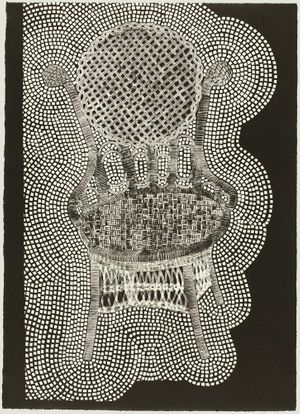
"Chair" (1965), 'Ruth Asawa: The Tamarind Prints,' The Museum of Modern Art, New York.
PRAISE AND REVIEWS
The Finanical Times
Ariella Budick
That’s how the MoMA exhibition feels [...] like gliding through a landscape of infinite variety and coherence. Her large-scale sculptures made of woven wire have an almost sensual intimacy; her tiniest sketches of hydrangeas hint at cosmic events. Drawings of blooms snipped from the garden or offered as bouquets have the vividness of portraits. They buzz with emotion.
Artnet
Sarah Cascone
The retrospective builds on this incredible momentum, presenting the full arc of her career and its many facets.
Puck
Marion Maneker
A sweeping MoMA retrospective shows the full scope and ambition of Ruth Asawa, a titanic talent who studied with luminaries like Buckminster Fuller and Josef Albers, yet wasn’t fully discovered until her death in 2013. As the art world approaches her centennial, the appreciation is still growing.
ARTnews
Alex Greenberger
Rare are the shows that reveal a bona fide masterpiece to the public; the Museum of Modern Art’s rich, fascinating Wifredo Lam retrospective is one of them.
The New York Times
Deborah Solomon
In Asawa’s hands, wire was transformed from an instrument of imprisonment into a lifeline, a route to imaginative freedom. She created a world in which forms brim and bloom and multiply without end. As much as that of any artist, Asawa’s work affirms the power of art to allow us to begin anew.
Substack
Garth Greenwell
Asawa’s drawings never stand on tiptoe. They keep their kinship with colloquial forms ... and also their closeness to technical drawing; though nothing could be more artful, they’re never pretentious.
The Brooklyn Rail
Jennie Waldow
Through its succinct focus on one chapter in Asawa’s career, the publication solidifies the Tamarind prints as a body of work abundantly worthy of independent examination and appreciation.
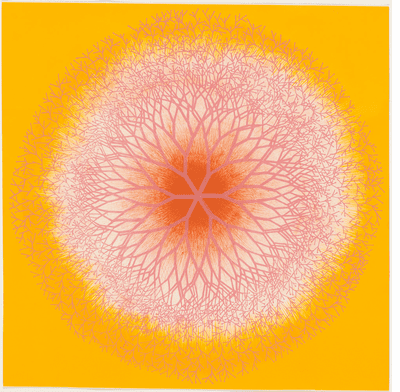
“Desert Plant” (1965) is from Ruth Asawa: The Tamarind Prints, published as a gem-like accompaniment to the full career retrospective on view through February 7, 2026, at MoMA. Collecting the entire portfolio of 54 prints made by Asawa during a 1965 residency at the renowned Tamarind Lithography Workshop in Los Angeles, which have never been published before as a complete series, this elegant 64-page hardcover has been produced in celebration of the artist’s 2026 centennial. “Each material has a nature of its own,” Asawa is quoted in the book, “and by combining it and putting it next to another material, you change or give personality to it without destroying either one.… It’s the same thing that you don’t change a person’s personality, but when you combine them with other people, other personalities, they take on another quality.… The intent is not to change them, but to bring out another part of them.” continue to blog
FORMAT: Hbk, 8 x 10 in. / 64 pgs / 64 color. LIST PRICE: U.S. $35.00 LIST PRICE: CANADA $49 ISBN: 9781633451872 PUBLISHER: The Museum of Modern Art, New York AVAILABLE: 10/28/2025 DISTRIBUTION: D.A.P. RETAILER DISC: TRADE PUBLISHING STATUS: Active AVAILABILITY: In stock TERRITORY: NA ONLY
Published by The Museum of Modern Art, New York. Edited by Cara Manes, Dominika Tylcz.
This exquisite publication features Asawa's vibrant, experimental lithographs of subjects ranging from delicate flowers to members of her family, and is the first to present her complete portfolio made at the renowned Tamarind Lithography Workshop
Over the course of just two months in 1965, at a residency at the Tamarind Lithography Workshop in Los Angeles, the Japanese American artist Ruth Asawa produced a stunning portfolio of 54 lithographs, depicting organic forms and plants as well as family and friends. The Tamarind Workshop had been founded by artist June Wayne in Los Angeles in 1960 in an effort to revitalize lithography as a fine art, and offered artists the opportunity to work in collaboration with master printers. For Asawa, it was a rare chance to focus on a single medium and opened up a new chapter of artmaking for her. A testament to Asawa's radically experimental and collaborative ethos, the Tamarind prints present a discrete chapter of her oeuvre, encapsulating many of the artist's emblematic motifs. Published in celebration of the artist's centennial in 2026, this exquisitely produced book illustrates each lithograph made during her residency at the Tamarind Workshop, which have never been published as a complete series.
Ruth Asawa (1926–2013) studied at Black Mountain College in the late 1940s before moving to San Francisco in 1949, where she produced a celebrated body of work that ranged from intricate wire sculptures to calligraphic ink paintings. Asawa continuously transformed materials and objects into subjects of sustained artistic contemplation, drawing on nature, science and craft to unsettle distinctions between abstraction and figuration, figure and ground, and negative and positive space.