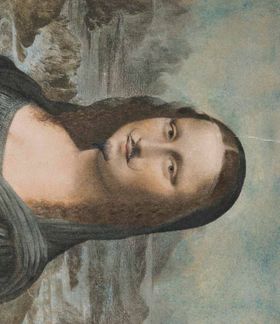
Edited with text by Matthew Affron, Michelle Kuo, Ann Temkin. Text by Danielle Cooke, Alexandra Drexelius, Helena Klevorn, Julia Vazquez.
An essential and lavishly illustrated visual compendium on the epoch-shifting artist whose radical vision reshaped art—and the museum—forever
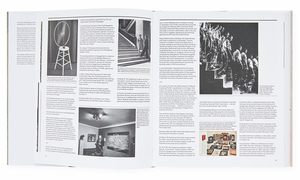
More than any other modern artist, Marcel Duchamp challenged and transformed the very definition of art. Published to accompany the first North American retrospective of his work in more than 50 years, the volume features the world's largest collection of Duchamp's work, bringing together such iconic works as Fountain and Nude Descending a Staircase for the first time in decades. Beautifully illustrated with more than 400 works spanning six decades—including painting, sculpture, readymades, film, photography and ephemera—and featuring a deeply researched chronology interwoven with archival and documentary material, Marcel Duchamp offers a new generation the first opportunity to experience the breadth of Duchamp's revolutionary and provocative work, strongly associated with the Surrealist and Dada movements. An expansive introduction by curators Ann Temkin, Michelle Kuo and Matthew Affron explores Duchamp's radical rethinking of art and the museum, transformation of authorship, innovative exhibition and installation displays, and lifelong dedication to changing the relationship between art and life. Revealing new dimensions of his conceptual brilliance, subversive wit and lasting impact on generations of artists, Marcel Duchamp is a rich visual compendium and an essential resource for anyone seeking to understand an artist who changed the course of modern art. Although Marcel Duchamp (American, born France, 1887–1968) defied definition or association with any single movement, he is perhaps the most impactful artist of the modern era in Europe as well as in the United States. Despite his place as a central figure in numerous artistic groups in both countries—including Cubism, Dada and Surrealism—Duchamp resisted categorization, prioritizing creative individuality. Though he is primarily remembered as an artist, he was also a curator, conservator, art advisor, professional chess player, writer, inventor and celebrity.
PRAISE AND REVIEWS
Hyperallergic
Hakim Bishara
This image-rich book will accompany the king of the readymade’s first North American retrospective in 50 years, opening this April at the Museum of Modern Art in New York. Can't wait for both the exhibition and the book.
The New York Times
Blake Gopnik
Duchamp helps us understand that ‘art’ shouldn’t be thought of as a noun that picks out certain kindsof objects, but as a verb: We ‘art’ absolutely any object at all by using it to trigger thoughts andconversation.
Artnet
Ben Davis
Not all art that works with concepts is meant to be reduced to general communication; some is meant not to, to define a secret code, a specific language. Duchamp plays between the two, and the playing is the art. He’s still a prophet in this telling, just one whose prophetic texts haven’t yet been exhausted.
The New York Times
Holland Cotter
Duchamp helps us understand that ‘art’ shouldn’t be thought of as a noun that picks out certain kindsof objects, but as a verb: We ‘art’ absolutely any object at all by using it to trigger thoughts andconversation.
The Art Newspaper
Ben ` Luke
The exhibition will reflect the loops and the reiterations, the false starts and loose ends of a singular career.
Hyperallergic
Lisa Yin Zhang
[Duchamp is] the reason art today can be gloriously inventive, wonderfully permissive, mystifyingly experimental, beautifully opaque.
Puck
Marion Maneker
Before Duchamp, works of art were made by artists. Afterward, art was whatever an artist made.
The New Yorker
Hilton Als
Love isn’t a word, or a concept, that one usually associates with Marcel Duchamp, the modernist master of irony and distance, but love—love of the mind and what it can do, love of bodies and play, love of freedom, love of what art can be, love of women, queerdom, poetry, and chance—is what makes 'Marcel Duchamp' such a wonder.
Apollo
Nicole Rudick
Duchamp most certainly provided a new model for what being an artist looked like....
The Observer
Elisa Carolle
[Presents] Duchamp not only as the father of conceptual art but also as a techno-imaginative innovatorand semiotic pioneer who anticipated how we read images, language and reality today.
Hyperallergic
Hakim Bishara
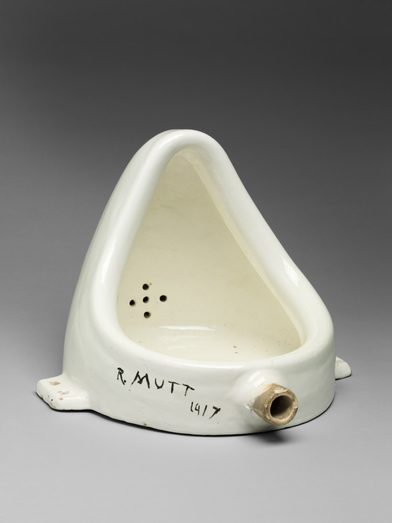
In 1917, Marcel Duchamp turned a urinal on its head and called it art. With that, he earned his place in the canon as the great usurper of artistic norms, the enemy of yesteryear’s tastemakers, the banisher of everything that came before him, and the godfather of art provocateurs.
Cultured
John Vincler
[Charts] how Duchamp invented contemporary art one idea at a time.
Artforum
Helen Molesworth
[Lays] out Duchamp’s production in an excellent and richly annotated timeline.
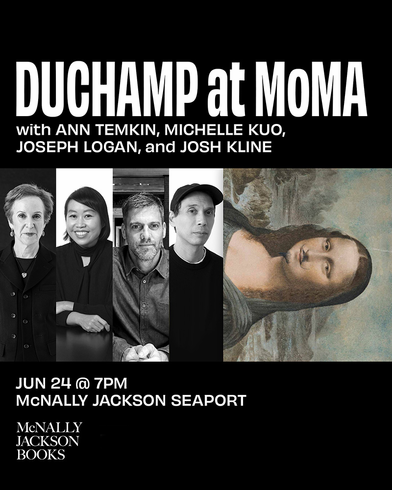
Wednesday, June 24, at 7 PM, McNally Jackson Seaport presents a celebration of Marcel Duchamp, whose radical vision reshaped art—and the role of the artist—forever. In honor of the landmark exhibition Marcel Duchamp—the first major North American retrospective of the artist’s work in over fifty years—and the accompanying publication, join MoMA curators Ann Temkin and Michelle Kuo, book designer Joseph Logan and artist Josh Kline for an in-depth discussion of Duchamp’s category-defying life and work, and his ongoing legacy and resonance for 21st-century artists. continue to blog
Last week, MoMA’s highly-anticipated Marcel Duchamp survey opened at last, and the echoes have not ceased to reverberate throughout the city and the international art world—with no end in sight. The first North American retrospective of the artist’s work in more than fifty years—featuring the world’s largest collection of Duchamp’s work—this historic exhibition travels to Philadelphia in the fall, where iconic pieces like Fountain (1950 replica, after a lost 1917 original), featured here, will reunite with several works that are too delicate or entrenched to be moved, including the Large Glass, The Bride Stripped Bare by Her Bachelors, Even (1915–1923) and the haunting (perhaps haunted) assemblage, Étant donnés (1946–1966). Certainly, this is a show that many art lovers will want to see more than once. We congratulate the curators, Anne Tempken and Michelle Kuo from MoMA and Matthew Affron from the PMA. The full breadth of their work, their research and their scholarship can perhaps only be appreciated in the definitive exhibition catalog, featuring 1000 color reproductions over 360 pages. continue to blog
FORMAT: Hbk, 9 x 10.5 in. / 360 pgs / 1000 color. LIST PRICE: U.S. $75.00 LIST PRICE: CANADA $105 ISBN: 9781633451803 PUBLISHER: The Museum of Modern Art, New York AVAILABLE: 5/5/2026 DISTRIBUTION: D.A.P. RETAILER DISC: TRADE PUBLISHING STATUS: Active AVAILABILITY: In stock TERRITORY: NA ONLY
Published by The Museum of Modern Art, New York. Edited with text by Matthew Affron, Michelle Kuo, Ann Temkin. Text by Danielle Cooke, Alexandra Drexelius, Helena Klevorn, Julia Vazquez.
An essential and lavishly illustrated visual compendium on the epoch-shifting artist whose radical vision reshaped art—and the museum—forever
More than any other modern artist, Marcel Duchamp challenged and transformed the very definition of art. Published to accompany the first North American retrospective of his work in more than 50 years, the volume features the world's largest collection of Duchamp's work, bringing together such iconic works as Fountain and Nude Descending a Staircase for the first time in decades. Beautifully illustrated with more than 400 works spanning six decades—including painting, sculpture, readymades, film, photography and ephemera—and featuring a deeply researched chronology interwoven with archival and documentary material, Marcel Duchamp offers a new generation the first opportunity to experience the breadth of Duchamp's revolutionary and provocative work, strongly associated with the Surrealist and Dada movements. An expansive introduction by curators Ann Temkin, Michelle Kuo and Matthew Affron explores Duchamp's radical rethinking of art and the museum, transformation of authorship, innovative exhibition and installation displays, and lifelong dedication to changing the relationship between art and life. Revealing new dimensions of his conceptual brilliance, subversive wit and lasting impact on generations of artists, Marcel Duchamp is a rich visual compendium and an essential resource for anyone seeking to understand an artist who changed the course of modern art.
Although Marcel Duchamp (American, born France, 1887–1968) defied definition or association with any single movement, he is perhaps the most impactful artist of the modern era in Europe as well as in the United States. Despite his place as a central figure in numerous artistic groups in both countries—including Cubism, Dada and Surrealism—Duchamp resisted categorization, prioritizing creative individuality. Though he is primarily remembered as an artist, he was also a curator, conservator, art advisor, professional chess player, writer, inventor and celebrity.