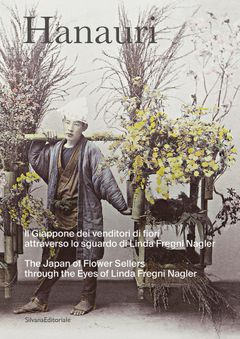
The Japan of Flower Sellers through the Eyes of Linda Fregni Nagler
Conversation with Linda Fregni Nagler.
A multimedia historical arrangement of the identity and iconography of Japanese street flower peddlers of the 19th century
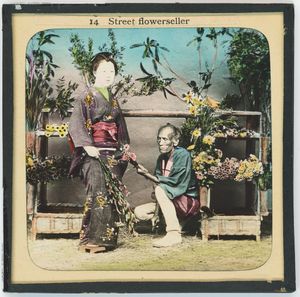
Using a variety of mediums to analyze a single subject, Hanauri is a project dedicated to the eponymous flower-selling peddlers of Edo and Meiji Japan. Artist and collector Linda Fregni Nagler selects 26 albumen prints from the mid-19th century and presents them alongside six large silver salt prints hand-colored by the artist and four stereoscopic glass positives, all depicting this class of street vendor. In conversation with these photographs, Fregni Nagler draws in a swath of contemporaneous materials: woodcuts that decry the iconography of hanauri; prints by Utagawa Kunisada including Toyokuni III from the series Six sellers on summer evenings; precious kesa textiles from the MAO collection; three kimonos; and fine lacquerware and kakemono. Together, these objects provide a link to image-making both before and after the invention of photography.
FORMAT: Pbk, 6.75 x 9.5 in. / 112 pgs / 85 color. LIST PRICE: U.S. $25.00 LIST PRICE: CANADA $35 ISBN: 9788836660377 PUBLISHER: Silvana Editoriale AVAILABLE: 5/12/2026 DISTRIBUTION: D.A.P. RETAILER DISC: TRADE PUBLISHING STATUS: Active AVAILABILITY: In stock TERRITORY: NA LA ASIA AU/NZ AFR ME
Hanauri The Japan of Flower Sellers through the Eyes of Linda Fregni Nagler
Published by Silvana Editoriale. Conversation with Linda Fregni Nagler.
A multimedia historical arrangement of the identity and iconography of Japanese street flower peddlers of the 19th century
Using a variety of mediums to analyze a single subject, Hanauri is a project dedicated to the eponymous flower-selling peddlers of Edo and Meiji Japan. Artist and collector Linda Fregni Nagler selects 26 albumen prints from the mid-19th century and presents them alongside six large silver salt prints hand-colored by the artist and four stereoscopic glass positives, all depicting this class of street vendor. In conversation with these photographs, Fregni Nagler draws in a swath of contemporaneous materials: woodcuts that decry the iconography of hanauri; prints by Utagawa Kunisada including Toyokuni III from the series Six sellers on summer evenings; precious kesa textiles from the MAO collection; three kimonos; and fine lacquerware and kakemono. Together, these objects provide a link to image-making both before and after the invention of photography.