| |||||||||||||||||||||||||
ARTIST MONOGRAPHS
|
|
STATUS: Out of stock Temporarily out of stock pending additional inventory. |
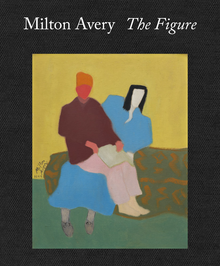 Milton Avery: The Figure
Published by Karma Books, New York.
Text by Adelyn Breeskin, Massimiliano Gioni, Catherine Lampert, John B. Ravenal. Additional contributions by Sean Cavanaugh, Sanya Kantarovsky, Nicolas Party, Helen Molesworth, Lucy Bull, Marley Freeman, Monica Majoli.
The first to focus exclusively on Milton Avery’s (1885–1965) figurative works, this volume is published in conjunction with Karma’s exhibitions in New York (2025) and Los Angeles (2026). Distilling his subjects to color, line, pattern and light, Avery sought what he called “the purity and essence of the idea—expressed in its simplest form.” His intimate impressions of the world around him and its cast of characters attest to his poetic approach to painting, which inspired numerous younger artists in his orbit—including Mark Rothko and Adolph Gottlieb—to seek their own lyricism, and remains influential to this day. In tandem with archival images, plates and installation photography, this publication features new scholarship by art historians Catherine Lampert and John B. Ravenal; a conversation between curator Massimiliano Gioni, artists Sanya Kantarovsky and Nicolas Party, and Avery’s grandson and fellow artist Sean Cavanaugh; curator and writer Helen Molesworth in conversation with artists Lucy Bull, Marley Freeman and Monica Majoli; and a 1960 essay by curator Adelyn Breeskin on the occasion of Avery’s retrospective at the American Federation of Arts in New York.
PUBLISHER
Karma Books, New York
BOOK FORMAT
Clth, 9.5 x 11.5 in. / 184 pgs / 140 color / 7 bw.
PUBLISHING STATUS
Pub Date 11/3/2026
Forthcoming
DISTRIBUTION
D.A.P. Exclusive
Catalog: FALL 2026 p. 79
PRODUCT DETAILS
ISBN 9781961883345 TRADE
List Price: $75.00 CAD $105.00 GBP £62.00
AVAILABILITY
Awaiting stock
STATUS: Forthcoming | 11/3/2026 This title is not yet published in the U.S. To pre-order or receive notice when the book is available, please email orders @ artbook.com |