| RECENT POSTS DATE 10/22/2026 DATE 10/14/2026 DATE 9/20/2026 DATE 9/16/2026 DATE 9/13/2026 DATE 9/12/2026 DATE 9/11/2026 DATE 9/11/2026 DATE 9/3/2026 DATE 8/30/2026 DATE 8/27/2026 DATE 8/25/2026 DATE 8/20/2026
| | | Herbert Pföstl's 2025 D.A.P. Highlights at the New Museum StoreDATE 12/18/2025 There are, of course, no "best books," but only very good ones. Secrets and sanctuaries. Radical shimmers. Here are twenty of Herbert Pfostl's favorite titles from among the many fine books that made it to the New Museum store in 2025.
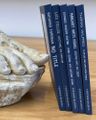 1. The Further Reading Library: The First Five Books | Christine Burgin and Andrew Lampert, Ed. | Christine Burgin 1. The Further Reading Library: The First Five Books | Christine Burgin and Andrew Lampert, Ed. | Christine Burgin
The first five books of the Burgin/Lampert Further Reading Library offer gems of wonder from the twilight zones between art and science. They are presented as singular gestures united by a vision to find, gather and circulate "forgotten ideas, overlooked accomplishments and idiosyncratic world views." Each book explores—through a collection of original documents, photographs and primary source material—a body of work, a specific topic or an individual. Introduced hereby are: avant-garde dancer Loïe Fuller (1862–1928), who worked with light and wanted to dance in radium; inventor, designer, artist and musician Thomas Wilfred (1889–1968), who created Lumia home "light organs"; sci-fi author and obsessive investigator into ancient mysteries, Richard Sharpe Shaver (1907–1975), who believed that stones bore truths about ancient mythical races; aphoristic declarations and philosophical asides from the pioneer of New York's experimental theatre scene, founder of the Ontological-Hysteric Theater company, Richard Foreman (1937–2025); and, last but certainly not least, singer, philanthropist and inventor Margaret Watts Hughes (1842–1907), creator of the “eidophone,” a device that recorded sound waves by etching them onto glass slides. Highly recommended, all!
| 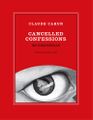 2. Claude Cahun: Cancelled Confessions (or Disavowals) | Claude Cahun | Siglio
“Aveux non Avenus,” translated here as "Cancelled Confessions (or Disavowals)," was written, compiled and illustrated in Paris in the 1920s and first published in 1930. Its author, Claude Cahun (born Lucy Renée Mathilde Schwob, niece of the "passive adventurer" Marcel Schwob), created her "confessions without deceit" in response to an invitation to write an autobiography. Cahun's memoir in cypher form staged its ever-mutating inquiry into the instability of "self" and its many masks as shape-shifting, gender-bending, Marxist-inflected mischief-making cri de cœurs. All in favor of outcasts and cast-offs, the ambiguous and alliterative, the unknowable and the unknown. Cancelled Confessions, illustrated with photomontages composed by Marcel Moore and Claude Cahun, includes the chant-like 1930 preface by Pierre Mac Orlan, along with enlightening words by Amelia Groom, and translator's notes by Susan de Muth. Redesigned to emulate the original artist's book, this spot-on edition is sturdily built, beautifully designed and a pleasure to have and hold.
|  3. The Places of Marguerite Duras | Marguerite Duras | Magic Hour Press 3. The Places of Marguerite Duras | Marguerite Duras | Magic Hour Press
This poignantly beautiful little book is built around memories of specific places in the life of the writer, filmmaker and film theorist Marguerite Duras. It tells of forests, gardens and houses—and their "talismanic properties." It remembers the feral freedom of childhood, and the musical force of longing and loss. It reflects on home as a "psychic space, an engine of plot, a maker of witches, even a form of cinema." The lovingly designed publication is accompanied by carefully selected photographs and film stills. Marguerite, we miss you.
| 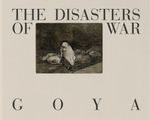 4. Goya: The Disasters of War | Francisco Goya | La Fábrica 4. Goya: The Disasters of War | Francisco Goya | La Fábrica
Francisco Goya didn't have to wait for our time to realize that humanity was headed for insolubility and darkness. His shards-sharp integrity and visionary imagination pulls the rug out from under us. Unblinkered and unconstrained by religions or ideologies, alone and ailing, Goya labored for ten years on his astonishing Disasters of War. This clothbound reproduction of the first edition of these radically unflinching etchings about the consequences of war is exquisitely printed "on paper that closely resembles the texture of the original engravings," as well as mirroring the original format and scale. The book contains no text—apart from a very brief editorial introduction and the bitter-bitingly ironic titles Goya gave each etching—and it doesn't need any. "Terribly contemporary" indeed. Look closely and weep.
| 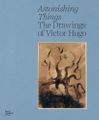 5. Astonishing Things: The Drawings of Victor Hugo | Royal Academy of Arts 5. Astonishing Things: The Drawings of Victor Hugo | Royal Academy of Arts
Novelist, poet and politician Victor Hugo (1802–1885) was a towering figure of 19th-century French society, both in the realm of politics (where he advocated for an end to slavery, capital punishment and absolute monarchy) and literature (as the creator of The Hunchback of Notre Dame and Les Misérables). While living in exile from 1851 to 1870, he pursued an obsessive passion for spiritualism—and drawing. The results of this refuge into the visionary were shown almost exclusively to friends and family alone, without any attempt to address or please the art world. Hugo's experimental approach to visual expression seems limitless. He splashed and blotted, used impressions of lace and leaves, coffee grounds or dust. He placed letters of the alphabet throughout his images like secret signs or signals. His conjured phantasms vacillate between the depiction of landscapes (trees, stones, clouds, seascapes), architecture (castles, bridges, spiders' webs), and creatures (tortured figures, animals, hanged men)—and alchemical renderings of abstract forms and stains. These strange works on paper—"made in the margins with what remained of the ink from my pen"—are the subject of Astonishing Things, published by the Royal Academy of Arts in collaboration with Maison de Victor Hugo and the Bibliothèque nationale de France. This is not the first book in English about Hugo's enigmatic drawings, but it is a beaut and you should have it.
| 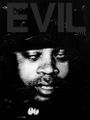 6. Arthur Jafa: Live Evil | Arthur Jafa | Walter König, Köln / LUMA Arles 6. Arthur Jafa: Live Evil | Arthur Jafa | Walter König, Köln / LUMA Arles
"A lot of Black artists do uplift, but I don't really do uplift. I'm an undertaker."
—Arthur Jafa
American artist and filmmaker/cinematographer Arthur Jafa was born in 1960 in Tupelo, Mississippi (not inconsequentially the birth-place of Elvis Presley) and raised in highly segregated Clarksdale, Mississippi. An alchemist of juxtaposition, his work of historical excavation and transpositioning through layered visuals from archive(d) material(s) has forged a rich trail through the deep terrain of Black history with its complex reverberations and cultural representations in America and around the world. Bringing together affecting memories that touch on US history, violence and repression, the book bears witness to the deep soul and irresistible force of Black life, and stands as an emblematic epiphany-gesture, a warning sign and a mark of radiant resistance. Art as a matter of life and death. Building off of Jafa's monumental LUMA, Arles exhibition of the same name, this heavily illustrated, 360-page catalog-as-picture-book presents a comprehensive and deeply immersive overview of his work over several decades, and explores the philosophical, historical and artistic implications of his practice. It features essays and a series of conversations between the artist and key practitioners working in the fields of cinema, arts and theory.
| 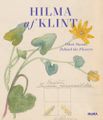 7. Hilma af Klint: What Stands Behind the Flowers | Jodi Hauptman, Ed. | The Museum of Modern Art, New York 7. Hilma af Klint: What Stands Behind the Flowers | Jodi Hauptman, Ed. | The Museum of Modern Art, New York
At the turn of the twentieth century, the Swedish artist and mystic Hilma af Klint created a body of work that left visible reality behind, exploring the radical possibilities of abstraction years before the movement's male luminaries Kandinsky, Malevich or Mondrian. More than a mere "pioneer of abstraction in art," Hilma af Klint focused her rigorous attention on the micro and the macro, the perceptible and invisible worlds of nature and the universe, mobilizing her artistic talent into a unique vocabulary in service of her vision and the dissemination of information. Her intense observation of and spiritual engagement with the flora of her native Sweden, across the spring and summer seasons of 1919 and 1920, is the focal point of What Stands Behind the Flowers—a truly wonderful volume, in content and design—which, together with Notes and Methods from 2018, stands among my favorite books about af Klint's artistic investigations into invisible relationships and hidden dimensions.
|  8. Alien Roots: Éliane Radigue : Blank Forms 10 | Eliane Radigue | Blank Forms Editions 8. Alien Roots: Éliane Radigue : Blank Forms 10 | Eliane Radigue | Blank Forms Editions
The tenth and final anthology from Blank Forms offers a deep dive into the profoundly complex and elusive work of "Parisian electronic composer" Éliane Radigue, whose calmly radical approach to music has long defied interpretation. This collection brings together key texts, newly translated primary documents, in-depth interviews and commissioned essays to delve into Radigue's "unreal, impalpable music," and "idiosyncratic compositional practice, which both embraces and confounds the iterative nature of magnetic tape, the subtleties of amplification and the very experience of listenership." An abundance of ephemera materials complement this essential and substantive, very handsome yet affordable publication.
| 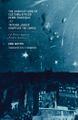 9. The Hashish Films of Customs Officer Henri Rousseau and Tatyana Joukof Shuffles the Cards : (A Novel against Psicho-Analise) | Emil Szittya | Wakefield Press 9. The Hashish Films of Customs Officer Henri Rousseau and Tatyana Joukof Shuffles the Cards : (A Novel against Psicho-Analise) | Emil Szittya | Wakefield Press
Austro-Hungarian vagabond poet, anarchist and historian of suicide, Emil Szittya's Hashish Films offers marvelously incautious texts riddled with fractured confessions and bewildering verdicts from the feral interwar years of the European avant-garde. Szittya's "minor epiphanies" in "anarchist orthography" testify to a dedication to hallucinations that possibly "rattled his cage" and may yet shake ours. This fine gem is the first of Szittya's books to appear in English. It was expertly translated by W. C. Bamberger and published by the always adventurous, ever exciting Wakefield Press. Group it on your shelf with Dada-Mystic Hugo Ball, one-armed adventurer-poet Blaise Cendrars, and the Comte de Lautréamont.
| |
 |
 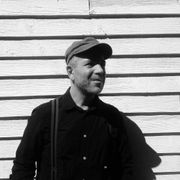 Veteran New Museum Book Buyer Herbert Pföstl is an Austrian artist, writer and literary translator. A painter of "departed landscapes, plants, animals, minerals and saints," his artworks are held in both public and private collections. His most recent solo exhibition, Between Field and Firmament, was at the Bolinas Museum. For his bread and butter he has worked with and for books all his life, creating selections—like this one for D.A.P. titles, 2025—for bookstores and private libraries.
Pföstl is the the author of To Die No More (Blind Pony Books, 2008), Light Issued Against Ruin (The Brother in Elysium, 2014), Schrift-Landschaften (Epidote Press, 2016), and Ideal Forms of Vanishing (The Brother in Elysium, 2021); co-author of Batailles Schleuder with Axel Matthes and László F. Földényi (Matthes & Seitz Berlin, forthcoming 2026); and translator (with Kristofor Minta) of A Shelter for Bells: From the Writings of Hans Jürgen von der Wense (Epidote Press, 2019), as well as a second volume of the writings of Hans Jürgen von der Wense, forthcoming 2026.
| |
|