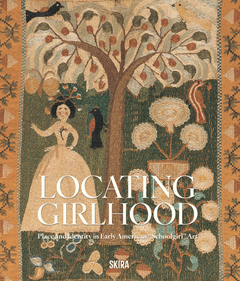
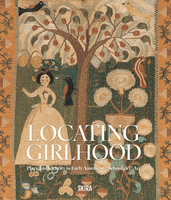
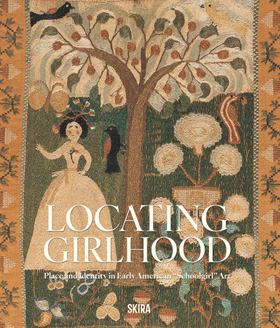
Locating Girlhood: Place and Identity in Early American “Schoolgirl” Art
Edited with text by Emelie Gevalt, Caroline Culp. Foreword by Laurel Thatcher Ulrich. Text by Elizabeth Bacon Eager, William Huntting Howell. Afterword by Andrea Pappas.
Repositioning early American women’s samplers, needleworks and watercolors within their rightful art historical context
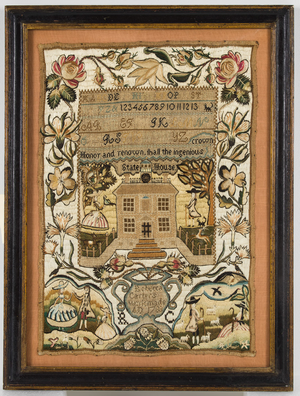
Before Thomas Cole climbed along the Catskills or Frederic Edwin Church surveyed Niagara Falls, the American landscape was already being visualized and commemorated by thousands of girls and young women—some named, many unknown—working in mediums that were termed domestic crafts or, more dismissively, “schoolgirl” art. From the 18th century onward, representations of landscape were a common visual thread in samplers, needlework pictures and watercolors, from country scenes and cityscapes to maps and other cartographic compositions. Timed to coincide with the US semiquincentennial, Locating Girlhood both celebrates the creativity of early American girls and women and critically examines the colonial and early federal ideologies that structured their worldview. This publication continues the lines of inquiry opened by the exhibition of the same name at the American Folk Art Museum, presenting nearly 100 exceptional objects from more than 35 museums and private collections, uniting celebrated masterpieces with remarkable lesser-known gems. By considering these works as deeply resonant expressions of place, Locating Girlhood both expands the story of the American landscape and situates women at its heart.
FORMAT: Hbk, 9.5 x 11 in. / 256 pgs / 125 color. LIST PRICE: U.S. $60.00 LIST PRICE: CANADA $84 ISBN: 9788857255170 PUBLISHER: SKIRA AVAILABLE: 10/27/2026 DISTRIBUTION: D.A.P. RETAILER DISC: TRADE PUBLISHING STATUS: Active AVAILABILITY: In stock TERRITORY: NA ONLY
Locating Girlhood: Place and Identity in Early American “Schoolgirl” Art
Published by SKIRA. Edited with text by Emelie Gevalt, Caroline Culp. Foreword by Laurel Thatcher Ulrich. Text by Elizabeth Bacon Eager, William Huntting Howell. Afterword by Andrea Pappas.
Repositioning early American women’s samplers, needleworks and watercolors within their rightful art historical context
Before Thomas Cole climbed along the Catskills or Frederic Edwin Church surveyed Niagara Falls, the American landscape was already being visualized and commemorated by thousands of girls and young women—some named, many unknown—working in mediums that were termed domestic crafts or, more dismissively, “schoolgirl” art. From the 18th century onward, representations of landscape were a common visual thread in samplers, needlework pictures and watercolors, from country scenes and cityscapes to maps and other cartographic compositions. Timed to coincide with the US semiquincentennial, Locating Girlhood both celebrates the creativity of early American girls and women and critically examines the colonial and early federal ideologies that structured their worldview. This publication continues the lines of inquiry opened by the exhibition of the same name at the American Folk Art Museum, presenting nearly 100 exceptional objects from more than 35 museums and private collections, uniting celebrated masterpieces with remarkable lesser-known gems. By considering these works as deeply resonant expressions of place, Locating Girlhood both expands the story of the American landscape and situates women at its heart.