Conflict, Culture, and Exchange in the Eighteenth Century
Edited with text by Ethan Lasser, Erica E. Hirshler. Text by Glenn Adamson, Layla Bermeo, Derek Burdette, Dennis Carr, Tara Cederholm, Adam Chen, Jennifer Chuong, Simona Di Nepi, Nonie Gadsden, Emelie Gevalt, Brendan McMahon, Mary Amanda McNeil, Christina Michelon, Alan Michelson, Lucía Abramovich Sánchez, Nanase Shirokawa, Kyera Singleton, Elizabeth Driscoll Smith, Paul Staiti, Emily Stoehrer, Jennifer Swope, Marina Tyquiengco, Gerald W.R. Ward, Kaylin Weber, Benjamin Weiss.
Toward a new “New World”—the interwoven 18th-century Americas as viewed through fine art, religious items, furniture, decorative objects and more
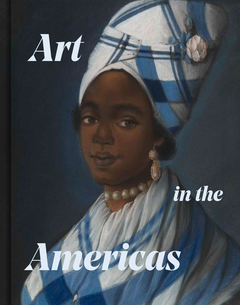
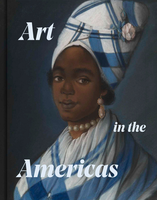
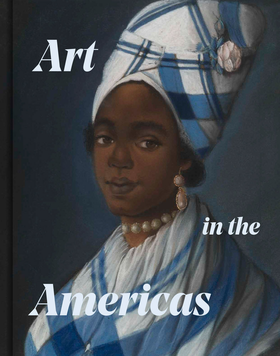
The story of 18th-century art from the Americas has traditionally emphasized a narrative of exceptionalism and independence. Yet the reality of this history is a far more nuanced story of encounter and interdependence across the geographic regions that are known today as North America, South America, Central America and the Caribbean. Drawing a cultural cartography with objects from the collection of the Museum of Fine Arts, Boston, Art in the Americas illustrates the exchange of ideas, materials, styles and techniques in the Western hemisphere. Family portraits by John Singleton Copley pair with pastel drawings of Black women in Guadeloupe; delicate blue-and-white Chinese export bowls sit alongside sterling silver Torah finials; an inlaid cabinet made in New Spain dazzles next to an Andean tapestry. Together with dozens of other objects, these works invert the typical dynamics of old world and new world; colonizer and colonized; tradition and innovation. Bolstered with essays by 27 writers, Art in the Americas reflects the range of voices who created fine and decorative arts in the 18th century, and those who study and present their legacy today.
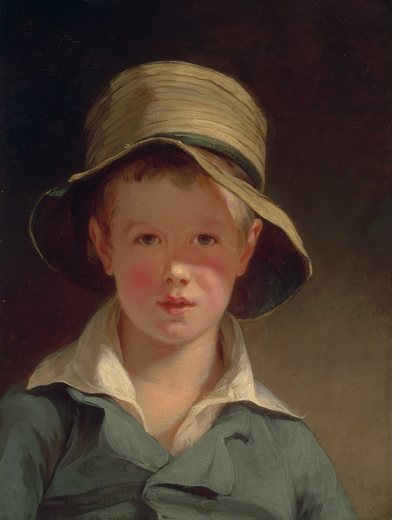
The Torn Hat, English-American painter Thomas Sully’s 1820 portrait of his nine-year-old son, Thomas Wilcocks Sully, is reproduced from Art in the Americas: Conflict, Culture, and Exchange in the Eighteenth Century, published by MFA Publications on the occasion of America’s 250th. One of 140 color reproductions by artists across the Western hemisphere and made from the 1700s into the 1800s, it is emblematic of a shift in painting style that corresponded with changing definitions of childhood. “Romantic ideas, which emphasized imagination and emotion over the rationality of the Enlightenment period, migrated to the United States from Europe and inspired artists’ attempts to capture the moods and inner lives of their subjects,” Layla Bermeo writes. “As thinkers rejected colonial-era notions of children as incomplete adults and instead viewed young people as innocent and worthy of nurturing, they redefined play as natural and educational. Loosely encircling his head, the boy’s hat is richly suggestive of his own world, filled with physical activity and adventure.… At a time when his portrait sales were declining, raising concerns about how he would continue to make a living, [Thomas] Sully found a fresh artistic approach through his experiences as a father. In the years that followed, his expressive portrayals of children became some of his most highly regarded, and regularly commissioned, works of art.” continue to blog
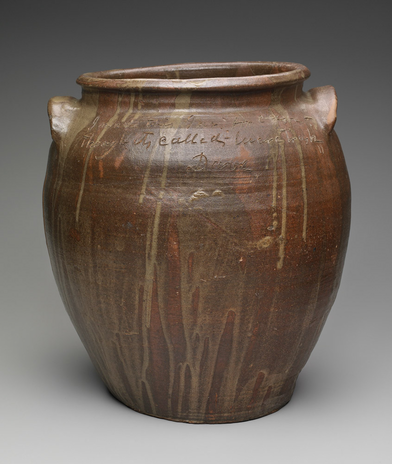
For this holiday weekend, we can think of no better book to feature than MFA Publications’ Art in the Americas: Conflict, Culture, and Exchange in the Eighteenth Century, contrasting works from the collection of MFA Boston in order to disrupt concepts of old world versus new, colonizer versus colonized, tradition versus innovation. Pictured here, a storage jar by David Drake, 1857. Co-editor Ethan W. Lasser writes: “In 1857, far from Boston, on a plantation in Edgefield, South Carolina, the enslaved potter Dave (who later took the name David Drake) etched a short poem into the shoulder of a stoneware storage jar. Dave worked under particularly precarious conditions. In South Carolina on the eve of the Civil War, it was illegal for enslaved people to read and write. Yet, like [Paul] Revere, Dave inscribed his name and the date alongside a strongly worded inscription that spoke truth to power: “I made this Jar = for cash / Though its called Lucre trash.” With these lines, Dave announced his role as maker and challenged those that undervalued his labor.” continue to blog
FORMAT: Hbk, 8.25 x 10.5 in. / 288 pgs / 140 color. LIST PRICE: U.S. $50.00 LIST PRICE: CANADA $70 GBP £40.00 ISBN: 9780878469116 PUBLISHER: MFA Publications, Museum of Fine Arts, Boston AVAILABLE: 7/14/2026 DISTRIBUTION: D.A.P. RETAILER DISC: TRADE PUBLISHING STATUS: Active AVAILABILITY: In stock TERRITORY: WORLD
Art in the Americas Conflict, Culture, and Exchange in the Eighteenth Century
Published by MFA Publications, Museum of Fine Arts, Boston. Edited with text by Ethan Lasser, Erica E. Hirshler. Text by Glenn Adamson, Layla Bermeo, Derek Burdette, Dennis Carr, Tara Cederholm, Adam Chen, Jennifer Chuong, Simona Di Nepi, Nonie Gadsden, Emelie Gevalt, Brendan McMahon, Mary Amanda McNeil, Christina Michelon, Alan Michelson, Lucía Abramovich Sánchez, Nanase Shirokawa, Kyera Singleton, Elizabeth Driscoll Smith, Paul Staiti, Emily Stoehrer, Jennifer Swope, Marina Tyquiengco, Gerald W.R. Ward, Kaylin Weber, Benjamin Weiss.
Toward a new “New World”—the interwoven 18th-century Americas as viewed through fine art, religious items, furniture, decorative objects and more
The story of 18th-century art from the Americas has traditionally emphasized a narrative of exceptionalism and independence. Yet the reality of this history is a far more nuanced story of encounter and interdependence across the geographic regions that are known today as North America, South America, Central America and the Caribbean. Drawing a cultural cartography with objects from the collection of the Museum of Fine Arts, Boston, Art in the Americas illustrates the exchange of ideas, materials, styles and techniques in the Western hemisphere. Family portraits by John Singleton Copley pair with pastel drawings of Black women in Guadeloupe; delicate blue-and-white Chinese export bowls sit alongside sterling silver Torah finials; an inlaid cabinet made in New Spain dazzles next to an Andean tapestry. Together with dozens of other objects, these works invert the typical dynamics of old world and new world; colonizer and colonized; tradition and innovation. Bolstered with essays by 27 writers, Art in the Americas reflects the range of voices who created fine and decorative arts in the 18th century, and those who study and present their legacy today.