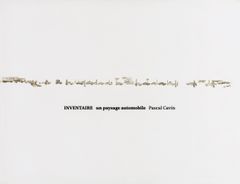
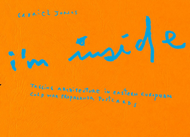
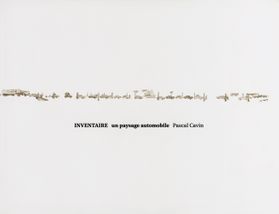
In 1967, Jean-Luc Godard released his celebrated film Weekend. Its most famous scene, in which the two protagonists stubbornly overtake an extensive traffic jam in a Facel Vega Facellia cabriolet, is one of the longest tracking shots in the history of cinema: the camera slowly passes by the line of about 40 motionless cars whose occupants employ the most varied techniques to kill time. In what for Godard is a metaphor for life--the camera's journey ends in a pool of blood, the victims and the crippled cars have meanwhile been cleared from the street--photographer Pascal Cavin sees an impressive catalogue of cars. By isolating and labeling the individual vehicles in 45 stills, he creates a thorough historical inventory of the automobile types populating the streets in the late 1960s.
FORMAT: Hbk, 9 x 6.75 in. / 98 pgs / 45 color. LIST PRICE: U.S. $30.00 LIST PRICE: CANADA $42 ISBN: 9783869309644 PUBLISHER: Steidl AVAILABLE: 7/14/2026 DISTRIBUTION: D.A.P. RETAILER DISC: FLAT40 PUBLISHING STATUS: Cancelled AVAILABILITY: Not available TERRITORY: NA ONLY
In 1967, Jean-Luc Godard released his celebrated film Weekend. Its most famous scene, in which the two protagonists stubbornly overtake an extensive traffic jam in a Facel Vega Facellia cabriolet, is one of the longest tracking shots in the history of cinema: the camera slowly passes by the line of about 40 motionless cars whose occupants employ the most varied techniques to kill time. In what for Godard is a metaphor for life--the camera's journey ends in a pool of blood, the victims and the crippled cars have meanwhile been cleared from the street--photographer Pascal Cavin sees an impressive catalogue of cars. By isolating and labeling the individual vehicles in 45 stills, he creates a thorough historical inventory of the automobile types populating the streets in the late 1960s.