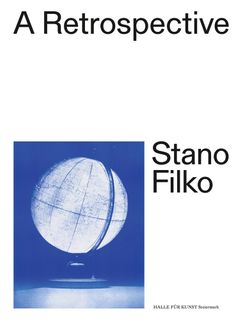
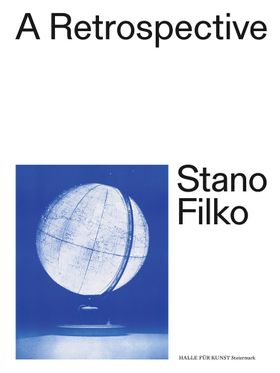
Text by Boris Ondreicka, Christian Höller, Hans Ulrich Obrist, Jan Verwoert, Lucia Gregorová Stach, Mira Keratová, Patrizia Grzonka, Sandro Droschl.
On the visionary oeuvre of a protagonist of Eastern Europe's 1960s avant-garde
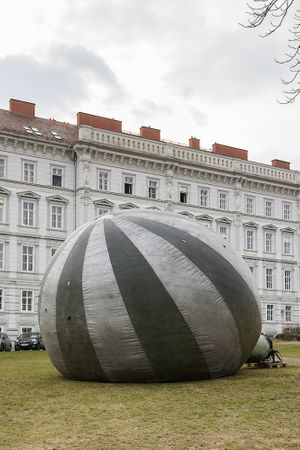
An influential figure in the Slovakian avant-garde, Stano Filko (1937–2015) synthesized Pop art, Fluxus and Conceptual art into a universalist vision of art and life influenced by subjects such as modernist architecture, mathematical algorithms and the cosmos. He designed hybrid objects and environments, assemblages, text-based works and performances that attempted to circumvent state repression. Among his acclaimed bodies of work are the Altar assemblages of the mid-1960s and the Bomb series. Having fled to West Germany in 1981, Filko exhibited at Documenta 7 in Kassel in 1982, and then relocated to New York, where he took up neo-expressionist painting, embracing a rainbow-colored chakra system that he explored for the rest of his life. This first English-language publication on Filko approaches his multilayered oeuvre from various perspectives.
in stock $55.00
Free Shipping
UPS GROUND IN THE CONTINENTAL U.S. FOR CONSUMER ONLINE ORDERS
FORMAT: Pbk, 8.25 x 11 in. / 224 pgs / 100 color. LIST PRICE: U.S. $55.00 LIST PRICE: CANADA $76 ISBN: 9783775753418 PUBLISHER: Hatje Cantz AVAILABLE: 7/4/2023 DISTRIBUTION: D.A.P. RETAILER DISC: TRADE PUBLISHING STATUS: Active AVAILABILITY: In stock TERRITORY: NA LA
Published by Hatje Cantz. Text by Boris Ondreicka, Christian Höller, Hans Ulrich Obrist, Jan Verwoert, Lucia Gregorová Stach, Mira Keratová, Patrizia Grzonka, Sandro Droschl.
On the visionary oeuvre of a protagonist of Eastern Europe's 1960s avant-garde
An influential figure in the Slovakian avant-garde, Stano Filko (1937–2015) synthesized Pop art, Fluxus and Conceptual art into a universalist vision of art and life influenced by subjects such as modernist architecture, mathematical algorithms and the cosmos. He designed hybrid objects and environments, assemblages, text-based works and performances that attempted to circumvent state repression. Among his acclaimed bodies of work are the Altar assemblages of the mid-1960s and the Bomb series. Having fled to West Germany in 1981, Filko exhibited at Documenta 7 in Kassel in 1982, and then relocated to New York, where he took up neo-expressionist painting, embracing a rainbow-colored chakra system that he explored for the rest of his life.
This first English-language publication on Filko approaches his multilayered oeuvre from various perspectives.