Edited with text by Susanne Pfeffer. Text by Benjamin H. D. Buchloh, E.N. Mirembe, Hannah Black, Manthia Diawara, Terri Geis, Melanie Herzog, Precious Okoyomon.
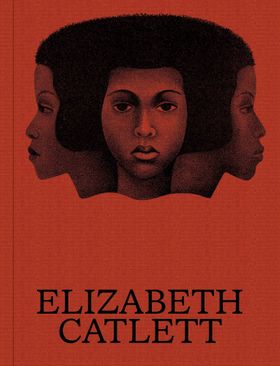
A richly illustrated rediscovery of Elizabeth Catlett: printmaker, sculptor and tireless advocate for human rights
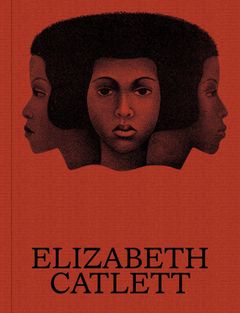
Born in Washington, DC, Elizabeth Catlett (1915–2012) moved to Mexico in 1946. Still, her artwork always remained attuned to the Black American experience. Her expressive linocuts of sharecroppers, fieldworkers or, more symbolically, “survivors” depicted the lived realities of Black men and women, while her prints of Harriet Tubman and Phyllis Wheatley constructed a new national history. Catlett’s body of work shares both aesthetic and theoretical sensibilities with major regional movements and their figures: women sculptors and printmakers working in Europe, including Barbara Hepworth and Käthe Kollwitz; Black American artists operating in an overtly political vein including John Woodrow Wilson and Jacob Lawrence; and members of the modernist “Mexican School,” including her partner, muralist Francisco Mora. In the late 1950s Catlett transitioned from printmaking to sculpture, creating softer, more sensuous figures of seated and reclining women or mothers cradling their children. However, she remained a ceaseless activist, especially for the rights of Black and Mexican women, and believed in making fine art accessible to all. This publication commemorates the first institutional survey of her work.
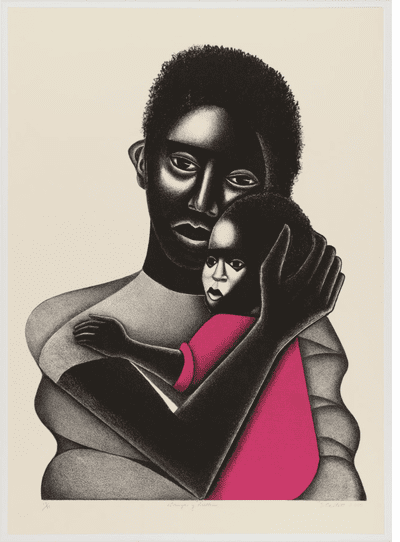
Danys y Liethis (2005) is from Elizabeth Catlett, one of the most stunning catalogs on our entire list. Oversized with a soft canvas cover, the book features ingenious canvas section dividers precisely matched to the rich red, blue, green, purple and orange colors of the installation walls of Catlett’s recent exhibition at Museum für Moderne Kunst in Frankfurt, Germany—which blend, in this book, perfectly into the background colors of the pages of the plate sections of the book itself. “I have always wanted my art to service my people,” Catlett is quoted. “To reflect us, to relate to us, to stimulate us, to make us aware of our potential […] We have to create an art for liberation and for life.” continue to blog
FORMAT: Pbk, 9.75 x 12.5 in. / 242 pgs / 201 color. LIST PRICE: U.S. $55.00 LIST PRICE: CANADA $77 ISBN: 9783753307022 PUBLISHER: Walther König, Köln AVAILABLE: 9/23/2025 DISTRIBUTION: D.A.P. RETAILER DISC: FLAT40 PUBLISHING STATUS: Out of print AVAILABILITY: Not available TERRITORY: NA LA ASIA AU/NZ AFR
Published by Walther König, Köln. Edited with text by Susanne Pfeffer. Text by Benjamin H. D. Buchloh, E.N. Mirembe, Hannah Black, Manthia Diawara, Terri Geis, Melanie Herzog, Precious Okoyomon.
A richly illustrated rediscovery of Elizabeth Catlett: printmaker, sculptor and tireless advocate for human rights
Born in Washington, DC, Elizabeth Catlett (1915–2012) moved to Mexico in 1946. Still, her artwork always remained attuned to the Black American experience. Her expressive linocuts of sharecroppers, fieldworkers or, more symbolically, “survivors” depicted the lived realities of Black men and women, while her prints of Harriet Tubman and Phyllis Wheatley constructed a new national history. Catlett’s body of work shares both aesthetic and theoretical sensibilities with major regional movements and their figures: women sculptors and printmakers working in Europe, including Barbara Hepworth and Käthe Kollwitz; Black American artists operating in an overtly political vein including John Woodrow Wilson and Jacob Lawrence; and members of the modernist “Mexican School,” including her partner, muralist Francisco Mora.
In the late 1950s Catlett transitioned from printmaking to sculpture, creating softer, more sensuous figures of seated and reclining women or mothers cradling their children. However, she remained a ceaseless activist, especially for the rights of Black and Mexican women, and believed in making fine art accessible to all. This publication commemorates the first institutional survey of her work.