Edited by Alex Klein, Jennifer Krasinski. Text by Carl Cheng, Rachel Eboh, Joel Ferree, Celien Govaerts, Alex Klein, Andres Pardey, Amanda Sroka, Gloria Sutton.
Cheng's genre-defying practice challenges our perceptions of environmental change and the role of technology in society
Published with The Contemporary Austin.
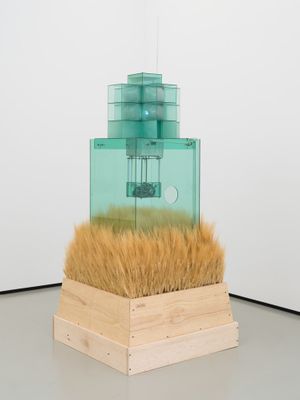
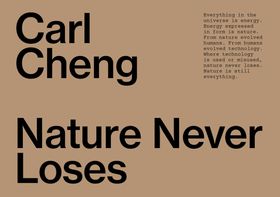
Carl Cheng (born 1942) first developed his art practice in Southern California in the 1960s amid a booming postwar aerospace industry, political unrest and an interdisciplinary art scene. In 1966 he incorporated his studio as John Doe Co., and from then on created sculptural "products" that reflect his conception of technology as an artistic tool. Originally recognized for his photographic sculptures, his inventive lexicon includes "art tools" employed in the production of ephemeral artworks, "nature machines" that anticipate an artificial world shaped by humans, kinetic installations and public art intended to reach broad audiences and question the relevance of art institutions. Nature Never Loses surveys six decades of Cheng’s prescient, genre-defying work and accompanies the eponymous traveling exhibition organized by the Contemporary Austin. It is the definitive guide to Cheng’s career, including a detailed overview of his most impressive works and an abundance of never-before-seen archival material.
FORMAT: Pbk, 8.75 x 12.5 in. / 448 pgs / 500 color / 400 b&w. LIST PRICE: U.S. $60.00 LIST PRICE: CANADA $84 GBP £51.00 ISBN: 9783037646205 PUBLISHER: JRP|Editions AVAILABLE: 5/26/2026 DISTRIBUTION: D.A.P. RETAILER DISC: TRADE PUBLISHING STATUS: Active AVAILABILITY: In stock TERRITORY: WORLD Excl AT CH DE FR
Published by JRP|Editions. Edited by Alex Klein, Jennifer Krasinski. Text by Carl Cheng, Rachel Eboh, Joel Ferree, Celien Govaerts, Alex Klein, Andres Pardey, Amanda Sroka, Gloria Sutton.
Cheng's genre-defying practice challenges our perceptions of environmental change and the role of technology in society
Published with The Contemporary Austin.
Carl Cheng (born 1942) first developed his art practice in Southern California in the 1960s amid a booming postwar aerospace industry, political unrest and an interdisciplinary art scene. In 1966 he incorporated his studio as John Doe Co., and from then on created sculptural "products" that reflect his conception of technology as an artistic tool. Originally recognized for his photographic sculptures, his inventive lexicon includes "art tools" employed in the production of ephemeral artworks, "nature machines" that anticipate an artificial world shaped by humans, kinetic installations and public art intended to reach broad audiences and question the relevance of art institutions.
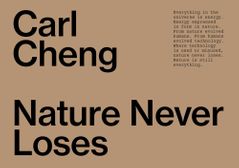
Nature Never Loses surveys six decades of Cheng’s prescient, genre-defying work and accompanies the eponymous traveling exhibition organized by the Contemporary Austin. It is the definitive guide to Cheng’s career, including a detailed overview of his most impressive works and an abundance of never-before-seen archival material.