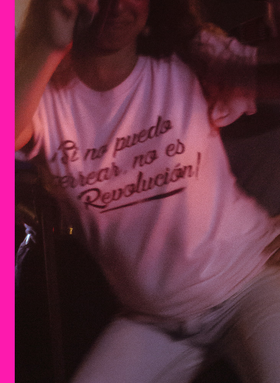
Dancing the Revolution: From Dancehall to Reggaetón
Edited with text by Carla Acevedo-Yates. Foreword by Madeleine Grynsztejn. Text by Julian Henriques, Sonjah Stanley Niaah, Juan Rivera, Ramón H. Rivera-Servera, nibia pastrana santiago.
The first publication to examine the visual, political and spiritual histories of dancehall, reggae en español, and reggaeton through the lens of contemporary art
Published with Museum of Contemporary Art Chicago.
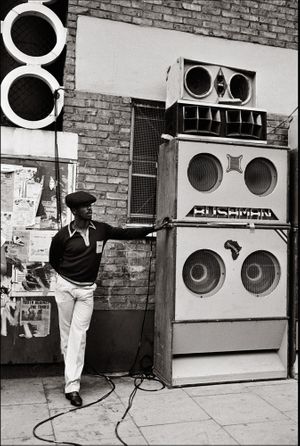
This bilingual (English/Spanish) book is the first critical volume to cover the complexity of Caribbean popular music through the lens of contemporary art, including the ways musical and social movements such as dancehall, reggae en español and reggaeton evolved into global phenomena. The book sheds light on the genres' migrations and shifting rhythms through contemporary artworks, while underscoring their social and political impact. It opens with an introduction by former Marilyn and Larry Fields Curator and Director of Curatorial Initiatives Carla Acevedo-Yates on the early days of the "underground" scene in San Juan, Puerto Rico, and its connections to contemporary art all over the world. The other five essays by different contributors draw attention to the politics and aesthetics of Caribbean popular music and the dance hall—a space where race, sexuality and class collide. Topics include the history and global spread of Jamaican sound system culture; the transnational history of reggaeton through reggae en español in Panama and Jamaican dancehall; the ways that feminist and queer spaces and aesthetics are growing within—and against—the male-dominated spaces and/or tropes related to these musical genres; and how dance amplified the 2019 demonstrations in Puerto Rico that brought about the resignation of then-governor Ricardo Rosselló. This multilayered publication presents artworks that examine and draw inspiration from music and dance as revolutionary practices for collective liberation rooted in the struggle against colonial oppression.
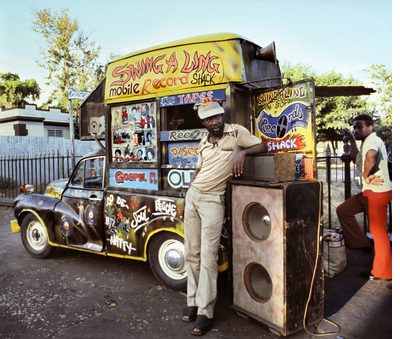
New from DelMonico Books, Dancing the Revolution: From Dancehall to Reggaetón is published to accompany the exhibition on view now at MCA Chicago. “In colonial contexts, music, dance and other forms of cultural expression are accessible ways to assert sovereignty amid the daily challenges of colonial violence,” Carla Acevedo Yates writes. “These are the ‘politics of enjoyment,’ a collective exercise of the senses, where Black Atlantic cultural performance practices serve as intangible sites in which sovereignty is reimagined and reclaimed. Like the beat of a drum, these practices awaken an essential life force within us. They allow us to access levels of embodied knowledge and joy that are intuitive and move with the improvisatory nature of Caribbean life itself—constantly adjusting and adapting to the sounds, rhythms, and sensations that surround us.” Featured photograph is by Adrian Boot, 1973. It is captioned: “Charlie Ace’s Swing-A-Ling mobile recording shop and studio. Run by Charlie Ace (real name Vernel Dixon), a legendary DJ in the 1970s as well as label owner of “Swing-A-Ling Records.” He worked with many producers including Lee Perry & Studio One. Sadly, Charlie Ace was gunned down, murdered in the early 1980s.” continue to blog
Dancing the Revolution: From Dancehall to Reggaetón
Published by DelMonico Books. Edited with text by Carla Acevedo-Yates. Foreword by Madeleine Grynsztejn. Text by Julian Henriques, Sonjah Stanley Niaah, Juan Rivera, Ramón H. Rivera-Servera, nibia pastrana santiago.
The first publication to examine the visual, political and spiritual histories of dancehall, reggae en español, and reggaeton through the lens of contemporary art
Published with Museum of Contemporary Art Chicago.
This bilingual (English/Spanish) book is the first critical volume to cover the complexity of Caribbean popular music through the lens of contemporary art, including the ways musical and social movements such as dancehall, reggae en español and reggaeton evolved into global phenomena. The book sheds light on the genres' migrations and shifting rhythms through contemporary artworks, while underscoring their social and political impact. It opens with an introduction by former Marilyn and Larry Fields Curator and Director of Curatorial Initiatives Carla Acevedo-Yates on the early days of the "underground" scene in San Juan, Puerto Rico, and its connections to contemporary art all over the world. The other five essays by different contributors draw attention to the politics and aesthetics of Caribbean popular music and the dance hall—a space where race, sexuality and class collide. Topics include the history and global spread of Jamaican sound system culture; the transnational history of reggaeton through reggae en español in Panama and Jamaican dancehall; the ways that feminist and queer spaces and aesthetics are growing within—and against—the male-dominated spaces and/or tropes related to these musical genres; and how dance amplified the 2019 demonstrations in Puerto Rico that brought about the resignation of then-governor Ricardo Rosselló. This multilayered publication presents artworks that examine and draw inspiration from music and dance as revolutionary practices for collective liberation rooted in the struggle against colonial oppression.