Edited with text by Michaela Hansen. Foreword by Michael Govan. Preface by Jason Wu. Text by Mei Mei Rado, Sharon Sadako Takeda.
A visual chronology of modern Chinese fashion—from the fall of the Qing dynasty to the Cultural Revolution—as seen through 70 rare ensembles
Published with Los Angeles County Museum of Art.
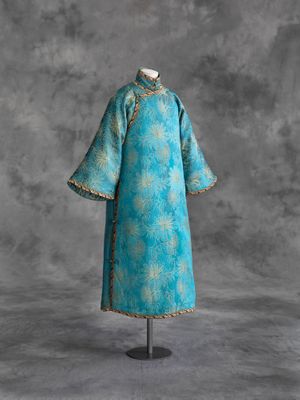
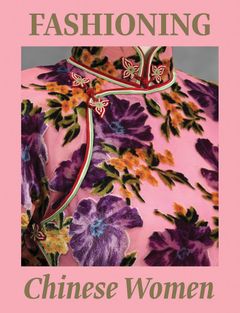
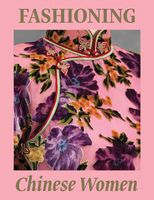
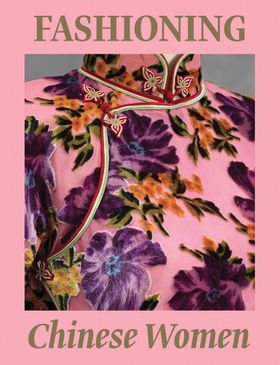
This sumptuous publication showcases Chinese women's high fashion designs from the late Qing dynasty at the turn of the 20th century through the 1960s, examining how women's dress evolved amid seismic shifts in Chinese society. With more than 120 images, it traces transformations in silhouette, tailoring and textile innovation, revealing the ways Chinese fashion responded to globalization, modernization and women's changing roles. A special point of interest throughout the book is the qipao, the form-fitting, often ornately designed gown that is an iconic signifier of modern Chinese femininity. The volume charts its emergence in the 1920s and its adaptation across the diaspora from the 1940s to the 1960s. New York–based Taiwanese Canadian fashion designer Jason Wu developed special 3D-printed mannequins (with nine different historically inspired hairstyles) to sport many of the ensembles, bringing to life fashionable women's body types across seven decades. Wu also pens the book's preface. Two essays by design historians and curators, Mei Mei Rado and Michaela Hansen, offer original research and nuanced analyses of modern Chinese fashion design. Rado investigates fashion's interplay with rapid historical and cultural changes in China, while Hansen analyzes how industrial and technological advances reshaped Chinese textile design. Interspersed throughout the volume are archival images including book illustrations, textile prints, magazine covers and calendar posters. Altogether, Fashioning Chinese Women offers an in-depth visual chronology of a dynamic chapter in Chinese fashion history that has been largely overlooked by Western art museums and publishers.
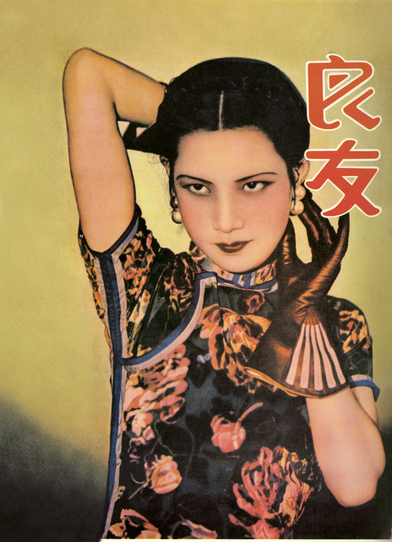
Despite considerable cultural significance, the period of dynamic transformation from dynastic to republican rule in Chinese fashion has long been overlooked by Western art museums. New release Fashioning Chinese Women: Empire to Modernity—published to accompany the eponymous LACMA exhibition opening in June—seeks to demystify and redefine the patrimony of transnational Chinese communities through a material exploration of the attire of a “society in flux.” The garments from this corpus come via a 2020 donation from Berkeley-based artist Chere Lai Mah, whose familial collection of twentieth-century Chinese women’s clothing reflects the changing social mores and increased influence of Western culture during the transition from late Qing dynasty up to the Cultural Revolution. Evolving at an unprecedented speed, fashion during this period, particularly women’s clothing, became a barometer of social norms, and was central to passionate debates regarding the female body and women’s roles—both highly contested issues related to a new Chinese modernity and national identity. Consumer illustrations, such as the February 1935 cover of Liangyou (The Young Companion) magazine, shown here, depict young women sporting this new style while engaging in modern activities, such as riding bicycles or playing tennis. These images evince a fresh sense of physical autonomy and vividly express the emerging feminist sentiment that advocated for the liberation of women from their traditional domestic roles. continue to blog
Published by DelMonico Books. Edited with text by Michaela Hansen. Foreword by Michael Govan. Preface by Jason Wu. Text by Mei Mei Rado, Sharon Sadako Takeda.
A visual chronology of modern Chinese fashion—from the fall of the Qing dynasty to the Cultural Revolution—as seen through 70 rare ensembles
Published with Los Angeles County Museum of Art.
This sumptuous publication showcases Chinese women's high fashion designs from the late Qing dynasty at the turn of the 20th century through the 1960s, examining how women's dress evolved amid seismic shifts in Chinese society. With more than 120 images, it traces transformations in silhouette, tailoring and textile innovation, revealing the ways Chinese fashion responded to globalization, modernization and women's changing roles. A special point of interest throughout the book is the qipao, the form-fitting, often ornately designed gown that is an iconic signifier of modern Chinese femininity. The volume charts its emergence in the 1920s and its adaptation across the diaspora from the 1940s to the 1960s.
New York–based Taiwanese Canadian fashion designer Jason Wu developed special 3D-printed mannequins (with nine different historically inspired hairstyles) to sport many of the ensembles, bringing to life fashionable women's body types across seven decades. Wu also pens the book's preface. Two essays by design historians and curators, Mei Mei Rado and Michaela Hansen, offer original research and nuanced analyses of modern Chinese fashion design. Rado investigates fashion's interplay with rapid historical and cultural changes in China, while Hansen analyzes how industrial and technological advances reshaped Chinese textile design. Interspersed throughout the volume are archival images including book illustrations, textile prints, magazine covers and calendar posters. Altogether, Fashioning Chinese Women offers an in-depth visual chronology of a dynamic chapter in Chinese fashion history that has been largely overlooked by Western art museums and publishers.