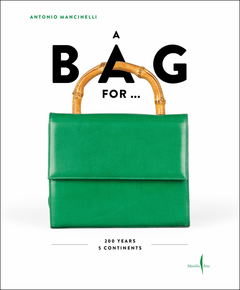
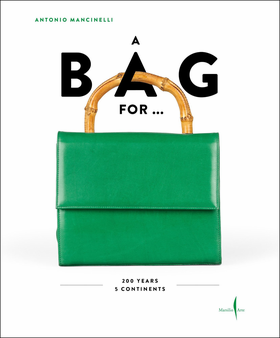
The Bag: 200 Years, 5 Continents Published by Marsilio Arte.
Edited with text by Antonio Mancinelli. Text by Olivier Saillard, Emanuele Coccia, Beatrice Manca. Practical, playful, portable—the history of the bag across two centuries, from high-concept couture to the everyday carryall The bag has been used by humans since time immemorial. Even when people had not yet invented clothing to cover themselves, they had already created containers to carry things in. Over the ages, the bag has undergone continual evolution and these shifts have been represented across art, referenced in literature and in film, and symbolized in all forms of advertising. As an aesthetic accessory, the bag has cemented its place in the history—as well as the future—of fashion, with designers turning to the bag as an evergreen site for innovation and creativity.
Whether as functional as the shopping bag or as ornamental as an evening clutch purse, the form of the bag represents a means of transport for objects of the most varied kind, an extension of the domestic walls outside the home. Its use is an act that accompanies men and women—of all stripes and across all societies—on their daily movements.
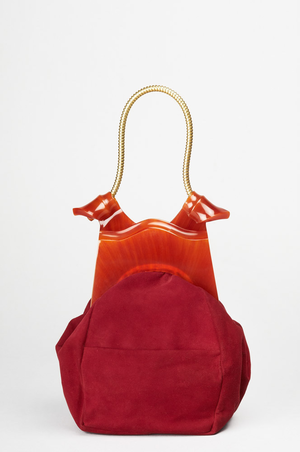
This volume chronicles an entire universe of bags spanning the 19th century to the present: from the formal to the everyday, from travel bags to change purses and beyond. There are familiar, iconic bags by designers such as Salvatore Ferragamo and Karl Lagerfeld, as well as unique examples—antique Bakelite-handled purses or beaded Iroquois souvenir bags from the 1890s. Some crafted out of fine leather or fabric, others embroidered or decorated with sequins, the varied bags, taken together, form a collective and kaleidoscopic vision of an accessory that is as versatile and timeless as it is indispensable.
|