This lavishly illustrated book offers a comprehensive overview of the work of the great Malian photographer Seydou Keïta, one of the most important portraitists of the 20th century
Hbk, 9.5 x 11.25 in. / 256 pgs / 196 color. | 10/28/2025 | In stock $65.00
Published by DelMonico Books. Edited with text by Catherine E. McKinley. Foreword by Anne Pasternak. Text by J. Luca Ackerman, Jennifer Bajorek, Duncan Clarke, Thomas Dyja, Howard W. French, Patricia Gérimont, Sana Ginwalla, Awa Konaté, Drew Sawyer.
Published with Brooklyn Museum.
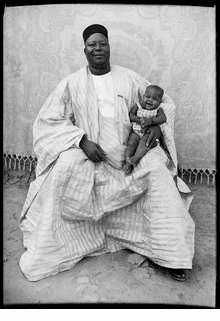
Seydou Keïta's photographs capture Malian culture during an era of radical transformation. As a commercial portrait photographer, Keïta had a remarkable ability to draw out tactile details and emotions from his subjects, creating strikingly intimate portraits that have resonated with audiences across geographic and cultural borders. In 1948, Keïta opened one of the city's first photography studios. Located in Bamako-Coura, the city's colonial center, the studio attracted clientele from across the country and West Africa. Keïta offered bold, patterned backdrops and props—including cars, Vespas and European clothing and accessories—that allowed sitters to explore new ways of fashioning the self before the camera's lens. This groundbreaking publication, which accompanies an exhibition at the Brooklyn Museum, draws from across Keïta's rich oeuvre—spanning iconic portraits and rarely seen vintage prints to never-before-shown negatives—to explore the social and political realities of the period. The catalog was informed and enriched by contributions from the Keïta family, including their generous loan of negatives from the family archive and oral histories. Richly illustrated and supported with texts from leading scholars and writers, this book is the essential volume on Seydou Keïta. Born in Bamako, Mali, Seydou Keïta (1921/23–2001) spent his youth working as a carpenter, following in the footsteps of his father. He shifted his focus to photography after receiving a Kodak Brownie Flash camera as a gift from his uncle in 1935. Between 1948 and 1963, Keïta photographed thousands of Malians and West Africans, becoming widely recognized across the region. In the early 1990s, his work reached Western viewers, cementing Keïta as one of the premier studio photographers of 20th-century Africa—a peer of August Sander, Irving Penn and Richard Avedon.
Seydou Keïta was born in Bamako, Mali in 1921, then part of the colony of French Sudan and a bustling transportation hub on the route to Dakar. With a Kodak Brownie given to him by his uncle, Keïta took up photography at the age of 14, going on to establish what would become Bamako's most successful portraiture enterprise of the 1950s and 60s. Photographs, Bamako, Mali 1949–1970 draws on an expanded archive to offer over 400 portraits, mostly unpublished, from the height of the photographer's productivity in downtown Bamako. Providing lushly patterned backdrops and props that now serve to date distinct periods in his career, the artist often styled his subjects but also encouraged their active participation, hanging sample portraits around the studio as inspiration. Migratory youth, government officials, shop owners and Bamako's cultural elite all make appearances here, and while Keïta's photographs served as both family record and cultural status symbol for the clients who commissioned them, these images have become a lasting visual record of Mali at that time. Seydou Keïta's work made its first international appearance in 1991 and has been exhibited extensively across Europe, Japan and the United States.

 Seydou Keita: Photographs, Bamako, Mali 19491970