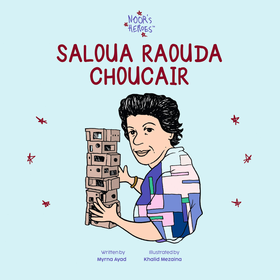
Discover the pioneer Lebanese painter and sculptor who left her mark on Arab modernism from Beirut to Cairo to Paris and beyond
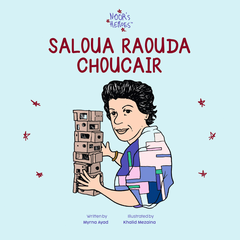
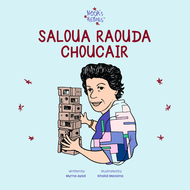
Lebanese artist Saloua Raouda Choucair (1916–2017) possessed "the mind of a poet, the soul of an architect and the precision of a mathematician," according to curator Fadia Antar. After first gaining an appreciation for Islamic art history in Egypt, Choucair traveled to Paris, where for a time she worked in the studio of painter Fernand Léger. Striving to move beyond the atelier's conventions, she left the studio and began a sculptural practice which lasted from the 1950s to the 1980s. Her sculptures were composed of segmented wood, metal or other materials that were designed to be taken apart and reassembled piece by piece, in a tradition not dissimilar to Arabic poetry. In the final decade of Choucair's life, her oeuvre gained international acclaim thanks to two retrospective exhibitions at the Beirut Exhibition Center and the Tate Modern.
STATUS: Forthcoming | 12/8/2026
This title is not yet published in the U.S. To pre-order or receive notice when the book is available, please email orders @ artbook.com
FORMAT: Hbk, 8.25 x 8.25 in. / 40 pgs / 33 color / 3 b&w. LIST PRICE: U.S. $20.00 LIST PRICE: CANADA $30 ISBN: 9789948705833 PUBLISHER: Kaph Books AVAILABLE: 12/8/2026 DISTRIBUTION: D.A.P. RETAILER DISC: TRADE PUBLISHING STATUS: Forthcoming AVAILABILITY: Awaiting stock TERRITORY: NA LA ASIA AU/NZ AFR ME
Published by Kaph Books. By Myrna Ayad. Illustrations by Khalid Mezaina.
Discover the pioneer Lebanese painter and sculptor who left her mark on Arab modernism from Beirut to Cairo to Paris and beyond
Lebanese artist Saloua Raouda Choucair (1916–2017) possessed "the mind of a poet, the soul of an architect and the precision of a mathematician," according to curator Fadia Antar. After first gaining an appreciation for Islamic art history in Egypt, Choucair traveled to Paris, where for a time she worked in the studio of painter Fernand Léger. Striving to move beyond the atelier's conventions, she left the studio and began a sculptural practice which lasted from the 1950s to the 1980s. Her sculptures were composed of segmented wood, metal or other materials that were designed to be taken apart and reassembled piece by piece, in a tradition not dissimilar to Arabic poetry. In the final decade of Choucair's life, her oeuvre gained international acclaim thanks to two retrospective exhibitions at the Beirut Exhibition Center and the Tate Modern.