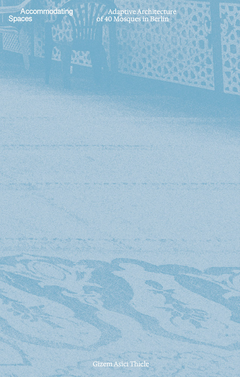
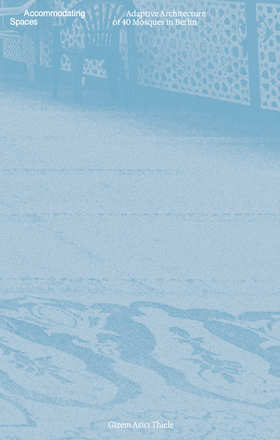
Accommodating Spaces: Adoptive Architecture of 40 Mosques in Berlin
By Gizem Asici Thiele.
A primer on the prevalent practice of architectural reuse among Berlin’s Islamic migrant population
This reader spotlights the largely overlooked, community-driven architectural culture of 40 mosques in Berlin, many of which are located in former shops, garages, apartments and factories. Unplanned by city policy, and at friction with Islamic traditions, the practice of architectural reuse evinces human ingenuity and flexibility in the face of necessity. Through site visits, observation, interviews with the members from mosque communities and remote research, architect Gizem Asici Thiele identifies the spatial characteristics of the mosques, situating them within the greater contexts of mosque architectural traditions and urban development. This primer reveals how various diasporic communities build communal religious grounds to creatively navigate regulations, while honoring diverse cultural expectations. Gizem Asici Thiele is an architect and researcher. She describes her practice as “flâneur freelancing,” drawing on long-term observation and everyday experience as foundations for critical spatial inquiry.
STATUS: Forthcoming | 12/8/2026
This title is not yet published in the U.S. To pre-order or receive notice when the book is available, please email orders @ artbook.com
FORMAT: Pbk, 5.5 x 8.75 in. / 250 pgs / 100 color / 179 duotone. LIST PRICE: U.S. $29.95 LIST PRICE: CANADA $41.95 ISBN: 9789083605258 PUBLISHER: Set Margins’ publications AVAILABLE: 12/8/2026 DISTRIBUTION: D.A.P. RETAILER DISC: TRADE PUBLISHING STATUS: Forthcoming AVAILABILITY: Awaiting stock TERRITORY: NA LA ASIA AFR ME
Accommodating Spaces: Adoptive Architecture of 40 Mosques in Berlin
Published by Set Margins’ publications. By Gizem Asici Thiele.
A primer on the prevalent practice of architectural reuse among Berlin’s Islamic migrant population
This reader spotlights the largely overlooked, community-driven architectural culture of 40 mosques in Berlin, many of which are located in former shops, garages, apartments and factories. Unplanned by city policy, and at friction with Islamic traditions, the practice of architectural reuse evinces human ingenuity and flexibility in the face of necessity.
Through site visits, observation, interviews with the members from mosque communities and remote research, architect Gizem Asici Thiele identifies the spatial characteristics of the mosques, situating them within the greater contexts of mosque architectural traditions and urban development. This primer reveals how various diasporic communities build communal religious grounds to creatively navigate regulations, while honoring diverse cultural expectations.
Gizem Asici Thiele is an architect and researcher. She describes her practice as “flâneur freelancing,” drawing on long-term observation and everyday experience as foundations for critical spatial inquiry.