Text by Rania Matar, Elliot Josephine Leila Reichert, Kim Ghattas, Youmna Melhem Chamieh, Georges Boustany.
Sublime photographic meditations on womanhood, homeland and the daunting prospect of immigration
Published with Eskenazi Museum of Art.
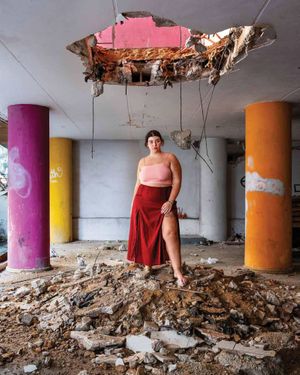
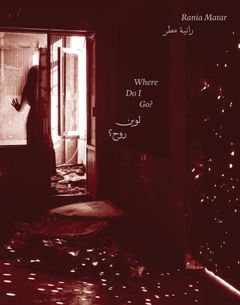
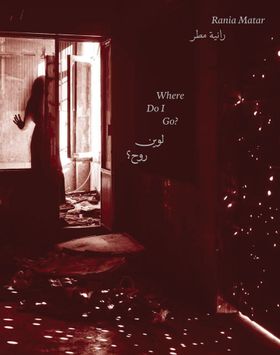
In commemoration of the 50th anniversary of the Lebanese Civil War, Boston-based photographer Rania Matar (born 1964) collaborated with young Lebanese women to visualize their life stories and complex relationships to their beautiful, war-torn homeland. Having immigrated from Lebanon to the United States when she was 20, Matar sees herself in her portrait subjects—many of whom have found themselves at the same critical juncture, deliberating whether to stay or leave. Her photographs of the women are rooted in empathy and empowerment; she encouraged the women to become active participants in the image-making process, presiding over their bodies and making the environment their own. The series captures the women as they embrace life and its attendant risks: climbing on rocks and trees, jumping fully dressed into dirty water and waterfalls, and trespassing into abandoned buildings. A series of essays that reflect upon life in Lebanon accompany Matar's majestic portraits.
PRAISE AND REVIEWS
Huck magazine
Miss Rosen
Where Do I Go?' is a majestic portrait of a people and a place as seen through the eyes of one who has lived this life themselves. Each portrait is a history of people and place layered over countless generations in the landscape. Amid ancient ruins are scenes of destruction that remain following the 1975 Lebanese Civil War, and more recently the Israeli invasion of Southern Lebanon.
STATUS: Out of stock
Temporarily out of stock pending additional inventory.
FORMAT: Hbk, 9.5 x 11.75 in. / 240 pgs / 147 color / 1 duotone / 24 b&w. LIST PRICE: U.S. $55.00 LIST PRICE: CANADA $77 ISBN: 9786148065002 PUBLISHER: Kaph Books AVAILABLE: 4/14/2026 DISTRIBUTION: D.A.P. RETAILER DISC: TRADE PUBLISHING STATUS: Active AVAILABILITY: Out of stock TERRITORY: NA LA ASIA AU/NZ AFR ME
Published by Kaph Books. Text by Rania Matar, Elliot Josephine Leila Reichert, Kim Ghattas, Youmna Melhem Chamieh, Georges Boustany.
Sublime photographic meditations on womanhood, homeland and the daunting prospect of immigration
Published with Eskenazi Museum of Art.
In commemoration of the 50th anniversary of the Lebanese Civil War, Boston-based photographer Rania Matar (born 1964) collaborated with young Lebanese women to visualize their life stories and complex relationships to their beautiful, war-torn homeland. Having immigrated from Lebanon to the United States when she was 20, Matar sees herself in her portrait subjects—many of whom have found themselves at the same critical juncture, deliberating whether to stay or leave. Her photographs of the women are rooted in empathy and empowerment; she encouraged the women to become active participants in the image-making process, presiding over their bodies and making the environment their own. The series captures the women as they embrace life and its attendant risks: climbing on rocks and trees, jumping fully dressed into dirty water and waterfalls, and trespassing into abandoned buildings. A series of essays that reflect upon life in Lebanon accompany Matar's majestic portraits.