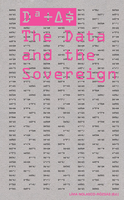
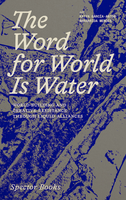
Edited by Nina Franz, Eva Wilson. Text by Pablo Cesarino, Stephan Gregory, Olexii Kuchanskyi, Elena Vogman, Denise Reimann, Dominik Schrey, Angelika Seppi, Ana Teixeiro Pinto, Samo Tomši?, Abbas Zahedi.
A paradigm-shifting critical reader: voices from the Global South resituate climate disaster as a sociohistorical unfolding rather than an imminent disruption
The current ecological situation is unique in that it extends beyond our epistemological and historical horizons, forcing us to train our eyes on things that are to come. Perspectives from the Global South, in particular, remind us that the “coming catastrophe” is also, fundamentally, already a lived reality in many parts of the world. What alternative discursive means might be deployed to help us comprehend the catastrophe that was brought about by the post-Enlightenment ideologies and rationalizations of Empire and colonization? What roles do media and technology play in relation to the coming and current catastrophes of climate change and environmental destruction? Given that it is vital to avoid the traps of eschatological narratives, what distinguishes this projection of the “end of the world” from its antecedent imaginaries? What if there is indeed no “end of the world” for humanity but rather an unlivable future?
STATUS: Forthcoming | 12/8/2026
This title is not yet published in the U.S. To pre-order or receive notice when the book is available, please email orders @ artbook.com
Published by Spector Books. Edited by Nina Franz, Eva Wilson. Text by Pablo Cesarino, Stephan Gregory, Olexii Kuchanskyi, Elena Vogman, Denise Reimann, Dominik Schrey, Angelika Seppi, Ana Teixeiro Pinto, Samo Tomši?, Abbas Zahedi.
A paradigm-shifting critical reader: voices from the Global South resituate climate disaster as a sociohistorical unfolding rather than an imminent disruption
The current ecological situation is unique in that it extends beyond our epistemological and historical horizons, forcing us to train our eyes on things that are to come. Perspectives from the Global South, in particular, remind us that the “coming catastrophe” is also, fundamentally, already a lived reality in many parts of the world. What alternative discursive means might be deployed to help us comprehend the catastrophe that was brought about by the post-Enlightenment ideologies and rationalizations of Empire and colonization? What roles do media and technology play in relation to the coming and current catastrophes of climate change and environmental destruction? Given that it is vital to avoid the traps of eschatological narratives, what distinguishes this projection of the “end of the world” from its antecedent imaginaries? What if there is indeed no “end of the world” for humanity but rather an unlivable future?