Text by Laura Helena Wurth, Dirk Boll, Steven Holl.
Zarina's holistic approach encompassed Italy's building culture and way of life: "If you want to be an architect, first you have to learn how to cook!"
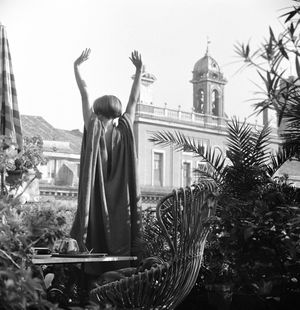
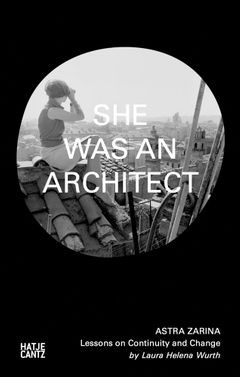
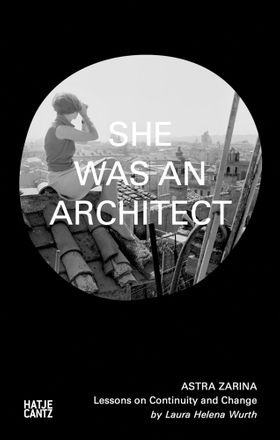
In the first volume of Hatje Cantz's new series She Was an Architect, journalist and art historian Laura Helena Wurth vividly recounts the fascinating life of American Italian architect Astra Zarina (1929–2008). In 1960, she became the first woman to win the American Academy in Rome's Prize for Architecture. She subsequently began restoring old historic houses in Civita di Bagnoregio, an abandoned hill town north of Rome. As a professor of architecture at the University of Washington for more than 30 years, Zarina launched the Washington University Rome Program—renovating the palazzo that the university still uses as its city campus today. Photographs from Zarina's estate and the Civita Institute Foundation provide insight into Zarina's personality, as well as her holistic approach to pedagogy that allowed students to immerse themselves in all aspects of Italian life and culture.
FORMAT: Pbk, 4.75 x 7.5 in. / 64 pgs / 20 color. LIST PRICE: U.S. $21.95 LIST PRICE: CANADA $29.95 ISBN: 9783775762106 PUBLISHER: Hatje Cantz AVAILABLE: 9/29/2026 DISTRIBUTION: D.A.P. RETAILER DISC: TRADE PUBLISHING STATUS: Active AVAILABILITY: In stock TERRITORY: NA LA
Astra Zarina: She Was an Architect Lessons on Continuity and Change
Published by Hatje Cantz. Text by Laura Helena Wurth, Dirk Boll, Steven Holl.
Zarina's holistic approach encompassed Italy's building culture and way of life: "If you want to be an architect, first you have to learn how to cook!"
In the first volume of Hatje Cantz's new series She Was an Architect, journalist and art historian Laura Helena Wurth vividly recounts the fascinating life of American Italian architect Astra Zarina (1929–2008). In 1960, she became the first woman to win the American Academy in Rome's Prize for Architecture. She subsequently began restoring old historic houses in Civita di Bagnoregio, an abandoned hill town north of Rome. As a professor of architecture at the University of Washington for more than 30 years, Zarina launched the Washington University Rome Program—renovating the palazzo that the university still uses as its city campus today. Photographs from Zarina's estate and the Civita Institute Foundation provide insight into Zarina's personality, as well as her holistic approach to pedagogy that allowed students to immerse themselves in all aspects of Italian life and culture.