Edited with text by Beverly Adams, Christophe Cherix. Text by Anny Aviram, Miriam Basilio, Terri Geis, Jean Khalfa, Damasia Lacroze, Laura Neufield, Maria Elena Ortiz, Lowery Stokes Sims, Catherine Stephens, Martin Tsang.
A sweeping retrospective of the innovative and influential Cuban-born artist, bringing new perspectives to his globe-spanning life and lyrical art
Over a career spanning six decades, Wifredo Lam radically expanded the purview of modernism. Born in Cuba, Lam spent most of his life in Spain, France and Italy, and came to embody the figure of the transnational artist in the 20th century, forging a unique visual style at the confluence of European modernity and Caribbean and African diasporic cultures. The extent of his influence throughout the Black Atlantic is unrivaled as both a leading innovator and an anti-colonialist. Published in conjunction with the most extensive retrospective devoted to the artist in the United States, Wifredo Lam: When I Don't Sleep, I Dream brings together more than 150 works from his prolific career—including paintings, large-scale works on paper, collaborative drawings, illustrated books, prints, ceramics and archival material. This landmark publication features extensive new photography; trenchant insights into Lam's relationship to Surrealism, Négritude and other literary, cultural and poetic movements; and the first in-depth conservation analysis of Lam's best-known painting, The Jungle (1942–43). Wifredo Lam (1902–82) left his native Cuba at age 21 to pursue a career in painting. He studied first in Spain, where he fought in the Spanish Civil War, before moving to France in 1938. There he met artists and writers such as Pablo Picasso, André Breton and the Surrealists. Fleeing the Nazi occupation, Lam returned to Cuba in 1941, where his work became increasingly experimental, both technically and in the development of his unique visual language. Returning to Europe in 1952, where he spent the remainder of his life, Lam expanded his material production into printmaking and ceramics, while continuing his visionary approach to painting, which he called "an act of decolonization."
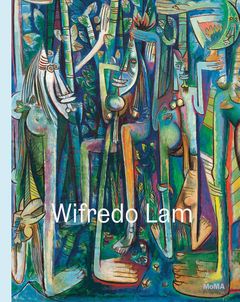
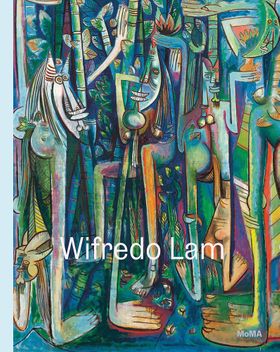
Featured image is reproduced from 'Wifredo Lam: When I Don’t Sleep, I Dream.'
PRAISE AND REVIEWS
The New York Times
Holland Cotter
An outsider wherever he went, Lam was bitterly conscious of the European colonialist politics that had produced him, but also deeply in tune with of the Afro-Cuban spirituality that was his heritage. And it’s the spiritual sensibility in his art — his vision of a world in which animal, plant and human are inseparable — that sets him apart from standard-issue Surrealism, as will surely be evident in 'Wifredo Lam: When I Don’t Sleep, I Dream.'
Hyperallergic
Lisa Yin Zhang
He’s the opposite of an academic holed up in an ivory tower writing theory; he was having those conversations on the ground and in his work.
The Guardian
Veronica Esposito
The product of years of work and dozens of collaborations with institutions and collectors around the world, 'When I Don’t Sleep, I Dream' shows the entire sweep of a career that straddled eras. Lam is best-known for agglomerations of elongated and mysterious figures that borrow from cubism and surrealism, although the exhibition also shows different sides of this artist: lushly colored and textured pieces that verge on abstraction, sculptural heads that point toward the artist’s African roots, early figurative works, and the weird cacophonies of forms that the artist made through the 1960s and 70s.
El Pais
Ana Vidal Egea
[A] well-deserved tribute he never received in his lifetime.
The New York Times
Holland Cotter
Perfectly proportioned, beautifully installed, [this exhibition] lets a figure who has long been defined by associative labels be the distinctive and peerless artist-poet he was.
Galerie Magazine
Alexandria Sillio
[The] book brings new perspectives to Lam’s worldly life and lyrical art.
Hyperallergic
Clara Maria Apostaitos
[Wifredo Lam] pursued his own dialogue with African and Afro-diasporic visual cultures even as the Parisian avant-garde exoticized his heritage. That tension — being racialized while renegotiating the frame imposed on him — remains central to understanding his work. MoMA’s exhibition leaves this context mostly unexplored; instead, much of this complexity is taken up by the excellent catalog.
The Brooklyn Rail
Alfred Mac Adam
The Museum of Modern Art’s grand, comprehensive show of some 130 items—paintings, works on paper, collaborative drawings, illustrations, and ceramics—traces fifty years of Lam’s artistic production, from the 1920s until the 1970s.
The Wall Street Journal
Lance Esplund
[As] an honest, comprehensive portrait of a singular, impassioned artist, 'Wifredo Lam' is genuinely stirring.
Artnet
Ben Davis
Above all, Lam’s works are very proudly individual in their vision.
London Review of Books
Tony Wood
For Lam, mental decolonisation wasn’t disconnected from the political kind; the two unfolded in tandem, and Cuba was carrying it out in the political sphere just as he was in the artistic one.
The New York Review of Books
Coco Fusco
Lam’s cosmopolitanism, his commitment to experimentation, his intellectual curiosity, and his extraordinary ability to synthesize ideas and forms from different cultures enabled him to make a unique contribution to modernism.
STATUS: Out of stock
Temporarily out of stock pending additional inventory.
FORMAT: Hbk, 9.5 x 12 in. / 288 pgs / 225 color. LIST PRICE: U.S. $75.00 LIST PRICE: CANADA $105 ISBN: 9781633451780 PUBLISHER: The Museum of Modern Art, New York AVAILABLE: 11/18/2025 DISTRIBUTION: D.A.P. RETAILER DISC: TRADE PUBLISHING STATUS: Active AVAILABILITY: Out of stock TERRITORY: NA ONLY
Published by The Museum of Modern Art, New York. Edited with text by Beverly Adams, Christophe Cherix. Text by Anny Aviram, Miriam Basilio, Terri Geis, Jean Khalfa, Damasia Lacroze, Laura Neufield, Maria Elena Ortiz, Lowery Stokes Sims, Catherine Stephens, Martin Tsang.
A sweeping retrospective of the innovative and influential Cuban-born artist, bringing new perspectives to his globe-spanning life and lyrical art
Over a career spanning six decades, Wifredo Lam radically expanded the purview of modernism. Born in Cuba, Lam spent most of his life in Spain, France and Italy, and came to embody the figure of the transnational artist in the 20th century, forging a unique visual style at the confluence of European modernity and Caribbean and African diasporic cultures. The extent of his influence throughout the Black Atlantic is unrivaled as both a leading innovator and an anti-colonialist.
Published in conjunction with the most extensive retrospective devoted to the artist in the United States, Wifredo Lam: When I Don't Sleep, I Dream brings together more than 150 works from his prolific career—including paintings, large-scale works on paper, collaborative drawings, illustrated books, prints, ceramics and archival material. This landmark publication features extensive new photography; trenchant insights into Lam's relationship to Surrealism, Négritude and other literary, cultural and poetic movements; and the first in-depth conservation analysis of Lam's best-known painting, The Jungle (1942–43).
Wifredo Lam (1902–82) left his native Cuba at age 21 to pursue a career in painting. He studied first in Spain, where he fought in the Spanish Civil War, before moving to France in 1938. There he met artists and writers such as Pablo Picasso, André Breton and the Surrealists. Fleeing the Nazi occupation, Lam returned to Cuba in 1941, where his work became increasingly experimental, both technically and in the development of his unique visual language. Returning to Europe in 1952, where he spent the remainder of his life, Lam expanded his material production into printmaking and ceramics, while continuing his visionary approach to painting, which he called "an act of decolonization."