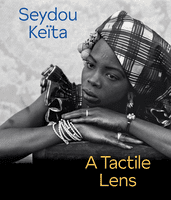
Edited with text by Catherine E. McKinley. Foreword by Anne Pasternak. Text by J. Luca Ackerman, Jennifer Bajorek, Duncan Clarke, Thomas Dyja, Howard W. French, Patricia Gérimont, Sana Ginwalla, Awa Konaté, Drew Sawyer.
This lavishly illustrated book offers a comprehensive overview of the work of the great Malian photographer Seydou Keïta, one of the most important portraitists of the 20th century
Published with Brooklyn Museum.
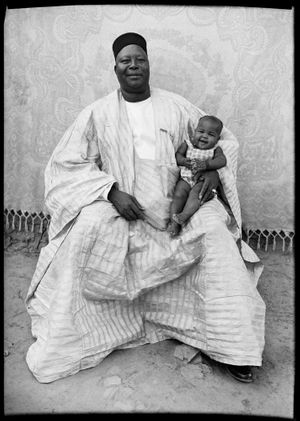
Seydou Keïta's photographs capture Malian culture during an era of radical transformation. As a commercial portrait photographer, Keïta had a remarkable ability to draw out tactile details and emotions from his subjects, creating strikingly intimate portraits that have resonated with audiences across geographic and cultural borders. In 1948, Keïta opened one of the city's first photography studios. Located in Bamako-Coura, the city's colonial center, the studio attracted clientele from across the country and West Africa. Keïta offered bold, patterned backdrops and props—including cars, Vespas and European clothing and accessories—that allowed sitters to explore new ways of fashioning the self before the camera's lens. This groundbreaking publication, which accompanies an exhibition at the Brooklyn Museum, draws from across Keïta's rich oeuvre—spanning iconic portraits and rarely seen vintage prints to never-before-shown negatives—to explore the social and political realities of the period. The catalog was informed and enriched by contributions from the Keïta family, including their generous loan of negatives from the family archive and oral histories. Richly illustrated and supported with texts from leading scholars and writers, this book is the essential volume on Seydou Keïta. Born in Bamako, Mali, Seydou Keïta (1921/23–2001) spent his youth working as a carpenter, following in the footsteps of his father. He shifted his focus to photography after receiving a Kodak Brownie Flash camera as a gift from his uncle in 1935. Between 1948 and 1963, Keïta photographed thousands of Malians and West Africans, becoming widely recognized across the region. In the early 1990s, his work reached Western viewers, cementing Keïta as one of the premier studio photographers of 20th-century Africa—a peer of August Sander, Irving Penn and Richard Avedon.
At the Brooklyn Museum, [Seydou Keita's] defining portraits of Mali’s citizens in the 1950s show them breaking free of colonial domination yet still tethered to their cultural history.
Huck magazine
Miss Rosen
Keïta combined his eye for design with a profound sense of the grandeur and intimacy a portrait could express.
Blind
Jonas Cuenin
[The] largest presentation of his work ever organized in North America.
Hyperallergic
Jasmine Weber
The images have simple compositions, but striking, maximalist outcomes, and their aesthetic influence on contemporary photography is undeniable.
Though most of the photographs in Seydou Keïta: A Tactile Lens—published to accompany the exhibition on view now at the Brooklyn Museum—are untitled, and most of the sitters unnamed, they are virtually all, somehow, unforgettable. Made in Bamako from the late 1940s through the early 1960s, during the period of time when Mali retook independence, they are remarkable for their individuality, intensity and elegance, as well as the fact that, because of the expense of the materials in West Africa at that time, most of the photographs were made as single shots. Catherine E. McKinley, the exhibition’s guest curator, writes, “Keïta is celebrated for the very painterly, tactile quality of his images—the tones and textures of skin; the complex layers of patterning; the almost tangible sense of his touch made to clothing and hands and faces as he posed sitters and props, so that the viewer seems to touch them, too. He had an innate mastery of light, working in a place where artificial lighting, as Madame Souncko Fofana, his now-octogenarian former sitter remembers, was rare. ‘He had three lights, something that amazed us, especially since there was no electricity here, except in the Governor’s house’ and at the cinema. Still, what animates and appears most luminously in his works are the intimacies he captured, evidence that his lens gained the sitter’s trust.” Featured image is “Untitled” (1959, printed ca. 1994–2001). continue to blog
Published by DelMonico Books. Edited with text by Catherine E. McKinley. Foreword by Anne Pasternak. Text by J. Luca Ackerman, Jennifer Bajorek, Duncan Clarke, Thomas Dyja, Howard W. French, Patricia Gérimont, Sana Ginwalla, Awa Konaté, Drew Sawyer.
This lavishly illustrated book offers a comprehensive overview of the work of the great Malian photographer Seydou Keïta, one of the most important portraitists of the 20th century
Published with Brooklyn Museum.
Seydou Keïta's photographs capture Malian culture during an era of radical transformation. As a commercial portrait photographer, Keïta had a remarkable ability to draw out tactile details and emotions from his subjects, creating strikingly intimate portraits that have resonated with audiences across geographic and cultural borders. In 1948, Keïta opened one of the city's first photography studios. Located in Bamako-Coura, the city's colonial center, the studio attracted clientele from across the country and West Africa. Keïta offered bold, patterned backdrops and props—including cars, Vespas and European clothing and accessories—that allowed sitters to explore new ways of fashioning the self before the camera's lens.
This groundbreaking publication, which accompanies an exhibition at the Brooklyn Museum, draws from across Keïta's rich oeuvre—spanning iconic portraits and rarely seen vintage prints to never-before-shown negatives—to explore the social and political realities of the period. The catalog was informed and enriched by contributions from the Keïta family, including their generous loan of negatives from the family archive and oral histories. Richly illustrated and supported with texts from leading scholars and writers, this book is the essential volume on Seydou Keïta.
Born in Bamako, Mali, Seydou Keïta (1921/23–2001) spent his youth working as a carpenter, following in the footsteps of his father. He shifted his focus to photography after receiving a Kodak Brownie Flash camera as a gift from his uncle in 1935. Between 1948 and 1963, Keïta photographed thousands of Malians and West Africans, becoming widely recognized across the region. In the early 1990s, his work reached Western viewers, cementing Keïta as one of the premier studio photographers of 20th-century Africa—a peer of August Sander, Irving Penn and Richard Avedon.