| |||||||||||||||||||||||||
ARTIST MONOGRAPHS
|
|
in stock $60.00 |
 Torkwase Dyson: A Liquid Belonging
Published by Pace Publishing.
Text by Dionne Brand, LeRonn P. Brooks, Saidiya Hartman, Jaleh Mansoor, Mabel Wilson. Interview by Christina Sharpe.
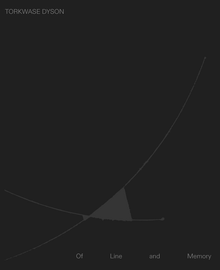
In her multidisciplinary practice guided by her working philosophy of Black Compositional Thought, New York–based Torkwase Dyson (born 1973) creates curvilinear and rectangular hypershapes and abstractions that speak to infrastructures of liberation and resistance. Dyson's recent exhibition at Pace Gallery in New York, with its site-specific installations and layered paintings, explored these geometries on an architectural scale, inviting viewers into new spatial and perceptual practices. The accompanying publication likewise asks readers to engage with the forms and actions that make up a book. Composed of one bound paper book and a diverse array of unbound materials—including acrylic, vellum, acetate and accordion-folded paper, all contained in a slipcase—it is as much an art object as it is an addendum to the exhibition. It also includes new writing by Dionne Brand, LeRonn P. Brooks, Saidiya Hartman, Jaleh Mansoor and Mabel Wilson, and a conversation with Christina Sharpe.
PUBLISHER
Pace Publishing
BOOK FORMAT
Slip, pbk, 10.5 x 10.5 in. / 76 pgs / 47 color.
PUBLISHING STATUS
Pub Date 10/3/2023
Out of stock indefinitely
DISTRIBUTION
D.A.P. Exclusive
Catalog: FALL 2023 p. 114
PRODUCT DETAILS
ISBN 9781948701914 SDNR40
List Price: $60.00 CAD $84.00 GBP £58.00
AVAILABILITY
Not available
STATUS: Out of stock indefinitely. |