Edited with text by Jean-Baptiste Delorme, Edith Devaney. Text by Vincent Bessières. Foreword by Fabrice Hergott. Interview by Marcus Steinweg.
New approaches to Condo's work, such as his relationship to music and his years in Paris, inform this survey of his Pop art–informed, unsettling paintings
Hbk, 9.5 x 11 in. / 272 pgs / 180 color. | 1/20/2026 | Out of stock $55.00
Published by JRP|Editions. Edited with text by Jean-Baptiste Delorme, Edith Devaney. Text by Vincent Bessières. Foreword by Fabrice Hergott. Interview by Marcus Steinweg.
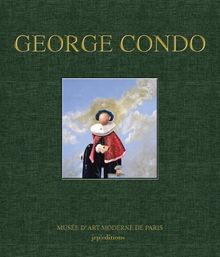
Emerging during the effervescence of the early 1980s in New York, alongside artist friends Keith Haring and Jean-Michel Basquiat, George Condo (born 1957) stands out for his appropriation of past European styles and techniques to address contemporary issues. With his quick and precise brushstrokes, he produces pieces of rare intensity, centered on the human figure. Described by French psychoanalyst Félix Guattari as "art that reflects schizoid potentialities," Condo's work explores the paradoxes of the human psyche and the grotesqueness of society. Published to accompany George Condo's major solo exhibition at the Musée d'Art Moderne de Paris, this volume proposes a comprehensive overview of the American artist's work, spanning his artistic practice in painting, sculpture and drawing from the early 1980s to now.
Published by DESTE Foundation for Contemporary Art. Edited by Karen Marta. Text by George Condo, Dakis Joannou.
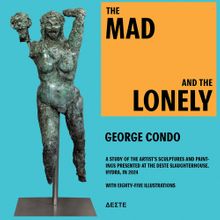
This catalog documents Condo's (born 1957) exhibition The Mad and The Lonely, the site-specific installation at the DESTE Foundation's Project Space at the Slaughterhouse on the island of Hydra in Greece, which included a number of small-scale paintings and sculptures selected from the artist's long career and recontextualized in the storied space. With a vivid 40-page leporello, this square hardcover book includes a text by Dakis Joannou and an essay by Condo himself that probes the many sites and sources of inspiration for The Mad and The Lonely.
Published by Hayward Gallery Publishing. Text by Ralph Rugoff, Laura Hoptman, Will Self, David Means.
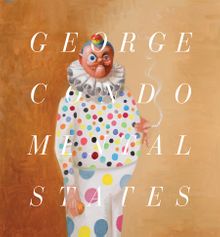
Painter and sculptor George Condo (born 1957) has inhabited a broad swath of cultural contexts over his three-decade career, from the early-1980s East Village scene to a collaboration with William Burroughs to making album cover art for Phish and, most recently, Kanye West. Early in his career, Condo was friendly with Jean-Michel Basquiat and Keith Haring and briefly worked at Andy Warhol's Factory. Having been included in the Whitney Biennial in 1987, by 2010 he was once again judged so original that a bronze sculpture of his was placed in that year's Biennial. Condo's loose, imaginative approach to portraiture has distinguished him throughout the decades: "There was a time when I realized that the central focal point of portraiture did not have to be representational in any way," he said in 1992. "You don't need to paint the body to show the truth about a character. All you need is the head and the hands." George Condo: Mental States surveys the artist's career from 1982 to the present day, focusing on his portrait paintings but also including a selection of sculptural busts made in materials such as gold and bronze. Organized by theme, and including 100 images of artworks in addition to writings by Will Self, David Means, Ralph Rugoff and Laura Hoptman, this volume explores Condo's relationship to art history, popular culture and contemporary society.
Published by Holzwarth Publications. Interview by Ralph Rugoff.
This collection of bizarrely sensuous new paintings, drawings, and sculptures by the well-known New York City artist is based mainly on a complex character named Jean Louis, whose multiple personalities include a chauffeur, a butler and a maid, as well as other assorted relatives. We also meet "Uncle Joe," who's naked from the waist down and balancing a wine glass upon his raised foot, and a reclining female nude, clenching a cigarette between the fingers of an exceedingly hairy and Dr. Seuss-ish black glove. In this new, highly ironic body of work, much of which refers directly to Picasso, Condo aligns himself with a long line of art historical portraiture. His subjects are as elegant and alienating as they are absurd and comical; any notion of the classical is subverted through his outrageous morphology, as he enjoys the playful interweaving of high and low.
Published by Hatje Cantz. Edited by Agnes Husslein-Arco and Thomas Kellein. Essays by Margrit Brehm and Stacey Schmidt.
“A woman is something you can glorify, you can be horrified by, you can be paranoid in front of, you can love, you can hate.” So says painter George Condo, not the first artist to have tackled the subject of “woman” and certainly not the last. Nevertheless, Condo's particular brand of cartoonish figurative painting, with its equal debts to Surrealism, Pop art and painterly abstraction, has gone a long way to pushing the means through which women might be represented. Herewith are One Hundred Women, drawn, painted and sculpted by the American artist--some of them nudes, some of them portraits, some of them part of large-scale art-historical collages. Each woman bears at least some trace of Condo's signature style, replete with animalistic grotesqueness and stylistic references to such modern masters as Goya, Velazquez, Picasso and Warhol.
 George Condo: The Mad and the Lonely
 George Condo: Mental States
 George Condo Playing Cards
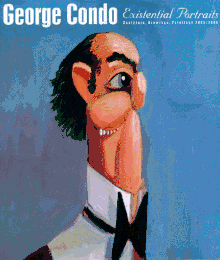 George Condo: Existential Portraits
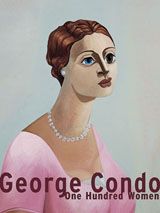 George Condo: One Hundred Women