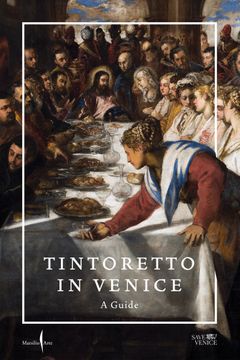
Edited by Thomas Dalla Costa, Robert Echols, Frederick Ilchman.
Exploring Venice through the daring works of Renaissance giant Tintoretto
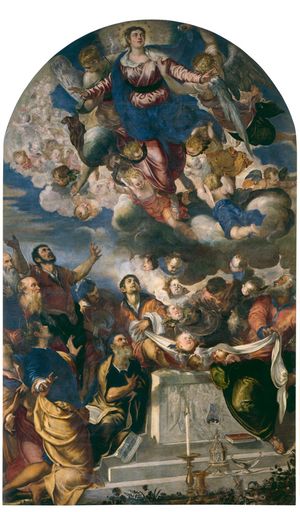
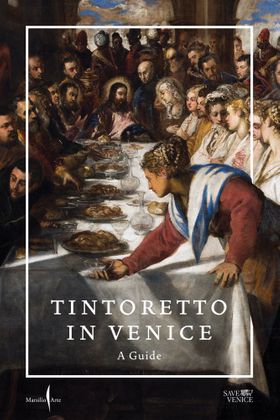
Unlike most of the other great artists of Renaissance-era Venice, Tintoretto (1519–94) was actually born in the city, which he seldom left. His legacy is felt acutely in the city, embedded into its environment. His large-scale Mannerist paintings can still be found everywhere—not only in museums, but also as a part of the original decorative cycles in public buildings such as the Scuola Grande di San Rocco, the Doge's Palace and the Libreria Marciana or as altarpieces or chapel adornments in Venetian churches. Divided into sections that correspond to the Venetian sestieri, or districts, the guide identifies over 120 paintings across the city. Accompanying each painting is an expository entry written by an international team of art historians, covering matters of pictorial style, patronage, dating, iconography, conservation and the relation to Tintoretto's oeuvre as a whole.
STATUS: Out of stock
Temporarily out of stock pending additional inventory.
FORMAT: Pbk, 6.25 x 9.5 in. / 144 pgs / 80 color. LIST PRICE: U.S. $19.95 LIST PRICE: CANADA $27.95 GBP £15.99 ISBN: 9791254631096 PUBLISHER: Marsilio Arte AVAILABLE: 2/24/2026 DISTRIBUTION: D.A.P. RETAILER DISC: TRADE PUBLISHING STATUS: Active AVAILABILITY: Out of stock TERRITORY: WORLD
Published by Marsilio Arte. Edited by Thomas Dalla Costa, Robert Echols, Frederick Ilchman.
Exploring Venice through the daring works of Renaissance giant Tintoretto
Unlike most of the other great artists of Renaissance-era Venice, Tintoretto (1519–94) was actually born in the city, which he seldom left. His legacy is felt acutely in the city, embedded into its environment. His large-scale Mannerist paintings can still be found everywhere—not only in museums, but also as a part of the original decorative cycles in public buildings such as the Scuola Grande di San Rocco, the Doge's Palace and the Libreria Marciana or as altarpieces or chapel adornments in Venetian churches.
Divided into sections that correspond to the Venetian sestieri, or districts, the guide identifies over 120 paintings across the city. Accompanying each painting is an expository entry written by an international team of art historians, covering matters of pictorial style, patronage, dating, iconography, conservation and the relation to Tintoretto's oeuvre as a whole.