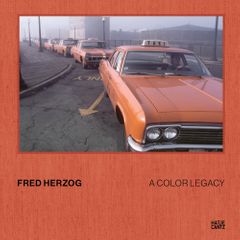
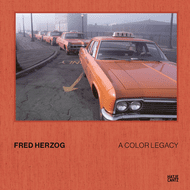
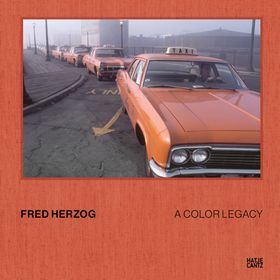
Edited with text by Hannah Reinhart, Andy Sylvester.
Previously unseen imagery from the archives of a pioneering figure in color photography
Fred Herzog was a master of color photography. His iconic Kodachrome street shots from the 1950s and 1960s capture urban life in warm red-orange tones, offering precise observations of people and city movements. Poetic, witty and always respectful, his images create an intimate atmosphere. After moving to Vancouver in 1953, Herzog built a vibrant visual tribute to the city. He also traveled to the US, Barbados, Curaçao, Guatemala and Mexico, his Leica always in hand. In an era dominated by black-and-white photography, Herzog's use of color was groundbreaking. His bestseller Modern Color remains celebrated worldwide. Now, newly released photographs from his archive, managed by Equinox Gallery, continue his legacy, offering fresh insight into his unique perspective. These images not only preserve Herzog's vision but also reaffirm his place as a pioneer of modern color photography. Fred Herzog (1930–2019) arrived in Vancouver from Germany in 1953. Professionally employed as a medical photographer, he spent his evenings and weekends photographing the city and its inhabitants in vibrant color. Though he was working prolifically from the 1950s, Herzog was relatively unknown until a major retrospective at the Vancouver Art Gallery in 2007 brought his work to a wider public. Digital inkjet printing enabled Herzog to finally make satisfactory prints from his slides and exhibit his important early color street photography.
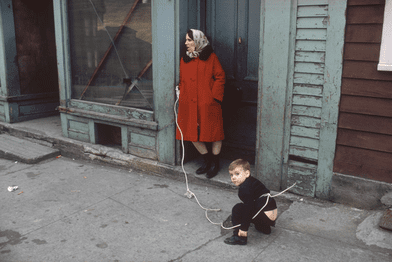
More than a decade before William Eggleston made his first color photograph, German-born medical photographer Fred Herzog emigrated to Canada and began walking the streets of Vancouver, documenting the people, the places, and the color compositions that they created together. At a time when art photography existed exclusively in black-and-white, he quietly traveled by foot around his adopted hometown, making forays into the United States, Barbados, Curaçao, Guatemala and Mexico, producing an astonishing body of color photographs that were not known to the world until he was 76 years old, in 2007, when The Vancouver Art Gallery held the first major retrospective of his work. Pictured here, “Mom and Son, Halifax” (1969) from new release Fred Herzog: A Color Legacy. continue to blog
FORMAT: Hbk, 9.5 x 9.5 in. / 144 pgs / 100 color. LIST PRICE: U.S. $49.95 LIST PRICE: CANADA $69.95 ISBN: 9783775761031 PUBLISHER: Hatje Cantz AVAILABLE: 1/27/2026 DISTRIBUTION: D.A.P. RETAILER DISC: TRADE PUBLISHING STATUS: Active AVAILABILITY: In stock TERRITORY: NA LA
Published by Hatje Cantz. Edited with text by Hannah Reinhart, Andy Sylvester.
Previously unseen imagery from the archives of a pioneering figure in color photography
Fred Herzog was a master of color photography. His iconic Kodachrome street shots from the 1950s and 1960s capture urban life in warm red-orange tones, offering precise observations of people and city movements. Poetic, witty and always respectful, his images create an intimate atmosphere.
After moving to Vancouver in 1953, Herzog built a vibrant visual tribute to the city. He also traveled to the US, Barbados, Curaçao, Guatemala and Mexico, his Leica always in hand. In an era dominated by black-and-white photography, Herzog's use of color was groundbreaking. His bestseller Modern Color remains celebrated worldwide. Now, newly released photographs from his archive, managed by Equinox Gallery, continue his legacy, offering fresh insight into his unique perspective. These images not only preserve Herzog's vision but also reaffirm his place as a pioneer of modern color photography.
Fred Herzog (1930–2019) arrived in Vancouver from Germany in 1953. Professionally employed as a medical photographer, he spent his evenings and weekends photographing the city and its inhabitants in vibrant color. Though he was working prolifically from the 1950s, Herzog was relatively unknown until a major retrospective at the Vancouver Art Gallery in 2007 brought his work to a wider public. Digital inkjet printing enabled Herzog to finally make satisfactory prints from his slides and exhibit his important early color street photography.