Forget what you know about the beehive and pick up this guide to apiaries from ancient times to the early modern world
Published with RVB.
Since the birth of the modern beehive in 1852, structural innovation in hive construction has entered a dormant period. By favoring the standardized box hive, beekeeping turns its back on the 4,400 years of architectural diversity that came before. In an attempt to rectify this stagnation and to recover a fascinating fragment of design history, Aladin Borioli has maintained an open-ended and ongoing research project, Apian, which uses theoretical, iconographic and ethnographic methods to dissect the relationship between bees and humans. Originally published by RVB Books in 2020, this pocket-size, bilingual (English/French) artist’s book traces archival evidence of the beehive from as far back as 2400 BCE. Borioli rejects a fixed narrative and makes way for polymorphism: introducing graphic design, photography and writing to retell the story of beehives. The 375 images offer a glimpse into this prolific history of architecture for nonhumans. Aladin Borioli (born 1988) lives and works between Bevaix, Switzerland, and London. He holds a BA in photography from the École cantonale d'art de Lausanne and an MA in visual and media anthropology from the Freie Universität Berlin. He is currently pursuing a certificate program in critical philosophy at the New Centre for Research and Practice.
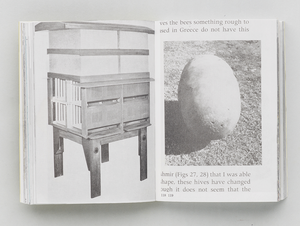
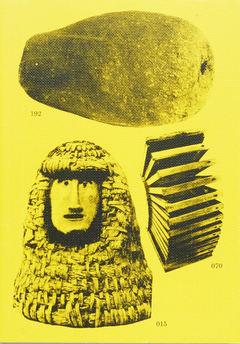
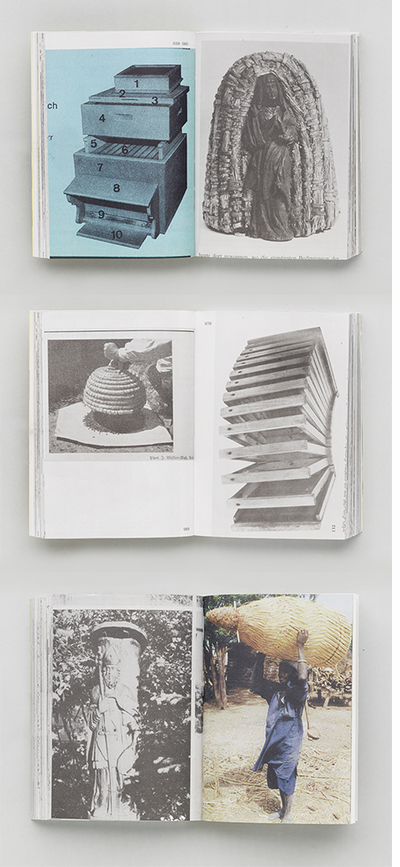
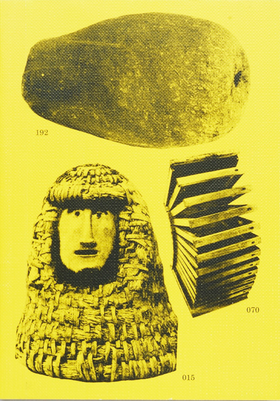
Spreads from bookseller favorite Aladin Borioli: Hives, 2400 BCE–1852 CE, first published in 2020 by Paris-based RVB Books and widely available only now through this must-have new co-edition with The Ice Plant. Retaining all of the perfect original design details, from the bright yellow paperback cover (and spine) with knocked out historic hive shapes to the adorable 4.25 x 6-inch trim size, this 448-page ode to golden-age apiaries emanates pure passion project from every awkwardly-cropped, low-res spread. Before honey harvesting was modernized and industrialized, beekeeping was idiosyncratic and culturally specific. "A log hive is no better than a Langstroth hive, nor is a Langstroth hive better than a skep hive," Ellen Lapper and Aladin Borioli write. "It is about advocating for hive design which is free from colonial, capitalist and for-profit logic. This is a task for the whole community. Remember: unite and create, not alienate and dictate!" Long live idiosyncratic beekeeping! continue to blog
FORMAT: Pbk, 4.25 x 6 in. / 448 pgs / 375 b&w. LIST PRICE: U.S. $32.00 LIST PRICE: CANADA $44 ISBN: 9782492175718 PUBLISHER: The Ice Plant AVAILABLE: 9/29/2026 DISTRIBUTION: D.A.P. RETAILER DISC: TRADE PUBLISHING STATUS: Active AVAILABILITY: In stock TERRITORY: NA LA AFR ME
Published by The Ice Plant. Text by Ellen Lapper, Aladin Borioli.
Forget what you know about the beehive and pick up this guide to apiaries from ancient times to the early modern world
Published with RVB.
Since the birth of the modern beehive in 1852, structural innovation in hive construction has entered a dormant period. By favoring the standardized box hive, beekeeping turns its back on the 4,400 years of architectural diversity that came before.
In an attempt to rectify this stagnation and to recover a fascinating fragment of design history, Aladin Borioli has maintained an open-ended and ongoing research project, Apian, which uses theoretical, iconographic and ethnographic methods to dissect the relationship between bees and humans. Originally published by RVB Books in 2020, this pocket-size, bilingual (English/French) artist’s book traces archival evidence of the beehive from as far back as 2400 BCE. Borioli rejects a fixed narrative and makes way for polymorphism: introducing graphic design, photography and writing to retell the story of beehives. The 375 images offer a glimpse into this prolific history of architecture for nonhumans.
Aladin Borioli (born 1988) lives and works between Bevaix, Switzerland, and London. He holds a BA in photography from the École cantonale d'art de Lausanne and an MA in visual and media anthropology from the Freie Universität Berlin. He is currently pursuing a certificate program in critical philosophy at the New Centre for Research and Practice.