By Hermann Burger. Translated with introduction by Adrian Nathan West.
“Hermann Burger is one of the truly great authors of the German language: a writer of consummate control and range, with a singular and haunting worldview.” –Uwe Schütte
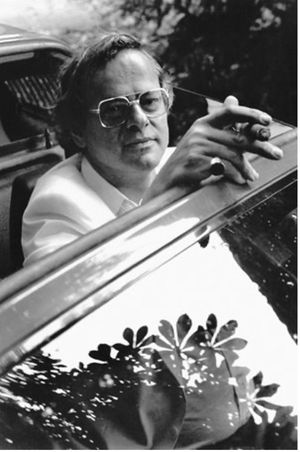
In the tunnel-village of Göschenen, a man named Hermann Burger has vanished without a trace from his hotel room, suspected of suicide. What is found in his room is not a note, but a 124-page manuscript entitled Tractatus Logico-Suicidalis: an exhaustive manifesto comprising 1,046 “thanatological” aphorisms (or “mortologisms”) advocating suicide. This “grim science of killing the self” studies the predominance of death over life, in traumatic experiences such as the breakup of a marriage, years of depression, the erosion of friendships and the disgrace of impotence—but the aphoristic text presents something more complicated than a logical conclusion to life experience. Drawing inspiration from such authors as Wittgenstein, Cioran and Bernhard, Burger’s unsettling work would be published shortly before the author would take his own life. Hermann Burger (1942–89) was a Swiss author, critic and professor. Author of four novels and several volumes of essays, short fiction and poetry, he first achieved fame with his novel Schilten, the story of a mad village schoolteacher who teaches his students to prepare for death. At the end of his life, he was working on the autobiographical tetralogy Brenner, one of the high points of 20th-century German prose. He died by overdose days after the first volume’s publication.
PRAISE AND REVIEWS
Bookforum
Andrew Martin
Burger’s ludicrous self-regard gives even his grimmest work (that would be 'Tractatus Logico-Suicidalis: On Killing Oneself') a comic edge. It would be a desservice to cal a self-described 'mortologist' life-affirming, but […] there’s something exhilarating about seeing despair turned into moving, desperate art.
The Complete Review
M.A. Orthofer
'Tractatus Logico-Suicidalis' is a fascinating—and discomforting—addition to the body of suicide-literature, grappling with that greatest of all issues, death itself.
e-flux
Ryan Ruby
[W]ritten with a pessimism that would have made Cioran clutch his pearls and a crankishness that would have made Bernhard blush.
FORMAT: Pbk, 5.5 x 8 in. / 208 pgs. LIST PRICE: U.S. $19.95 LIST PRICE: CANADA $27.95 GBP £16.95 ISBN: 9781939663887 PUBLISHER: Wakefield Press AVAILABLE: 11/22/2022 DISTRIBUTION: D.A.P. RETAILER DISC: TRADE PUBLISHING STATUS: Active AVAILABILITY: In stock TERRITORY: WORLD
Published by Wakefield Press. By Hermann Burger. Translated with introduction by Adrian Nathan West.
“Hermann Burger is one of the truly great authors of the German language: a writer of consummate control and range, with a singular and haunting worldview.” –Uwe Schütte
In the tunnel-village of Göschenen, a man named Hermann Burger has vanished without a trace from his hotel room, suspected of suicide. What is found in his room is not a note, but a 124-page manuscript entitled Tractatus Logico-Suicidalis: an exhaustive manifesto comprising 1,046 “thanatological” aphorisms (or “mortologisms”) advocating suicide.
This “grim science of killing the self” studies the predominance of death over life, in traumatic experiences such as the breakup of a marriage, years of depression, the erosion of friendships and the disgrace of impotence—but the aphoristic text presents something more complicated than a logical conclusion to life experience. Drawing inspiration from such authors as Wittgenstein, Cioran and Bernhard, Burger’s unsettling work would be published shortly before the author would take his own life.
Hermann Burger (1942–89) was a Swiss author, critic and professor. Author of four novels and several volumes of essays, short fiction and poetry, he first achieved fame with his novel Schilten, the story of a mad village schoolteacher who teaches his students to prepare for death. At the end of his life, he was working on the autobiographical tetralogy Brenner, one of the high points of 20th-century German prose. He died by overdose days after the first volume’s publication.