By Dmytro Soloviov. Photographs by Dmytro Soloviov. Edited by Damon Murray, Stephen Sorrell. Introduction by Owen Hatherley.
The most comprehensive publication to date on the stunning modernist architecture that defined the landscape of Soviet-era Ukraine
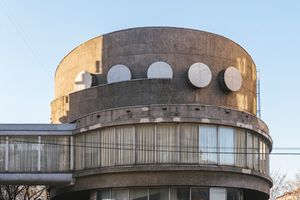
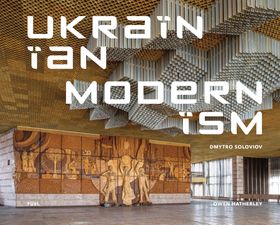
What does Ukrainian modernist architecture look like, and why isn’t it better known in the West? Photographer and architectural tour guide Dmytro Soloviov is fighting to preserve the disappearing modernist heritage of his native Ukraine. These innovative buildings represent an extraordinary blend of function, avant-garde aesthetics and ingenious design, but despite these qualities, they remain largely unrecognized. This is a result of several factors, including the stigma of belonging to the Soviet era, corruption, neglect, as well as the ongoing threat of destruction from both unscrupulous developers and war. From masterpieces such as the Kyiv Crematorium and Salut Hotel, to previously undocumented examples like the Uzhhorod Airport Terminal and the Novoarkhanhelsk Police Station, Soloviov has traversed Ukraine photographing the exteriors and interiors of these important buildings and their monumental art (mosaics, stained glass and sculptures). While the nation’s attention is consumed by more existential matters, he has documented the unique identity of one of the least cataloged periods of Soviet architecture, his images forming a singular record of an unexpected and rapidly disappearing legacy. An introduction by renowned architecture critic Owen Hatherley, complete with historical images, cements these buildings in a cultural and political context. With over 120 examples across 240 pages, this publication is the most comprehensive available on the subject.
PRAISE AND REVIEWS
Colossal
Kate Mothes
'Ukrainian Modernism' combines Soloviov’s contemporary photos with archival images, exploring the breadth of the region’s architectural marvels
Hypebeast
Gico Gavino
Through a photographic journey, Soloviovs chronicles Ukraine’s varied Modernist history from avant-garde constructivism to late Soviet Brutalism.
designboom
Ravail Khan
[Brings] long-overdue attention to a period of architecture still largely absent from mainstream discourse.
Wallpaper*
Jonathan Bell
With photographs and texts by Dmytro Soloviov, an architectural tour guide, the book is an essential survey of an overlooked legacy that is very much under threat.
The Odessa Journal
'Ukrainian Modernism' is currently the most comprehensive visual and analytical study of Ukraine's modernist architecture.
STIR World
Dhwani Shanghvi
By shifting focus from gilded cathedrals to everyday modernist buildings—civic centres, housing estates, cultural halls—the book foregrounds the architecture that truly defines Ukraine’s present as well as Soviet-era urban reality.
FORMAT: Hbk, 8 x 6.5 in. / 240 pgs / 246 color. LIST PRICE: U.S. $34.95 LIST PRICE: CANADA $48.95 ISBN: 9781739887872 PUBLISHER: FUEL Publishing AVAILABLE: 5/6/2025 DISTRIBUTION: D.A.P. RETAILER DISC: TRADE PUBLISHING STATUS: Active AVAILABILITY: In stock TERRITORY: NA ONLY
Ukrainian Modernism Modernist Architecture of Ukraine
Published by FUEL Publishing. By Dmytro Soloviov. Photographs by Dmytro Soloviov. Edited by Damon Murray, Stephen Sorrell. Introduction by Owen Hatherley.
The most comprehensive publication to date on the stunning modernist architecture that defined the landscape of Soviet-era Ukraine
What does Ukrainian modernist architecture look like, and why isn’t it better known in the West? Photographer and architectural tour guide Dmytro Soloviov is fighting to preserve the disappearing modernist heritage of his native Ukraine. These innovative buildings represent an extraordinary blend of function, avant-garde aesthetics and ingenious design, but despite these qualities, they remain largely unrecognized. This is a result of several factors, including the stigma of belonging to the Soviet era, corruption, neglect, as well as the ongoing threat of destruction from both unscrupulous developers and war. From masterpieces such as the Kyiv Crematorium and Salut Hotel, to previously undocumented examples like the Uzhhorod Airport Terminal and the Novoarkhanhelsk Police Station, Soloviov has traversed Ukraine photographing the exteriors and interiors of these important buildings and their monumental art (mosaics, stained glass and sculptures). While the nation’s attention is consumed by more existential matters, he has documented the unique identity of one of the least cataloged periods of Soviet architecture, his images forming a singular record of an unexpected and rapidly disappearing legacy. An introduction by renowned architecture critic Owen Hatherley, complete with historical images, cements these buildings in a cultural and political context. With over 120 examples across 240 pages, this publication is the most comprehensive available on the subject.