Edited with text by Sarah Lewis. Text by Lonnie G. Bunch III, Vinson Cunningham, Sherrilyn Ifill, Paul Farber, Siddhartha Mitter, Jeneé Osterheldt, Patrick Weems.
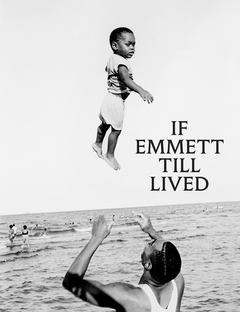
Meditating on the legacies of racial injustice in America: a photographic reimagining of Emmett Till’s life had it not been cut short
Published with Museum of Contemporary Photography at Columbia College Chicago.
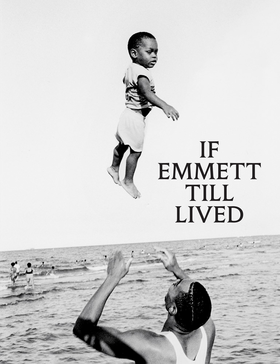
This book honors the life, death and legacy of Emmett Till through a kaleidoscope of 20th- and 21st-century photography. Both a reckoning with the past and a probing investigation into the current state of American life, If Emmett Till Lived presents a fictionalized narrative of the life Emmett Till might have lived had he returned home in 1955, rather than being murdered at the age of 14 while visiting family in Mississippi, a victim of the racial terror of Jim Crow rule. Curated by writer and scholar Sarah Lewis, the more than 100 photographs from dozens of artists are drawn from the permanent collection of the Museum of Contemporary Photography. Her selection of works recalls small but not insignificant moments in Till’s childhood as well as larger themes from his life’s unfulfilled promise. Collectively, Lewis’ selections present a poetic and profound photographic account of quotidian moments from a childhood and adulthood unrealized. These photographs speak to the absence of images of Till’s life beyond the age of 14. In filling that void, the exhibition more broadly addresses the lasting impact of racialized violence in the United States across generations, ultimately offering a framework for considering how freedom is secured on American ground. Photographers include: Dawoud Bey, Keith Carter, Teju Cole, Bruce Davidson, An-My Lê, Danny Lyon, Sally Mann, Diana Matar, Gordon Parks, Walter Rosenblum, Carrie Mae Weems.
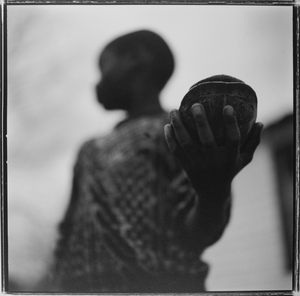
Keith Carter, "Turtle Shell," 1992. From 'If Emmett Till Lived: A Creative Monument.'
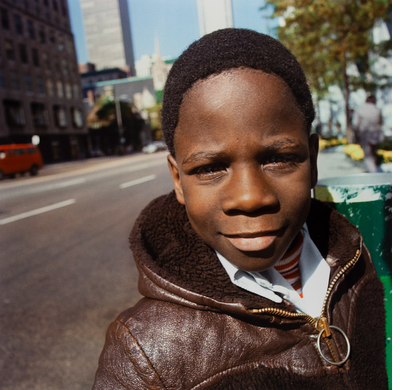
“What if Emmett Till lived,” Sarah Lewis asks in her Introduction to the highly-anticipated new release If Emmett Till Lived: A Creative Monument. “What if he had returned home still a child, alive and free? These questions invite a range of others, a reckoning with the past, and a probing investigation of the current state of American life. This book, and the related exhibition, If Emmett Till Lived [opening this week at Museum of Contemporary Photography at Columbia College Chicago], together offer a collective arena to consider how freedom has been secured on American ground.” Featured photograph, by Charles Traub, is Chicago, from the Lunchtime Project, 1977.
continue to blog
FORMAT: Hbk, 8 x 10.5 in. / 256 pgs / 90 color / 105 duotone. LIST PRICE: U.S. $49.95 LIST PRICE: CANADA $69.95 GBP £39.99 ISBN: 9781636812311 PUBLISHER: DelMonico Books AVAILABLE: 9/22/2026 DISTRIBUTION: D.A.P. RETAILER DISC: TRADE PUBLISHING STATUS: Active AVAILABILITY: In stock TERRITORY: WORLD
Published by DelMonico Books. Edited with text by Sarah Lewis. Text by Lonnie G. Bunch III, Vinson Cunningham, Sherrilyn Ifill, Paul Farber, Siddhartha Mitter, Jeneé Osterheldt, Patrick Weems.
Meditating on the legacies of racial injustice in America: a photographic reimagining of Emmett Till’s life had it not been cut short
Published with Museum of Contemporary Photography at Columbia College Chicago.
This book honors the life, death and legacy of Emmett Till through a kaleidoscope of 20th- and 21st-century photography. Both a reckoning with the past and a probing investigation into the current state of American life, If Emmett Till Lived presents a fictionalized narrative of the life Emmett Till might have lived had he returned home in 1955, rather than being murdered at the age of 14 while visiting family in Mississippi, a victim of the racial terror of Jim Crow rule. Curated by writer and scholar Sarah Lewis, the more than 100 photographs from dozens of artists are drawn from the permanent collection of the Museum of Contemporary Photography. Her selection of works recalls small but not insignificant moments in Till’s childhood as well as larger themes from his life’s unfulfilled promise. Collectively, Lewis’ selections present a poetic and profound photographic account of quotidian moments from a childhood and adulthood unrealized. These photographs speak to the absence of images of Till’s life beyond the age of 14. In filling that void, the exhibition more broadly addresses the lasting impact of racialized violence in the United States across generations, ultimately offering a framework for considering how freedom is secured on American ground.
Photographers include: Dawoud Bey, Keith Carter, Teju Cole, Bruce Davidson, An-My Lê, Danny Lyon, Sally Mann, Diana Matar, Gordon Parks, Walter Rosenblum, Carrie Mae Weems.