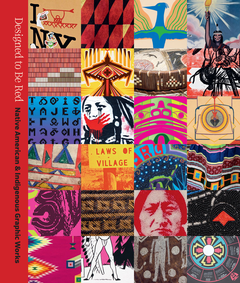
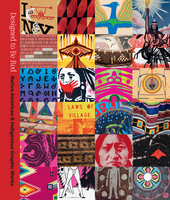
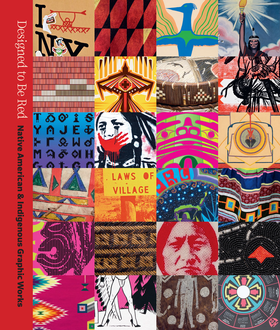
Designed to Be Red: Native American & Indigenous Graphic Works
Edited with text by Brian Johnson.
The first publication dedicated to Indigenous typography, poster design, lettering and graphic arts across the Americas
Design history has a problem. Native American and Indigenous peoples have been making decisions about form, function, communication and meaning for millennia—and the canon has looked right through them. Mythmakers and marketing teams have long used graphic design to tell stories about Native Americans, First Nations, Métis, Alaska Natives and other Indigenous peoples rather than with them, creating reductive and harmful representations of a living, vibrant and varied group of people. Yet Native graphic art has a rich history that shows that its practitioners are innovators who have created dynamic, subversive and optimistic work. Modern graphic expressions such as posters, digital fonts and even stenciled cars intertwine with traditional Indigenous pottery, weavings and paintings. Through examples spanning nearly two centuries and representing over 80 tribes and nations, Designed to Be Red reveals and celebrates design histories that have always existed alongside, despite and in resistance to dominant colonial narratives, illustrating the full spectrum of Native life. Artists include: Neal Ambrose-Smith (Flathead Salish, Métis and Cree), Crystal Worl (Tlingit/Deg Hit’an Athabascan), Terran Last Gun (Piikani), Marie Watt (Turtle Clan, Seneca Nation of Indians, Haudenosaunee Confederacy), Melissa Cody (Diné).
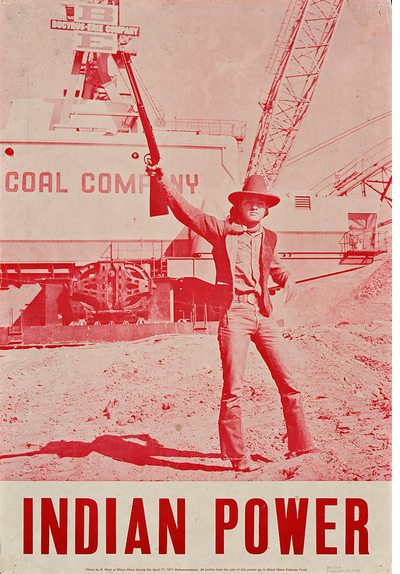
Featured image is reproduced from new release Designed to Be Red: Native American & Indigenous Graphic Works, published to accompany the exhibition on view now at Poster House, NYC. Credited to Designer Once Known, Indian Power (1971) features Leroy Keams (Diné), a prominent member of the American Indian Movement, “raising a rifle in defiance during protests against strip mining on Black Mesa,” according to author Brian Johnson. “Behind him looms Peabody Energy’s mining operation—the result of agreements made in 1964 and 1966 with Navajo Nation and Hopi tribal leaders that were later revealed to be corrupt; the attorney representing one of the tribes had been paid by Peabody, undermining Tribal sovereignty. The company’s strip mining ravaged the landscape, drained the Navajo aquifer, and forced the relocation of 12,000 to 16,000 Diné—the most significant Indigenous displacement since the Trail of Tears. The poster itself was a tool of resistance: all profits from its sale went to the Black Mesa Defense Fund.” continue to blog
Designed to Be Red: Native American & Indigenous Graphic Works
Published by DelMonico Books. Edited with text by Brian Johnson.
The first publication dedicated to Indigenous typography, poster design, lettering and graphic arts across the Americas
Design history has a problem. Native American and Indigenous peoples have been making decisions about form, function, communication and meaning for millennia—and the canon has looked right through them. Mythmakers and marketing teams have long used graphic design to tell stories about Native Americans, First Nations, Métis, Alaska Natives and other Indigenous peoples rather than with them, creating reductive and harmful representations of a living, vibrant and varied group of people.
Yet Native graphic art has a rich history that shows that its practitioners are innovators who have created dynamic, subversive and optimistic work. Modern graphic expressions such as posters, digital fonts and even stenciled cars intertwine with traditional Indigenous pottery, weavings and paintings. Through examples spanning nearly two centuries and representing over 80 tribes and nations, Designed to Be Red reveals and celebrates design histories that have always existed alongside, despite and in resistance to dominant colonial narratives, illustrating the full spectrum of Native life.
Artists include: Neal Ambrose-Smith (Flathead Salish, Métis and Cree), Crystal Worl (Tlingit/Deg Hit’an Athabascan), Terran Last Gun (Piikani), Marie Watt (Turtle Clan, Seneca Nation of Indians, Haudenosaunee Confederacy), Melissa Cody (Diné).