Back-to-the-Land Architecture in Northern California
Published by D.A.P.. Edited with text and oral histories by David Jacob Kramer. Foreword by Jentri Anders. Photographs by Michael Schmelling.
Published with Edition Patrick Frey.
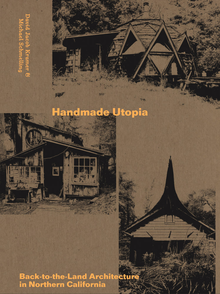
Half a century ago, a legion of young idealists dropped out of society and went “back to the land,” creating a patchwork of utopian communes across Northern California. Handmade Utopia: Back-to-the-Land Architecture in Northern California tracks down the rogue souls still committed to this way of life, capturing their handbuilt, otherworldly residences alongside the stories of how they came to be—at what is now the tail end of one generation’s grand social experiment. Handmade Utopia travels the length of Northern California, which formed the epicenter of the movement, journeying down hidden dirt roads and deep into redwood forests to discover handmade homes kept hidden for decades. Michael Schmelling’s photography documents how these structures appear today and David Jacob Kramer’s oral histories detail how they came to be, and are presented alongside a plethora of archival materials. In the mid-1960s, back-to-the-landers fled a Bay Area that had become over-policed and overrun with runaways, drugs and commercial exploitation. These new pioneers taught themselves to farm, practiced free love and generated radical new architectural styles. Only a fraction of these pioneers stuck it out for the decades following the Summer of Love. These flinty souls remain a study in principled self-reliance and human ingenuity. They are now in their 70s and 80s and the question arises of what they will leave behind, literally and figuratively. For decades they have kept these experimental homes hidden, long fearful of building inspectors and drug squads. Handmade Utopia presents these structures as artworks in their own right, captured at a moment when they risk being lost forever.
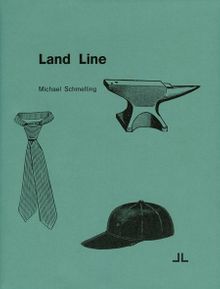
In the winter of 2007, photographer Michael Schmelling--known for his previous books Shut Up Truth and The Plan--photographed the USA National Memory Championships in New York City. Roughly 100 competitors gathered in a modest conference hall in the Con Edison building to compete in a series of mnemonic tests. Schmelling's photographs from that day are primarily of the competitors, all intensely engaged in recalling and reciting lists of information. Schmelling returned to the championships in 2008, photographing many of the same competitors as the year before. Building a book of short, interrelated stories, Schmelling has combined these images of mnemonists with a series of similar, overlapping narratives. Traveling through a North American landscape of neutral interiors, the viewer of Land Line encounters an array of subjects in the midst of thinking, forgetting, questioning and interpreting. Photographs of professional mnemonists, teenagers in an algorithmic code competition, entrepreneurs, a Hollywood actor, prisoners and English language students dressed up as historical figures coalesce into a larger narrative about cognition, memory and information.
Between 2003 and 2005, Michael Schmelling photographed 12 private residences in the company of Disaster Masters, a New York-based company specializing in cleaning up homes and counseling compulsive hoarders. Featuring 490 photographs printed in black-and-white on 576 newsprint pages, this volume devotes one chapter to each home--producing an arresting art object and a fantastic document of urban archaeology and psychology.
Published by J&L Books. Edited by Leanne Shapton, Jason Fulford.
Shut Up Truth is a document of artist Michael Schmelling's friendship with James Holloway, a Texas native and union projectionist. The project began in 1996, when Schmelling met Holloway at a film screening while on assignment in Texas for the Associated Press. Shut Up Truth iis an unflincing and intimate portrait of a single, white middle-aged man. The photographs, taken in El Paso, constitute a documentary of contemporary American life. Michael Schmelling was born in Pittsburgh in 1973. He now lives in New York City and is a regular contributor to The New York Times Magazine, New York Magazine, The Fader, Details.
 Michael Schmelling: Land Line
 Michael Schmelling: The Plan
 Michael Schmelling: Shut Up Truth