| |||||||||||||||||||||||||
PHOTOGRAPHY MONOGRAPHS
|
|
STATUS: Forthcoming | 11/3/2026 This title is not yet published in the U.S. To pre-order or receive notice when the book is available, please email orders @ artbook.com |
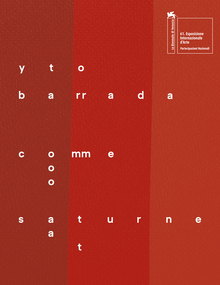
 Yto Barrada: Color Problems
Published by JRP|Editions.
Edited with text by Clément Dirié. Text by Omar Berrada, Arnaud Dubois, Wells Fray-Smith, Thomas Lax, Elisabeth Lebovici, Yasmine Seale. Interview by Anaïs Masson.
For more than 20 years, French Moroccan artist Yto Barrada (born 1971) has explored natural and cultural phenomena as well as subaltern histories through films, installations, sculptures, textile works, photographs and site-specific projects. This long-awaited monograph spans her entire practice, from her first acclaimed photographic series A Life Full of Holes (1998–2004) to her most recent research on textile, dyeing and "color problems," in which she once more bridges nature, materiality and art history.
This volume unifies an international group of writers to decipher the methodologies and perspectives active in Barrada’s practice. The volume also highlights Barrada’s commitment to the city of Tangier, where she founded a cinema and an eco-feminist African campus and dye garden, as well as her relationship with American artist and longtime Chelsea Hotel resident Bettina Grossman (1927–2021), whose estate is in her care.
PUBLISHER
JRP|Editions
BOOK FORMAT
Clth, 9 x 10.25 in. / 256 pgs / 200 color.
PUBLISHING STATUS
Pub Date 10/13/2026
Active
DISTRIBUTION
D.A.P. Exclusive
Catalog: FALL 2026 p. 82
PRODUCT DETAILS
ISBN 9783037646472 TRADE
List Price: $60.00 CAD $84.00 GBP £45.00
AVAILABILITY
Out of stock
STATUS: Out of stock Temporarily out of stock pending additional inventory. |
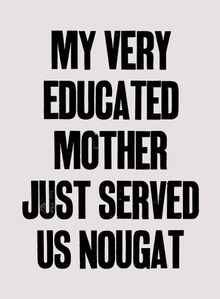 Yto Barrada: My Very Educated Mother Just Served Us Nougat
Published by Silvana Editoriale.
Text by Laura Barlow, Ruba Katrib, Mason Leaver-Yap.
This book surveys the French Moroccan artist Yto Barrada’s (born 1971) photographs, films, videos, sculptures, prints and fabric works, as well as her archival practices and public interventions made over the last two decades.
PUBLISHER
Silvana Editoriale
BOOK FORMAT
Paperback, 6.75 x 9 in. / 168 pgs / 100 color.
PUBLISHING STATUS
Pub Date 4/20/2021
Active
DISTRIBUTION
D.A.P. Exclusive
Catalog: SPRING 2021 p. 155
PRODUCT DETAILS
ISBN 9788836647651 FLAT40
List Price: $40.95 CAD $57.00
AVAILABILITY
In stock
in stock $40.95 |
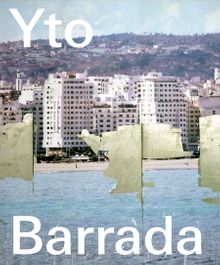 Yto Barrada
Published by JRP|Editions.
Edited by Lionel Bovier, Clément Dirié. Text by Jean-François Chevrier, Juan Goytisolo, Marie Muracciole, Sina Najafi.
PUBLISHER
JRP|Editions
BOOK FORMAT
Paperback, 9.25 x 11.25 in. / 160 pgs / 100 color.
PUBLISHING STATUS
Pub Date 10/31/2013
Active
DISTRIBUTION
D.A.P. Exclusive
Catalog: SPRING 2012 p. 170
PRODUCT DETAILS
ISBN 9783037642023 TRADE
List Price: $55.00 CAD $77.00 GBP £25.00
AVAILABILITY
In stock
in stock $55.00 |
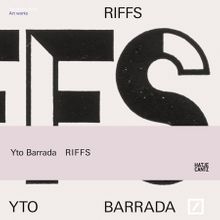 Yto Barrada: Riffs
Published by Hatje Cantz.
Text by Okwui Enwezor, Friedhelm Hütte, Marie Muracciole, Daniel Soutif.
PUBLISHER
Hatje Cantz
BOOK FORMAT
Hardcover, 11 x 11 in. / 144 pgs / 90 color.
PUBLISHING STATUS
Pub Date 10/31/2011
Out of print
DISTRIBUTION
D.A.P. Exclusive
Catalog: FALL 2011 p. 166
PRODUCT DETAILS
ISBN 9783775730211 TRADE
List Price: $60.00 CAD $70.00
AVAILABILITY
Not available
STATUS: Out of print | 00/00/00 For assistance locating a copy, please see our list of recommended out of print specialists |