Published by Hatje Cantz. Edited by Susanne Gaensheimer, Susanne Meyer-Bu?ser, Nina Zimmer. Text by Uwe Fleckner, Katja Förster, Susanne Meyer-Bu?ser, Livia Wermuth.
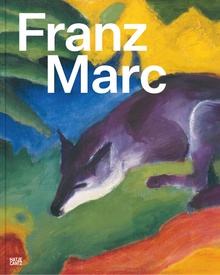
Franz Marc (1880–1916) built an extensive artistic network spanning from his native Munich to Berlin, Paris and Thessaloniki, meeting artists such as Robert Delaunay and Gabriele Münter. Marc's most important partnership, however, was with Wassily Kandinsky: together they founded the journal "Der Blaue Reiter," which would become a collective name for its associated artists working in the German Expressionist style. Characterized by a deep connection to nature, thoughtful depictions of animals and a vibrant palette, Marc's paintings evolved toward a formal dissolution similar to Cubism, yet his career came to an abrupt end when he was killed at the Battle of Verdun. Published to coincide with the first monographic Marc exhibition in over 20 years, The Quest for a Better World offers a comprehensive insight into the work of this extraordinary artist.
Published by Hatje Cantz. Edited by Christian von Holst. Essays by Andreas Schalhorn, Andreas K. Vetter, Karin von Maur, Klaus Zeeb.
Like no other artist, Franz Marc pursued the representation of the horse--a central topic in the fine arts--as his life's work. As a painter and co-founder of the "Blaue Reiter" he created symbolic, visionary images which today stand among the icons of modernism. This publication presents an overview of Marc's paintings, drawings, gouaches and a number of famous postcards--from his nature studies of 1905 and 1906 to the sketches he made on the eve of World War I. During this short period of time, the horse motif became increasingly central, especially after Marc moved from Munich to the secluded upper Bavarian village of Sindelsdorf. With a skill for precise observation and intuitive understanding, Marc attempted an ''animalization of art,'' in which the horse became both subject and expression of the hope for better and more organic existence.
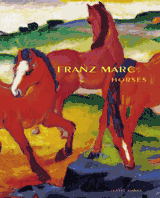 Franz Marc: Horses