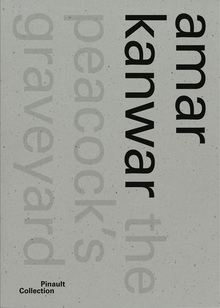
Published by Marsilio Arte. Edited by Jean-Marie Gallais.
On the upper floor of Palazzo Grassi, the Indian multimedia artist Amar Kanwar (born 1964) presents his latest large installation, The Peacock’s Graveyard (2023), part of the Pinault Collection’s permanent holdings. A seven-channel video feed telling multiple tales at once, it represents a unique experience of intense meditation on impermanence and the cycle of life, inviting visitors to reconsider their vision of uncanonical beliefs and seek new forms of resistance, reconciliation and political action. Like the exhibition, the volume published to accompany it presents other works by Kanwar that offer profound reflections on a moment in history in which every truth seems to have a brutal opposing truth.
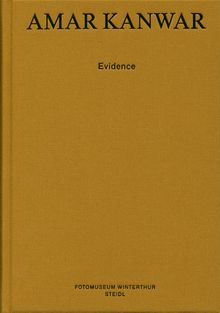
Published by Steidl. Edited by Urs Stahel, Daniela Janser.
This book represents a moment in a life and oeuvre constantly in flux, always branching out and converging, following a course, but at times deliberately diverging, because there is time, or time can be found--to breathe, to walk, to pause, to move on, to circle. There is poetry in Amar Kanwar's words and lyricism in his films--both method and metaphor alike by which life's distillation and dissipation become comprehensible and deeper knowledge can be gained. Space can be grasped through time, time through poetry. What is at stake is always the life of the individual, the rules of society, power, abuse, violence, the power to enlighten and the courage to change. --Urs Stahel
Part I, Part II, Part III, 19 Channel Video Installation
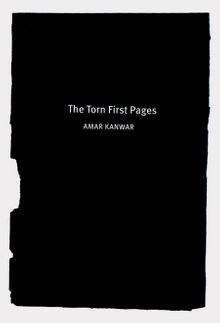
Published by Walther König, Köln.
Amar Kanwar's The Torn First Pages is an ode to the thousands engaged in the struggle for democracy in Burma. It is published in honor of the bookshop owner Ko Than Htay, who was imprisoned for removing the first pages of all books and journals that contained ideological propaganda from the military regime.
 Amar Kanwar: Evidence
 Amar Kanwar: The Torn First Pages