Published by Hatje Cantz. Text by Stephanie Buck, Dagmar Korbacher, Petra Kuhlmann-Hodick, Annette Ludwig, Christoph Orth, Anna Marie Pfäfflin.
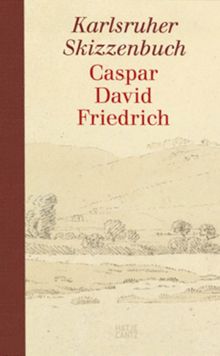
When a German museum consortium acquired Caspar David Friedrich's (1774–1840) Karlsruhe sketchbook, it became the last of the artist's six surviving sketchbooks to enter a public collection. Dating from around 1804, the volume captures a pivotal moment in Friedrich's artistic development: 33 drawings made during his walks through Dresden and its surroundings. Notably, the sketch of the oak tree on page nine features in Friedrich's contemporaneous paintings Cairn in Snow (1807) and The Abbey in the Oakwood (1809–10). This Swiss-bound facsimile edition of the Karlsruhe sketchbook reproduces each page and includes a scholarly introduction contextualizing Friedrich's creative process, acquainting readers with the artist's visual world as seen through his own eyes.
A popular artist in his own lifetime, German Romantic painter Caspar David Friedrich (1774–1840) is known for his allegorical landscapes that convey a deep sense of contemplation. By setting small groups of people or singular personages against misty fog-covered valleys, tranquil cloudy seas or brilliant sunrises, Friedrich continuously positions humanity in reverence to nature. Although 2024 marks the 250th anniversary of his birth, Freidrich and his paintings continue to gain in topicality, particularly with respect to climate change. Many of his works, such as The Sea of Ice, stand silent witness to evidence of altered landscapes and increased global temperatures. In the playful format of an A–Z book, art historian Barbara Hess examines Friedrich’s life and work, from the Romantic movement at large to his sketches of nature and the lasting poignancy of his sublime paintings.
 Caspar David Friedrich: A–Z