| |||||||||||||||||||||||||
ARTIST MONOGRAPHS
|
|
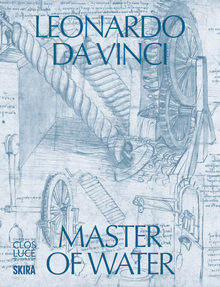
in stock $35.00 |
 Biomimicry: Taking Inspiration from Nature
From Leonardo da Vinci to the Present Day
Published by SKIRA PARIS.
Edited by Pascal Brioist, Andrea Bernardoni. Foreword by François Saint Bris.
This book explores the concept of biomimicry by establishing a dialogue between the work of Leonardo da Vinci and Renaissance engineers on the one hand and contemporary researchers on the other. It shows the way in which the living can be a source of inspiration for our technological future and the extent to which the Renaissance understood this. Biomimicry brings together drawings by da Vinci and Albrecht Dürer, models of machines based on the artists' drawings, Renaissance manuscripts and biomimetic robots from LAASCNRS and the University of Lausanne. In this way, it highlights the extraordinary modernity of da Vinci's work on materials, animal anatomy, bird and fish behavior, and locomotion techniques, bringing together history, art, technology and current scientific developments in a cross-disciplinary approach.
PUBLISHER
SKIRA PARIS
BOOK FORMAT
Hardcover, 7.75 x 10.25 in. / 168 pgs / 100 color.
PUBLISHING STATUS
Pub Date 8/19/2025
Active
DISTRIBUTION
D.A.P. Exclusive
Catalog: FALL 2025 p. 109
PRODUCT DETAILS
ISBN 9782370742797 TRADE
List Price: $35.00 CAD $49.00
AVAILABILITY
In stock
in stock $35.00 |
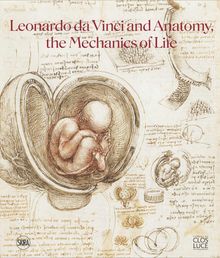 Leonardo da Vinci and Anatomy
The Mechanics of Life
Published by SKIRA PARIS.
Text by Dominique Le Nen, Pascal Brioist.
Renaissance artist Leonardo da Vinci (1452–1519) made detailed anatomical sketches that contributed both to a greater understanding of the human body and to the compositions of his own artworks. Da Vinci was not content with a passive description of the human body; he sought to understand the mysteries of its functions by studying the mechanics, senses and bodily processes through the means of dissection.
This catalog for the exhibition at the Château de Clos Lucé, where da Vinci spent the final years of his life, demonstrates how the artist’s work as an anatomist was critical to his practice as a painter. Well-known works such as The Last Supper are shown to have been influenced by knowledge gathered in the medical field. The book brings together Leonardo’s drawings with objects, books studied by the artist, interviews with specialists and 3D reconstructions.
PUBLISHER
SKIRA PARIS
BOOK FORMAT
Paperback, 9.5 x 11 in. / 192 pgs / 100 color.
PUBLISHING STATUS
Pub Date 4/16/2024
Active
DISTRIBUTION
D.A.P. Exclusive
Catalog: SPRING 2024 p. 104
PRODUCT DETAILS
ISBN 9782370742148 TRADE
List Price: $30.00 CAD $42.00
AVAILABILITY
In stock
in stock $30.00 |
 Leonardo da Vinci and the Perfumes of the Renaissance
Published by SKIRA PARIS.
Text by Pascal Brioist, Carlo Vecce.
This exhibition catalog is a journey into the perfumes of the Renaissance through the daily life of Leonardo da Vinci (1452–1519). The book delves into the scents of this brilliant era: the spices, incense and musks of Constantinople; the perfumed costumes of Venice, Florence, Milan; and the court of Francis I of France. It highlights the plants of the Tuscan master’s childhood, such as olive, jasmine, juniper and lemon and orange trees, as well as the smells of the workshop including walnut and linseed oils, rabbit skin glue, resins, waxes and fats. Leonardo himself concocted fragrant recipes, from the most delicate to the most intense, using enfleurage and distillation techniques. This ambitious catalog features reconstitutions of objects designed by Leonardo, such as an alembic or the famous amber necklace from The Lady with an Ermine.
PUBLISHER
SKIRA PARIS
BOOK FORMAT
Hardcover, 7.75 x 10.25 in. / 192 pgs / 100 color.
PUBLISHING STATUS
Pub Date 12/31/2024
Active
DISTRIBUTION
D.A.P. Exclusive
Catalog: FALL 2024 p. 135
PRODUCT DETAILS
ISBN 9782370742452 TRADE
List Price: $30.00 CAD $42.00
AVAILABILITY
Not available
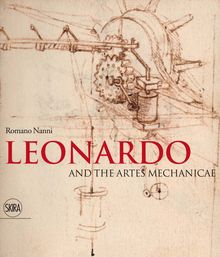 Leonardo and the Artes Mechanicae
Published by Skira.
Edited by Romano Nanni. Text by Marco Biffi, Fabio Giusberti, Alexander Neuwahl, Davide Russo.
The extraordinary technologic innovations and revolutionary machines from the collection of the Leonardo Museum in Vinci. This beautifully illustrated volume discovers the multiple interests of Leonardo the technologist, the architect, the man of science and, more generally, the history of Renaissance techniques.
Romano Nanni is director of the Biblioteca Leonardiana and of the Leonardo Museum in Vinci (Florence).
PUBLISHER
Skira
BOOK FORMAT
Hardcover, 9.75 x 11.5 in. / 320 pgs / 318 illustrations.
PUBLISHING STATUS
Pub Date 9/23/2014
Active
DISTRIBUTION
D.A.P. Exclusive
Catalog: Publisher Backlist
PRODUCT DETAILS
ISBN 9788876245749 TRADE
List Price: $80.00 CAD $112.00
AVAILABILITY
In stock
in stock $80.00 |
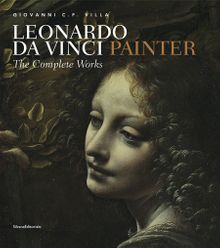 Leonardo da Vinci: Painter
The Complete Works
Published by Silvana Editoriale.
Text by Giovanni Villa.
Leonardo da Vinci (1452–1519) was born in Florence and studied with the renowned painter Verrocchio, qualifying as a “master” at the age of 20 in 1472. After his apprenticeship he worked for Ludovico il Moro, later moving to Rome, Bologna and Venice before settling in France, where his final three years were spent in the service of François I.
PUBLISHER
BOOK FORMAT
Hardcover, 9.5 x 11 in. / 240 pgs / 80 color.
PUBLISHING STATUS
Pub Date 3/31/2012
Out of print
DISTRIBUTION
D.A.P. Exclusive
Catalog: SPRING 2012 p. 20
PRODUCT DETAILS
ISBN 9788836621446 TRADE
List Price: $60.00 CAD $70.00
AVAILABILITY
Not available
STATUS: Out of print | 00/00/00 For assistance locating a copy, please see our list of recommended out of print specialists |