Published by Primary Information. Text by George Baker, Tom Burr, Jordan Carter, Aria Dean, Jody Graf, Renée Green, David Joselit, Christine Messineo, Humberto Moro, Blake Oetting.
This artist's book by American conceptual artist Tom Burr (born 1963) documents his three-year occupation of a repurposed 19th-century factory in Torrington, Connecticut. Blurring the boundaries between studio and gallery, art and architecture, and artist and community, Torrington Project featured more than 90 works from Burr's career, serving as both a site for creating new pieces and hosting a dynamic roster of artists, writers, performers, curators, collectors and friends. The publication functions as the project's final element, featuring documentation of Burr's build-out of the space, alongside the works housed within; the artist's diaristic writings about his stewardship of the building; and contributions from scholars, curators and other artists. Subverting the traditional catalogue raisonné, Torrington Project charts the social dimensions that defined the endeavor, underscoring Burr's ongoing engagement with architecture, institutional critique, personal histories and public space.
Published by Walther König, Köln. Text by Anke Kempkes.
This witty exhibition catalogue collects Burr’s recent installation at the Vienna Secession. Sculptural and collaged works create an assemblage that oscillates between interior architectural elements, catwalk and abstract form. The titles of the works and the objects themselves refer to personalities like Jean Cocteau and Truman Capote.
Published by JRP|Ringier. Edited by Florence Derieux. Texts by Stuart Comer, George Baker, Cerith Wyn Evans.
Tom Burr (born in 1963, in New Haven, Connecticut) is an American artist whose work--photographs, drawings, sculptures and installations--revisits the formal vocabulary of the avant-gardes of the 1960s, in particular Minimalism and post-Minimalism, and mixes together pop iconography, homosexual culture, underground aesthetics, musical, cinematographic and literary influences and contemporary architecture and design. These works articulate the problematics linked to architecture and public space and questions of sociology, psychology and gender politics. The conceptual investigation led by the artist essentially questions the way in which identity, especially sexual identity, is constructed or is, on the contrary, constrained by society and its physical spaces. The artist uses the appropriationist strategy of the 1980s, as it permits past works to be revisited in order to reveal different significations. Thus the artist reconfigures a history no longer fixed in time and space, but on the contrary perfectly open, illuminating and transforming the present.

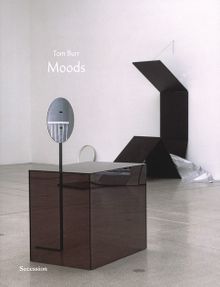 Tom Burr: Moods
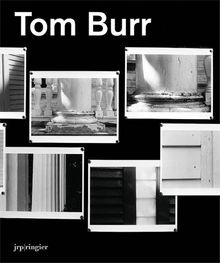 Tom Burr: Extrospective