Published by Hatje Cantz. Edited by Camille Morando. Text by Noémie Fillon, Fabrice Flahutez, Marie Mauzé, Didier Semin. Interview by Samy Kinge.
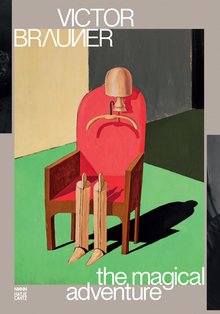
Victor Brauner (1903–1966) was a key figure in the Romanian avant-garde before settling in Paris. There he became one of the most captivating painters of the Surrealist movement, remaining a prolific and inspiring creator until his death. Despite his significant contributions to International Surrealism, Brauner’s erudite, humorous and inventive work remains to be discovered. His creations frequently depict mythical creatures and symbolic motifs and, in typical Surrealist fashion, often plunge into the realms of mysticism and the unconscious. The Magical Adventure presents for the first time an extraordinary private collection that offers a comprehensive overview of the artist’s entire body of work, illustrating his multifaceted creations—paintings, drawings, sculptures, objects, writings, magazines, engravings—from the 1920s up to the 1960s. It also features several essays by scholars and curators as well as an interview with Brauner specialist Samy Kinge.
Published by Hatje Cantz. Essays by Susan Davidson, Brad Epley, Margaret Montagne, Ileana Marcoulesco and Didier Semin.
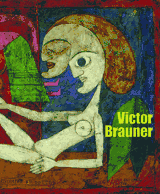
Born in 1903 in Romania, Victor Brauner was an active member of the first wave of Romanian avant-garde artists whose concerns anticipated those of Western European Surrealism by 20 years. As such, his paintings are distinguished by their wealth of occult notations and an eclectic use of diverse religious symbolism. Brauner's work attests to a unique integration of his Eastern European roots into more flamboyant Western modernism. Despite his many years living in Paris he retained his Romanian identity as evidenced in his choice of titles, his palette, and primarily his choice of imagery, reverting over and over again to his childhood memories and anxieties, to the Balkan landscape, and to the magic and spiritual symbols of his upbringing. This book demonstrates how Brauner's work differs from that of his famous Surrealist counterparts, de Chirico, Ernst, and Tanguy for example, extending our idea of Surrealism itself through his use of poetry, both direct and analogical, his highly narrative depictions of personal and social relations, and his extraordinarily colorful palette.
 Victor Brauner