Edited with text by Megan Fontanella. Text by Julie Barten, Susan Davidson, John K. Delaney, Lidia Ferrara, Vivien Greene, Sasha Kalter-Wasserman, Natalia Lauricella, Gillian McMillan, Nathan Otterson, Federica Pozzi, Samantha Small, Lena Stringari, Jeffrey Warda, Jeffrey Weiss.
From Cézanne to Braque, the Thannhauser Collection forms the core of the Guggenheim's early modernist holdings
Hbk, 8.75 x 11.5 in. / 328 pgs / 325 color. | 10/23/2018 | In stock $65.00
Text by Anthony Calnek, Matthew Drutt, Lisa Dennison, Michael Govan, Jennifer Blessing, Diane Waldman, Kay Heymer, Susan Davidson, Julia Brown, Ted Mann.
Hardcover, 10 x 11.25 in. / 344 pgs / 300 color. | 3/1/2007 | Not available $50.00
Published by Guggenheim Museum Publications. Edited with text by Megan Fontanella. Text by Julie Barten, Susan Davidson, John K. Delaney, Lidia Ferrara, Vivien Greene, Sasha Kalter-Wasserman, Natalia Lauricella, Gillian McMillan, Nathan Otterson, Federica Pozzi, Samantha Small, Lena Stringari, Jeffrey Warda, Jeffrey Weiss.
When Justin K. Thannhauser (1892–1976) brought his collection of modern art to the Solomon R. Guggenheim Museum in 1965, it was his crowning achievement after more than a half-century as one of Europe's most influential and distinguished collectors and dealers. The collection's formal bequeathal to the Guggenheim in 1978 represents a watershed moment for the museum—today its Thannhauser Collection constitutes the core of the Guggenheim's impressionist, postimpressionist, and School of Paris holdings, including 32 works by Pablo Picasso.
This volume presents the astonishing collection in full, offering a concentrated survey of works by such modern masters as Braque, Cézanne, Degas, Gauguin, Manet, Picasso, Pissarro and Van Gogh, among others. Throughout, artworks are given rich context and detail with historical installation views and high-tech conservation images. Short essays on collection highlights by current and former Guggenheim curators and conservators illuminate the artists' stylistic innovations as they sought to liberate art from academic genres and techniques. The book also features extensive technical analyses, offering rare insight into the artists' materials and processes based on the latest advances in conservation technology. A lead essay by Megan Fontanella recounts the genesis of Thannhauser's collection and its eventual transfer to the Guggenheim Museum. Tracing his ambitious career as gallerist and collector in Europe during the interwar years and into the calamity of World War II, she explores how Thannhauser's lifelong support for experimental art and eye for original talent helped define the modernist vanguard of 20th-century art.
Megan Fontanella is Curator of Modern Art and Provenance at the Solomon R. Guggenheim Museum, New York.
Julie Barten is Senior Conservator of Collections and Exhibitions at the Solomon R. Guggenheim Museum, New York.
Susan Davidson is Senior Curator of Collections and Exhibitions at the Solomon R. Guggenheim Museum, New York.
John K. Delaney is Senior Imaging Scientist at the National Gallery of Art, Washington.
Lidia Ferrara is an MA Candidate at the University of California, Los Angeles.
Vivien Greene is Senior Curator of 19th- and Early 20th-Century Art at the Solomon R. Guggenheim Museum, New York.
Sasha Kalter-Wasserman is Associate Curator and Associate Director of Curatorial Affairs, Abu Dhabi Project at the Solomon R. Guggenheim Museum, New York.
Natalia Lauricella is a PhD Candidate at the University of Southern California, Los Angeles.
Gillian McMillan is Associate Chief Conservator at the Solomon R. Guggenheim Museum, New York.
Nathan Otterson is Senior Conservator of Objects at Guggenheim Museum.
Federica Pozzi is Associate Research Scientist in the Department of Scientific Research at the Metropolitan Museum of Art, New York.
Samantha Small is a PhD candidate at the Graduate Center, City University of New York.
Lena Stringari is Deputy Director and Chief Conservator at the Solomon R. Guggenheim Museum, New York.
Jeffrey Warda is Senior Conservator of Paper and Photographs at the Solomon R. Guggenheim Museum, New York.
Jeffrey Weiss is Senior Curator at the Solomon R. Guggenheim Museum, New York.
Published by Guggenheim Museum Publications. Edited with text by Megan Fontanella. Text by Tracey Bashkoff, Susan Davidson, Vivien Greene, Lauren Hinkson, Susan Thompson, Jeffrey Weiss.
Visionaries: Creating a Modern Guggenheim celebrates the late 19th- and early 20th-century masterworks at the core of the institution’s holdings, and the trailblazers—artists and early patrons alike—whose contributions helped define the forward-looking identity of the Solomon R. Guggenheim Foundation. Central to Visionaries is the story of museum founder Solomon R. Guggenheim, who with support from his trusted advisor, Hilla Rebay, become a great champion of “nonobjective” art and assembled a radical collection against the backdrop of economic crisis and war in the 1930s and ’40s.
A lead catalog essay by museum curator Megan Fontanella explores Solomon Guggenheim’s fascinating activities in this period, together with that of five similarly pioneering art patrons whose personal holdings would become essential components of the foundation collection: Impressionist, Post-Impressionist and early School of Paris artworks from Justin K. Thannhauser; the eclectic Expressionist inventory of émigré art dealer Karl Nierendorf; the incomparable abstract and Surrealist paintings and sculptures from self-proclaimed “art addict” Peggy Guggenheim; and key modern examples from the estates of artists Katherine S. Dreier and Rebay. Alongside vibrant illustrations of works by such iconic artists as Alexander Calder, Marc Chagall, Vasily Kandinsky, Paul Klee, Piet Mondrian, Pablo Picasso and Jackson Pollock, Visionaries also features essays by six curators examining touchstone works from the foundation collection.
Megan Fontanella is Associate Curator of Collections and Provenance at the Solomon R. Guggenheim Museum, New York.
Vivien Greene is Senior Curator of 19th- and Early 20th-Century Art at the Solomon R. Guggenheim Museum, New York.
Jeffrey Weiss is Senior Curator at the Solomon R. Guggenheim Museum, New York.
Susan Thompson is Assistant Curator at the Solomon R. Guggenheim Museum, New York.
Tracey Bashkoff is Senior Curator of Collections and Exhibitions at the Solomon R. Guggenheim Museum, New York.
Lauren Hinkson is Assistant Curator for Collections at the Solomon R. Guggenheim Museum, New York.
Susan Davidson is Senior Curator of Collections and Exhibitions at the Solomon R. Guggenheim Museum, New York.
Published by Guggenheim Museum Publications. Text by Susan Davidson, Megan Fontanella, Brandon Taylor, Jeffrey Warda.
Robert Motherwell: Early Collages, published to accompany an exhibition devoted exclusively to Motherwell’s works on paper from the 1940s and early 1950s, reexamines the origins of the artist’s style and his revelatory encounter with the papier collé technique that he described in 1944 as “the greatest of our discoveries.” Motherwell’s enthusiasm for and dedication to the collage medium for the remainder of his career sets him apart from other artists of his generation and extended beyond the mere physical presence of pasted cut-and-torn papers. Featuring approximately 60 works and four essays that delve into artists’ engagements with collage in the first half of the twentieth century, Motherwell’s early career with patron Peggy Guggenheim, underlying humanitarian themes during World War II and the artist’s materials, Early Collages provides a vital reassessment of Motherwell’s work in the collage medium. Robert Motherwell (1915–1991) studied painting at the California School of Fine Arts in San Francisco, at Stanford, Harvard and Columbia. His first solo show was presented at the Raymond Duncan Gallery in Paris in 1939. In 1941, Motherwell traveled to Mexico with Roberto Matta. After returning to New York, his circle came to include William Baziotes, Willem de Kooning, Hans Hofmann and Jackson Pollock. In 1944, Motherwell became editor of the Documents of Modern Art series of books, and participated in Fourteen Americans at The Museum of Modern Art in New York in 1946. The artist subsequently taught and lectured throughout the United States. A retrospective of his works organized by the Albright-Knox Art Gallery, Buffalo, New York, traveled throughout the United States from 1983 to 1985.
Published by Guggenheim Museum Publications. Text by Donna De Salvo, Susan Davidson, Dave Hickey, Helen Hsu, Adrian Kohn, Don Quaintance, Charles Ray.
John Chamberlain rose to prominence in the late 1950s with energetic, vibrant sculptures hewn from disused car parts, achieving a three-dimensional form of Abstract Expressionism that astounded critics and captured the imaginations of fellow artists. For a seven-year period in the mid-1960s, the artist abandoned automotive metal and turned to other materials. Motivated by scientific curiosity, Chamberlain produced sculptures in unorthodox media, such as urethene foam, galvanized steel, paper bags, mineral-coated Plexiglas and aluminum foil. Since returning in 1972 to metal as his primary material, Chamberlain limited himself to specific parts of the automobile, adding color to found car parts, dripping, spraying and patterning on top of existing hues to an often wild effect. In recent years, the artist has embarked on the production of a new body of work that demonstrates a decided return to earlier themes. John Chamberlain: Choices accompanies the Guggenheim Museum exhibition, which comprises 95 works, from the artist’s earliest monochromatic iron sculptures to the outsized foil creations he is working on today, encompassing shifts in scale, material and methods informed by the collage process that has been central to Chamberlain’s working method. This fully illustrated exhibition catalogue includes essays by Susan Davidson, Donna De Salvo, Dave Hickey, Adrian Kohn and Charles Ray with an extensive chronology by Helen Hsu and a lexicon by Don Quaintance.
Published by D.A.P./Schirmer/Mosel. Edited by David White, Susan Davidson. Text by Nicholas Cullinan.
Robert Rauschenberg's engagement with photography began in the late 1940s under the tutelage of Hazel Larsen Archer at Black Mountain College in North Carolina. This exposure (or experience) was so great that for a time Rauschenberg was unsure whether to pursue painting or photography as a career. Instead, he chose both, and found ways to fold photography into his Combines, maintained a practice of photographing friends and family, documented the evolution of artworks and occasionally dramatized them by inserting himself into the picture frame. As Walter Hopps wrote, "The use of photography has long been an essential device for Rauschenberg's melding of imagery... [and] a vital means for Rauschenberg's aesthetic investigations of how humans perceive, select and combine visual information. Without photography, much of Rauschenberg's oeuvre would scarcely exist." The artist himself affirmed, "I've never stopped being a photographer." This volume gathers and surveys for the first time Rauschenberg's numerous uses of photography. This publication includes portraits of friends such as Cy Twombly, Jasper Johns, Merce Cunningham and John Cage, studio shots, photographs used in the Combines and Silkscreen paintings, photographs of lost artworks and works in process. This allows us to re-imagine almost the entirety of the artist's output in light of his always inventive uses of photography, while also supplying previously unseen glimpses into his social milieu of the 1950s and early 60s. Painter, sculptor, printmaker and photographer Robert Rauschenberg (1925-2008) provided a crucial bridge between Abstract Expressionism and Pop art. After studying at Black Mountain College under Josef Albers, Rauschenberg moved to New York where he formed close allegiances with Jasper Johns and Cy Twombly, began his groundbreaking Combines, collaborated with the Merce Cunningham Dance Company and co-launched the non-profit Experiments in Art and Technology. Considered one of the most innovative artists of his era, he died in 2008.
In 1942, at the opening of her Art of This Century gallery, Peggy Guggenheim famously demonstrated her equability toward both Surrealist and abstract art by wearing one earring made by Surrealist painter Yves Tanguy and one by abstract sculptor and kinetic artist Alexander Calder. Yet the opposition implied by this act of truce-making perhaps overstates the antimonies between these two modernist masters. Tanguy and Calder shared many friends in Surrealist circles in Paris, and showed work in the same exhibitions throughout the middle of the century. In this beautiful volume, full of color reproductions and important ephemera relating to the artists' shared history, Susan Davidson, Senior Curator of collections and exhibitions at the Guggenheim Museum in New York, elucidates the overlap between these two canonical modernists.
PUBLISHER L&M Arts
BOOK FORMAT Hardcover, 9.5 x 11.5 in. / 180 pgs / illustrated throughout.
PUBLISHING STATUS Pub Date 7/31/2010 Out of print
DISTRIBUTION D.A.P. Exclusive Catalog: FALL 2010 p. 103
PRODUCT DETAILS ISBN 9780979094286TRADE List Price: $75.00 CDN $90.00
Published by Guggenheim Museum Publications. Edited by Susan Davidson. Text by Trisha Brown, Mimi Thompson. Preface by Philip Rylands.
In the mid-1980s, Robert Rauschenberg's creative attentions turned toward the visual and plastic properties of junk metal when he began to assemble found metal objects and screenprint his photographic images onto aluminum, bronze, brass and copper. His first body of work in this vein was Gluts, a series begun in 1986 and continued intermittently until 1995, in which ornate metalwork seemingly derived from a bedpost might attach to a slice of mesh wire, or twisted petals of yellow metal might sprout from the remains of an eviscerated toaster. Asked to comment on his novel use of the word "gluts," Rauschenberg said, "It's a time of glut. Greed is rampant... I simply want to present people with their ruins... I think of the Gluts as souvenirs without nostalgia." Published to accompany the Peggy Guggenheim Collection's exhibition Robert Rauschenberg: Gluts (the first show to focus on Rauschenberg's sculpture since 1995), this fully illustrated catalogue features a selection of approximately 40 sculptures drawn from the holdings of institutions and private collections in the United States and abroad. It includes a reassessment of Rauschenberg's work as a sculptor by author and painter Mimi Thompson, an essay by Trisha Brown, an illustrated exhibition history, a preface by Philip Rylands and introduction by Susan Davidson that focuses on Rauschenberg's relationship to the Guggenheim and the artist's engagement with Venice in particular.
Published by Guggenheim Museum Publications. Text by Anthony Calnek, Matthew Drutt, Lisa Dennison, Michael Govan, Jennifer Blessing, Diane Waldman, Kay Heymer, Susan Davidson, Julia Brown, Ted Mann.
Originally, Solomon R. Guggenheim donated works from his collection to the Solomon R. Guggenheim Foundation, which he began in 1937 to support and promote non-objective art. Then, in 1939, he established the Museum of Non-Objective Painting, which was renamed the Solomon R. Guggenheim Museum in 1952, and its signature Frank Lloyd Wright building opened on New York's Fifth Avenue in 1959. Over time, the Guggenheim has expanded the type of art that it exhibits and collects through the addition of other great collections--notably, those of Karl Nierendorf, Peggy Guggenheim, Justin and Hilde Thannhauser, and Giuseppe Panza di Biumo--as well as through opportunities that resulted from the institution's increasingly international focus in more recent decades. The Guggenheim today encompasses venues on two continents: the museum in New York, the Peggy Guggenheim Collection in Venice, the Guggenheim Museum Bilbao, the Deutsche Guggenheim in Berlin and the Guggenheim Hermitage Museum in Las Vegas. This volume is published on the occasion of a major exhibition at the Kunst-und Ausstellungshalle der Bundesrepublik Deutschland, Bonn, and the Kunstmuseum Bonn. With its comprehensive presentation of masterworks from the Guggenheim's extended holdings, it provides insight into Modern and Contemporary art movements--from Impressionism to Cubism, Surrealism to Abstract Expressionism, Pop art and Minimalism to the most recent developments--and the distinctive features of the collection. The selection emphasizes the Guggenheim's ongoing commitment to acquiring the work of particular artists in depth, including Vasily Kandinsky, Paul Klee, Pablo Picasso, Robert Rauschenberg, Richard Serra and Matthew Barney, among many others.
Published by Guggenheim Museum Publications. Edited by Susan Davidson and Philip Rylands Essays by Dieter Bogner, Francis V. O'Connor, Don Quaintance, Jasper Sharp and Valentina Sonzogni.
In the 1940s New York was the crucible for post-war American and European art, and at the heart of this was Peggy Guggenheim and her remarkable museum/gallery, made instantly the most sensational venue of the avant garde in New York by Frederick Kiesler's visionary architectural design. This is the never-before-written story of “Art of This Century”--the name Guggenheim gave to both her collection (now part of the Solomon R. Guggenheim Foundation and on permanent view in Venice, Italy) and to her 57th Street gallery, Kiesler's masterpiece, within which the careers of artists such as William Baziotes, David Hare, Robert Motherwell, Jackson Pollock, Mark Rothko, Charles Seliger and Clyfford Still were launched. The essays in this volume recount the formation of Guggenheim's collection and reconstruct for the first time the plan and design of Art of This Century, analyzing its place in Kiesler's long career in architecture, theatre design, sculpture, and theories of perception. They also assemble reactions by the press; set the record straight with new evidence about Pollock's largest-ever painting, Mural (1943); and document the 55 exhibitions that Guggenheim organized at Art of This Century from 1942 to 1947. The 398-page publication is comprehensively illustrated and includes color plates of a selection of the collection, Kiesler's drawings and designs, and numerous installation photographs. Peggy Guggenheim was born Marguerite Guggenheim on August 26, 1898 in New York City. This American art collector was an important patron of the Abstract Expressionist school of artists in New York City. Her father was Benjamin Guggenheim, a son of the wealthy mining magnate Meyer Guggenheim, and one of her uncles was Solomon R. Guggenheim, who founded the Guggenheim Museum in New York. She died in 1979, near Venice, Italy.
Published by Guggenheim Museum Publications. Essays by Susan Davidson, David Anfam and Margaret Hoben Ellis.
While legendary artist Jackson Pollock has been comprehensively investigated in recent shows, a focused exhibition examining his drawings has not been organized since 1980. No Limits, Just Edges: Jackson Pollock Paintings on Paper features a compelling group of 75 artworks drawn from the holdings of institutions and private collections worldwide. Curated by Susan Davidson, this long-awaited exhibition to be held at the Deutsche Guggenheim, Berlin, Guggenheim Bilbao and the Peggy Guggenheim Collection in Venice considers the artist's works on paper as an essential component in his signature transformation of the traditional figurative line into a non-figurative graphic expression. This catalogue of the exhibiton begins chronologically with Pollock's early sketchbook studies based on old master paintings by Michelangelo and El Greco, as well as those influenced by his contemporaries, mainly the Mexican muralists Jose Clemente Orozco and David Alfaro Siqueiros. These early works reveal a figurative treatment that Pollock ultimately rejected as he moved at first toward pieces that mirrored his advancements in painting, and eventually, by late 1947, to abstract compositions. Throughout his career, Pollock experimented with different media on paper, alternating the same themes on watercolor and lithography, and later adding gouache to engravings to provide interesting variations. In the last years of his life, Pollock's fascination with different types of paper led him to special handmade sheets that allowed the paint to permeate below the main layer, thus achieving fortuitous variations of his well-known poured painting technique. This fully illustrated catalogue, which shows the full range of Pollock's works on paper, includes a reassessment of his skills as a draftsman by David Anfam, a noted scholar of Abstract Expressionism. Susan Davidson contributes a text that focuses on Pollock's stylistic development and the reception of his works on paper during his lifetime. A technical analysis of Pollock's working method is provided by Margaret Hoben Ellis.
Published by Hatje Cantz. Essays by Susan Davidson, Brad Epley, Margaret Montagne, Ileana Marcoulesco and Didier Semin.
Born in 1903 in Romania, Victor Brauner was an active member of the first wave of Romanian avant-garde artists whose concerns anticipated those of Western European Surrealism by 20 years. As such, his paintings are distinguished by their wealth of occult notations and an eclectic use of diverse religious symbolism. Brauner's work attests to a unique integration of his Eastern European roots into more flamboyant Western modernism. Despite his many years living in Paris he retained his Romanian identity as evidenced in his choice of titles, his palette, and primarily his choice of imagery, reverting over and over again to his childhood memories and anxieties, to the Balkan landscape, and to the magic and spiritual symbols of his upbringing. This book demonstrates how Brauner's work differs from that of his famous Surrealist counterparts, de Chirico, Ernst, and Tanguy for example, extending our idea of Surrealism itself through his use of poetry, both direct and analogical, his highly narrative depictions of personal and social relations, and his extraordinarily colorful palette.
Published by Hatje Cantz. Edited by Karin von Maur. Contributors include Susan Davidson, Gordon Onslow Ford, Konrad Klapheck, Karin von Maur, Beate Wolf.
Ur-Surrealist Yves Tanguy belonged to the inner circle of the 1920s Parisian avant-garde, alongside such figures as Salvador Dal', Max Ernst, and Alberto Giacometti, making essential contributions to Surrealist manifestoes, magazines, and exhibitions. Tanguy's artistic obsession was the world of imagination, of dreams and reveries, and his cryptically codified imagery continues to perplex audiences today. His paintings seem to exist in a hazy, oddly beautiful limbo dimension beyond time and space, a world at once vertiginous and calm, disturbing and breathtaking. The central focus of Yves Tanguy and Surrealism is the Surrealist mode, to which Tanguy dedicated himself like no other painter of his time, cementing the movement's place in the history of visual art. On the basis of previously unpublished documents and works, authors discuss Tanguy's otherworldly oeuvre in all its aspects--from his development as an artist to the reception of his work in the United States. With stunning reproductions in full color as well as black and white, Yves Tanguy and Surrealism is an extensive overview of the work of an artist whose forays into the creative unknown continue to resonate.
Published by Hatje Cantz. Artwork by Joseph Cornell, Marcel Duchamp. Contributions by Walter Hopps. Text by Susan Davidson, Ann Temkin.
This book chronicles the friendship and working relationship between two of the twentieth century's most innovative and influential artists--Joseph Cornell and Marcel Duchamp. The focus of this book is the box compiled by Cornell and dedicated to his friend Duchamp: the Duchamp Dossier, c. 1934-53, a hitherto publicly unknown artwork discovered in the artist's estate following his death.

 Visionaries: Creating a Modern Guggenheim
 Robert Motherwell: Early Collages
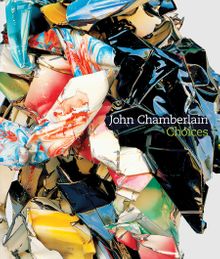 John Chamberlain: Choices
 Robert Rauschenberg: Photographs
 Yves Tanguy & Alexander Calder: Between Surrealism and Abstraction
 Robert Rauschenberg: Gluts
 The Guggenheim Collection
 Peggy Guggenheim & Frederick Kiesler: The Story Of Art Of This Century
 No Limits, Just Edges: Jackson Pollock
 Victor Brauner
 Cornell/Duchamp...In Resonance